This is one outlet's own report from Gothamist — the article as it was filed.
AIPROPX ReportGothamist · 46m ago
Fewer homeless New Yorkers died last year even as population remained at record high
A non-profit newsroom, powered by WNYC. Gothamist Listen Live Donate News Fewer homeless New Yorkers died last year even as population remained at record high By Karen Yi Published Aug 22, 2026 at 12:01 p.m. ET
Twitter Reddit Email Never miss a story Email address By submitting your information, you're agreeing to receive communications from New York Public Radio in accordance with our Terms . By Karen Yi Published Aug 22, 2026 at 12:01 p.m. ET
Twitter Reddit Email We rely on your support to make local news available to all Make your contribution now and help Gothamist thrive in 2026. Donate today
Gothamist is funded by sponsors and member donations
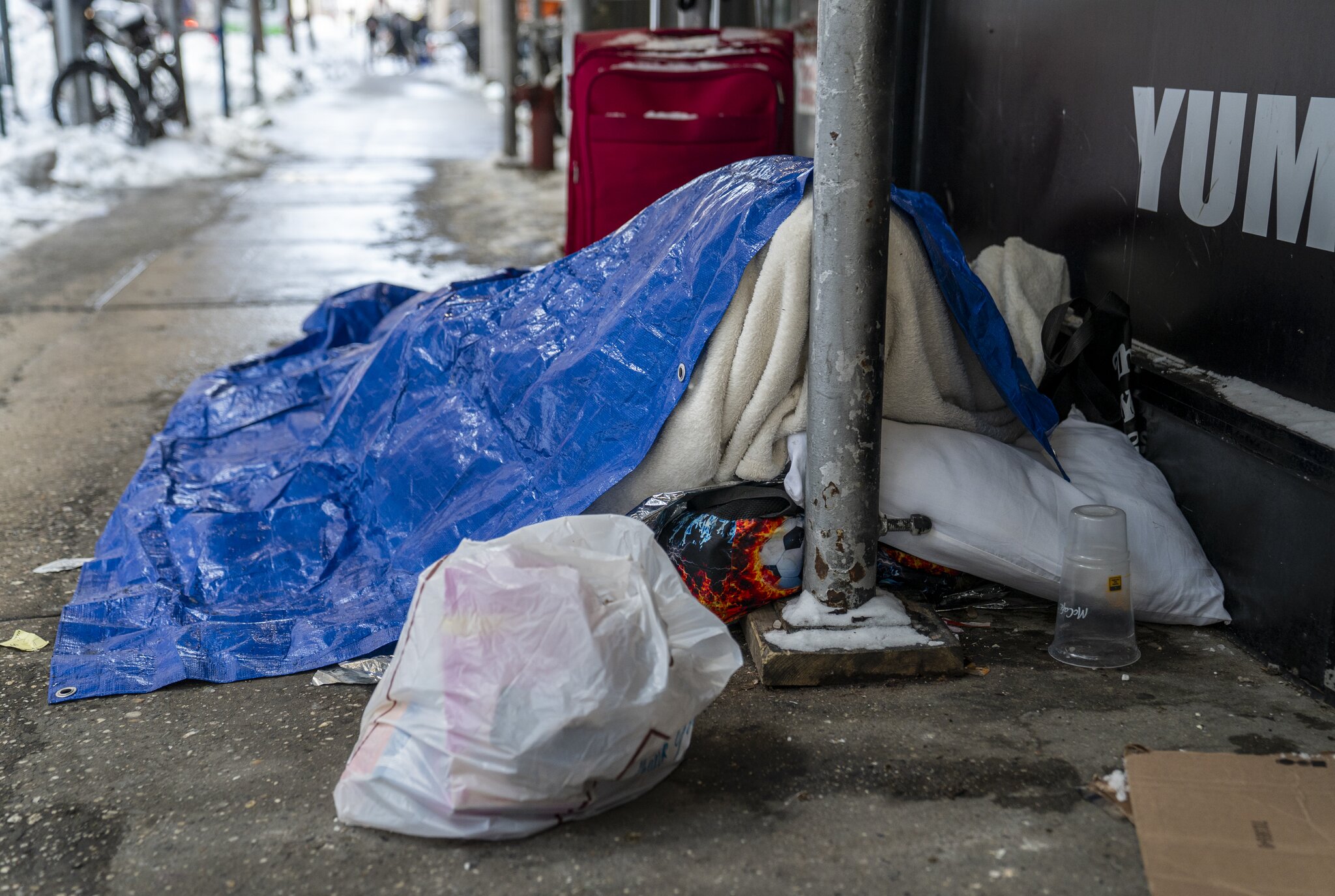
More than 600 homeless New Yorkers died in the city in 2025 — a significant decline compared to the previous year , even as the city’s homeless population remained at record levels, city numbers show.
The annual report shows an 18% drop in deaths among homeless New Yorkers in the fiscal year that ended June 30, compared to the prior fiscal year. It’s the first decrease in seven years, largely driven by the city’s efforts to help keep drug users safe by referring them to counseling and safe-use locations and preventing overdoses, city officials said.
It comes as the city’s shelter population remains at record levels and the Mamdani administration grapples with the highest rate of street homelessness in the last 10 years .
City officials said every homeless shelter is equipped with fentanyl testing strips, naloxone kits and trained staff. And when people walk into shelter they receive information on how to seek help and the number for a 24-hour hotline.
“The city saw overdose deaths amongst New York City's homeless population declining faster than the citywide and national decline,” said Neha Sharma, a spokesperson for the Department of Social Services.
The report shows most people died in a hospital though some people died in shelter or outdoors. The main causes of death included drug-related issues, heart disease, cancer and accidents, the data shows.
Homeless advocates said the deaths — more than half of which were deaths of homeless people not living in shelters — underscore the need to double down on convincing New Yorkers sleeping on the street to come inside and get the help they need.
“How do we have alternatives for the street homeless population that they're willing to engage in where right now they're choosing not to? It's very hard to deal with significant drug or alcohol challenges when people are completely unsheltered,” said Dan Lehman, president and CEO of HELP USA , a shelter and housing provider. He said street homeless New Yorkers made up 60% of drug-related deaths.
“That's the biggest single thing that we should be thinking about: How do we target and engage if we're really going to look to reduce deaths among people who are experiencing homelessness?” he said.
City officials said they began including more unsheltered people in their reports in 2023 to paint a more accurate picture. The report, released earlier this year, now counts the deaths of individuals the city had not conducted outreach to, people who the city couldn’t determine whether they had a place to live, those staying in a vacant apartment or staying with friends who didn’t have a place of their own.
Even with the drop in drug-related deaths year over year, drugs still remained the leading cause of death among homeless people, the report shows. The number of drug-related deaths dropped by more than a quarter last year, compared to fiscal year 2024, the report shows. In city shelters, overdose deaths dropped by 61% between 2022-25, city officials said. In New York City overall, drug related deaths dropped by 33%. Nationally, they dropped by 34%.
“I really do believe that so many mothers, fathers, brothers, and sisters' lives have been saved” by the city’s approach to harm reduction, said Chinese Dobson, a harm reduction specialist with the Department of Social Services.
“Being in a shelter is not easy, and using drugs is a way for people to cope with it. And sometimes when they don't have enough money to do certain things, they may take risks that maybe they wouldn't take if they did have housing or if they did have a better outlook or did have resources,” she added.
City officials also help shelter residents find safe-use sites that allow drug use in a sterile, supervised environment to prevent overdoses and spread of disease.
“In the current crisis, every overdose death is preventable,” said Jasmine Budnella, director of drug policy at VOCAL-NY, a grassroots group advocating for low-income New Yorkers.
“It is a matter of if we are putting resources into the right things to make sure that we both have housing, healthcare, that we have naloxone into the hands of everybody, that people have access to the things that they need.”
Budnella said the report showed the neighborhoods where the most people died of drug-related causes, and where the city needs to expand its harm reduction services, such as East New York and Brownsville — the neighborhoods that saw among the highest number of deaths.
More than 80% of the homeless people who died were men, and of those, many were between the ages of 45-64. Among unsheltered people who died, 13 died due to exposure to excessive cold.
Nirah Johnson, director of health and homeless service integration at the Department of Social Services, said the city wants to make sure everyone who walks through the shelter receives support, even if they’re only there a short time, “because we consider everyone to be at risk.”
She said the city is also building its programs to reduce the risk of alcohol use.
“Even things as simple as eating before you drink, drinking water throughout, not drinking in unsafe places, like we do see accidents related to alcohol use, falls, et cetera,” Johnson said.
Karen Yi covers homelessness and poverty. She joined the WNYC and Gothamist newsroom in 2020. Before that, Karen covere...
AIPROPX is an independent multi-source news index — we track, compare, and connect coverage from across the web into one place you won't find anywhere else.