This is one outlet's own report from TechCrunch — the article as it was filed. Other outlets are covering the same event; open the full story to compare every source side by side.
Inside one London founder house rewriting the founder-house rules
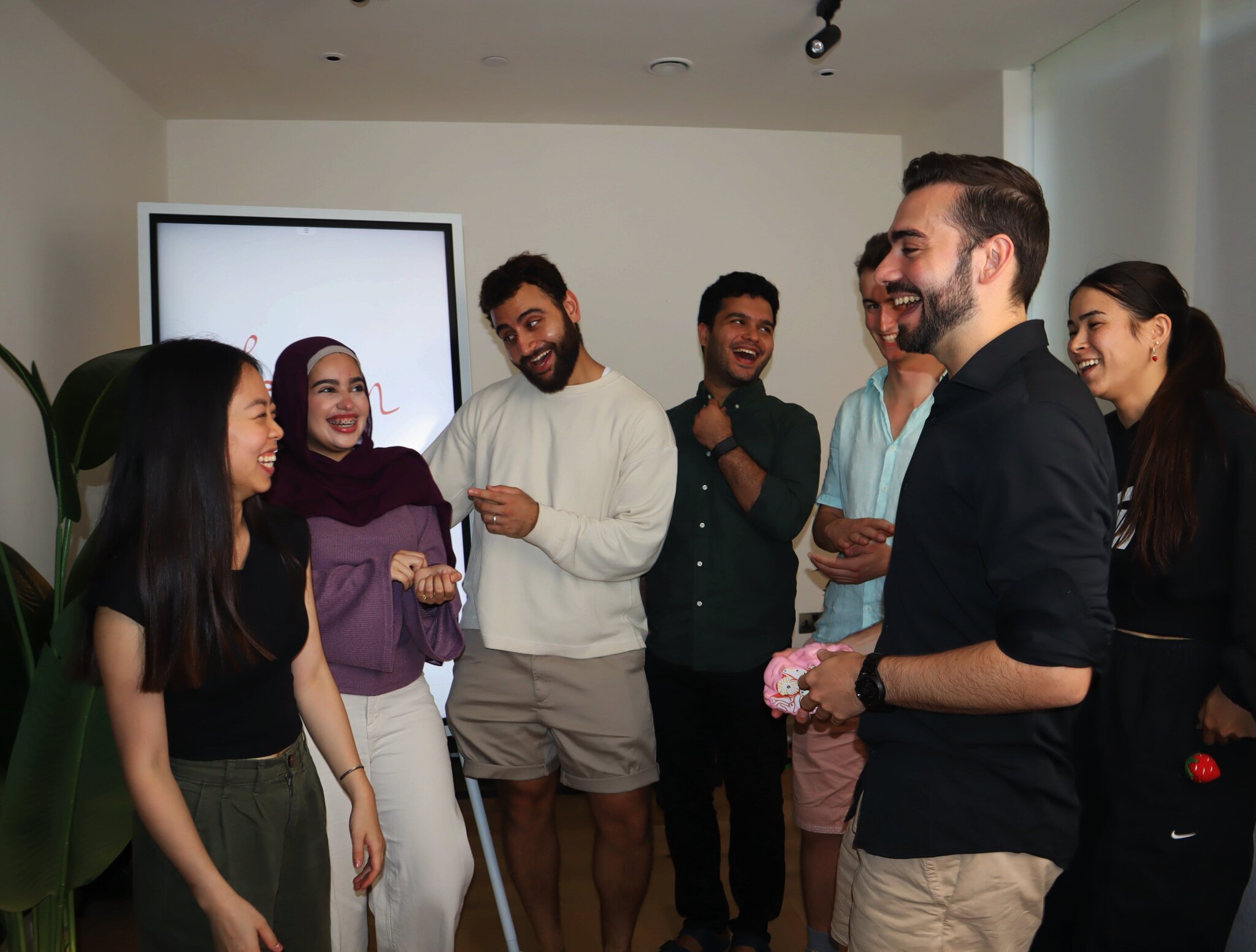
Inside one London founder house rewriting the founder-house rules Dominic-Madori Davis 10:03 AM PDT · July 26, 2026 Six twentysomethings in East London have built what they say is the anti-San Francisco hacker house. The goal is a “holistic improvement in life,” rather than “12 weeks, Demo Day is coming,” Rowan Aldean, 26, explained.
Intrigued, I spent an afternoon visiting the house, meeting its residents, and doing a vibe check. I arrived after Aldean escorted me through the clean sidewalks of a new East London development to where the six-story building stood facing the water.
The house is called the London Island Founder House — or “Lift House” — and Aldean and his wife, Zahraa, 22, an upcoming pharmaceutical research PhD candidate, have lived there since May, just a few months after it officially launched in March. Aldean sold his previous company last year for millions , he said, and now runs an "applied AI" startup that helps companies learn how to deploy agents.
Like all hacker houses, Lift House is part startup workspace, part co-living space. The house is named after both its lift — that is, its elevator — and its mission to uplift tech founders, Aldean said. It’s one of the very few co-living hacker houses to exist in London (compared to San Francisco, where dozens — if not hundreds — are scattered around the city at any given time).
Lift House is a bet that U.K. founders can build successful companies without mimicking the over-the-top hustle culture of Silicon Valley.
Founders have described stories of San Francisco hacker houses illegally running in warehouses, throwing full-on galas, or setting up in a tent or espousing punishing, 72-hour sprints typical of the “996” work culture.
“I don’t expect the performative and over-the-top events will be a thing here,” Aldean said, and pointed to one of London’s most successful AI companies, DeepMind. “They’ve won Nobel prizes and built frontier innovation without any song and dance.”
Instead, Lift House is part of a trend called “Londonmaxxing,” in which founders attempt to optimize everything the London tech scene offers. The London ecosystem feels less showy and less startup bro-y than San Francisco, but its founders share similar ambitions: success, wealth, and market domination. London AI startups have raised $12 billion so far in 2026, out of $14.7 billion raised by all London startups, according to Dealroom. Six companies have raised more than $500 million: Wayve, Superintelligence, ElevenLabs, Recursive, Ineffable Intelligence, and Isomorphic Labs, the latter three of which were founded by DeepMind alumni. The excitement from AI has boosted the morale of the U.K. tech scene, inspiring a new generation of founders, like those in the Lift House, to take big swings.
The timeline for living on Lift House is flexible — some people have stayed for a month; others intend to stay for at least six months. They buy their own groceries, Aldean said, although they often cook together and share ingredients. Cleaning is split among the group. Everyone declined to share information about the rent they pay.
The residents of Lift House aim for a balanced approach toward ambition, each one of them tells me — an almost unheard-of idea by San Francisco startup standards.
On Sundays, the group will journal together, a practice introduced by David Amor, 28, who runs a brain coaching and training company, helping founders and business leaders understand more about their brain and how it can help optimize business performance. The idea of journaling is to help everyone track how much time they spent in nature that week, how well they ate, and how much they moved their bodies.
“I’m eating healthier, working out more, and sleeping more,” Luke, 27, who runs an AI-marketing company, said about living in the house. “I always make sure to have lunch now, which is something that is simple, but I wasn’t doing before I lived here.” (Luke asked that his last name be withheld.) Tuesdays evenings are for volleyball, where the founders play on the house team in a local league.
After dinner on other evenings, Wan Ying L, 25, who just left an AI startup and is working on a new idea, might play the piano in the living room. Sometimes the group plays Catan or visits art exhibitions together.
Presence Plumb, 25, is a tech strategist. She likes to host rooftop dinner parties, serving dishes that reflect the different nationalities in the house — from Iraqi to Spanish — while invited founders, researchers, investors, and operators chat about tech trends and investments.
“It’s a bit calmer, balanced, authentic in a way,” she said of people in the London ecosystem. “They don’t want too much of that only startup tech bro vibe. They want a bit of balance.”
Each founder follows their own schedules for a typical workday. Amor, for example, is up by 8 a.m. and gives himself exactly 30 seconds after waking up before jumping into his morning work. “I have a clear objective of ‘this is what I want to do in the first half of the day, when there’s no distractions.’” After his morning work routine, he takes a cold shower, “because it increases your dopamine by 250% and that gives me that motivation, that spark,” he said.
Luke, meanwhile, is up at around 8:30. His co-founder, Varun, 27 (who asked that his last name be withheld), typically travels to the Lift House to co-work, and the duo starts work at around 9 a.m. with a team call.
Aldean rarely wakes before 10 a.m. unless something big is happening, like a “crazy angel [investor] call,” he said. When asked what makes this house uniquely British rather than a wellness-focused Silicon Valley founder house, Aldean joked: “Well, we drink tea together like Brits, and in SF folks just drink filtered coffee.” More seriously, he spoke of how British founders face a different kind of pressure than those in the U.S. They must navigate a cultural aversion to risk, an inclination toward humility, and a shame associated w...
AIPROPX is an independent multi-source news index — we track, compare, and connect coverage from across the web into one place you won't find anywhere else.