This is one outlet's own report from Tehran Times — the article as it was filed. Other outlets are covering the same event; open the full story to compare every source side by side.
TEHRAN - While the United States boasts some of the world's most advanced military technology, operating close to Iran's coastline presents a formidable challenge; Tehran can rapidly mass large numbers of relatively inexpensive drones and missiles near its own shores.
Crucially, this geographic advantage means that if American ground troops were ever deployed, they would effectively become sitting ducks for Iranian forces, who are lying in wait and ready to hunt them down.
The first option is to capture or blockade Kharg Island, which is of immense strategic importance to Iran. Roughly 90 percent of Iran's crude oil exports are shipped through this island.
Kharg Island is located in deep waters, allowing large oil tankers to dock there. Much of Iran's coastline, by contrast, cannot accommodate such large vessels, although smaller tankers could still continue exporting limited quantities of oil.
Mark Cancian, a senior adviser at the Center for Strategic and International Studies and a former U.S. military officer, argues that given the overwhelming capabilities of the U.S. Navy and Air Force, capturing Kharg Island would be militarily feasible.
However, retired Vice Admiral Robert Harward, former Deputy Commander of U.S. Central Command, warns that holding the island afterward could become a nightmare for the United States. According to Harward, once American troops are stationed there, they would become easy targets. Iran could launch thousands of inexpensive drones and missiles from its nearby coastline, overwhelming American air defenses and striking the small island repeatedly. Another important consideration is the political dimension.
Some political analysts argue that President Trump would seek to avoid damaging major oil facilities because doing so would drive up global oil prices. Consequently, protecting those facilities throughout the conflict would become extremely difficult. Even Mark Cancian, despite believing that the island could be captured, concludes that keeping American troops stationed there would be extremely dangerous. For that reason, he believes the operation would ultimately create more costs than benefits.
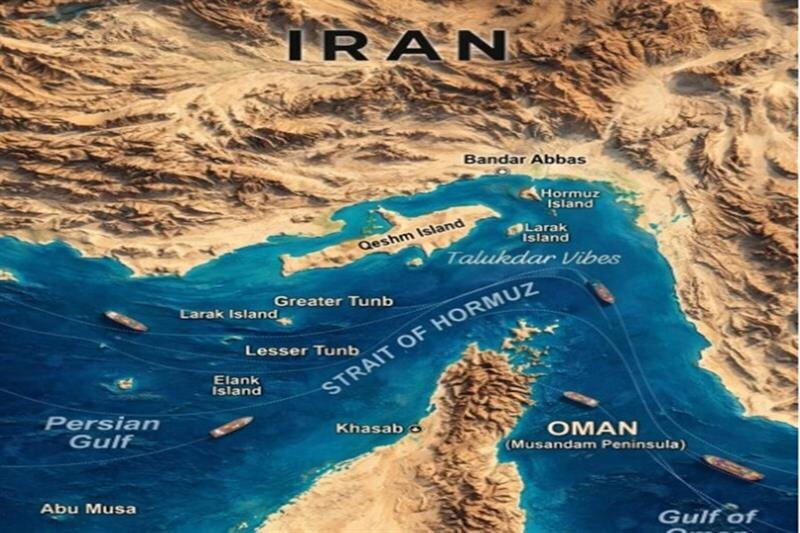
The second proposal involves attacking Larak Island, located at the narrow entrance to the Strait of Hormuz. The island's mountainous terrain plays a significant defensive role. Iran has reportedly constructed hardened underground bunkers inside the mountains, where it has deployed anti-ship missiles and radar systems. Experts at the U.S. Naval War College argue that because these Iranian weapons are deeply buried underground, destroying them would require the United States to expend missiles that are many times more expensive than the targets themselves, making such an operation highly costly.
Milan Vego, a noted naval historian and strategist, writes that if American warships approach Larak Island, they would come within close range of Iran's coastline. This would eliminate the advantage of conducting long-range strikes and expose U.S. vessels to attacks from Iranian coastal missile batteries and fast attack boats. Moreover, any large American destroyer entering the area would almost certainly be detected by Iranian radar systems, and Iran also benefits from intelligence provided by Chinese and Russian satellite networks.
Based on these considerations, both Milan Vego and experts at the Naval
War College conclude that this plan is essentially impractical because the expected human and financial costs for the United States would be extremely high.
The third option involves seizing Abu Musa, Greater Tunb, and Lesser Tunb, islands located directly along the shipping lanes through the Strait of Hormuz.
Brandon Carr, a researcher at the Quincy Institute for Responsible Statecraft in Washington, argues that American commandos could likely remove Iranian forces from these islands through overwhelming firepower. However, he believes maintaining control afterward would become an enormous challenge. Even after capturing the islands, the United States would gain very little military advantage.
According to Carr, one of the basic principles of warfare is that forces unable to receive continuous reinforcements and supplies, or lacking hardened defensive positions, become highly vulnerable. Under such circumstances, American troops stationed on the islands would become easy targets for Iranian missile strikes and drone attacks. Meanwhile, Michael Knights, a military analyst at the Washington Institute for Near East Policy, argues that these islands could be captured and subsequently transferred to the United Arab Emirates, providing Washington with diplomatic benefits. After weighing these competing views, Brandon Carr concludes that although such an operation might achieve short-term success, maintaining control even for several weeks would be extremely dangerous. To keep American troops alive, the United States would need to deploy a large and costly defensive system, while gaining relatively little strategic benefit in return.
The fourth proposal involves intercepting or seizing Iranian oil tankers in the eastern section of the Strait of Hormuz. According to this commentary, similar measures were employed during previous periods of naval blockade against Iran. Retired Admiral James Stavridis, former Supreme Allied Commander of NATO, argues that in the open sea the military balance shifts significantly in America's favor. In open waters, the United States can fully exploit its long-range radar systems, aircraft carrier strike groups, advanced surveillance networks, and modern naval capabilities.
After two decades of war in Afghanistan, the United States learned that changing a country's government and politically controlling that country are two very different objectives. In Iran's case, the challenge becomes even more complex. Iran is not merely a state; it is a civilization with an ancient identity, a strong sense of national consciousness, and revol...
AIPROPX is an independent multi-source news index — we track, compare, and connect coverage from across the web into one place you won't find anywhere else.