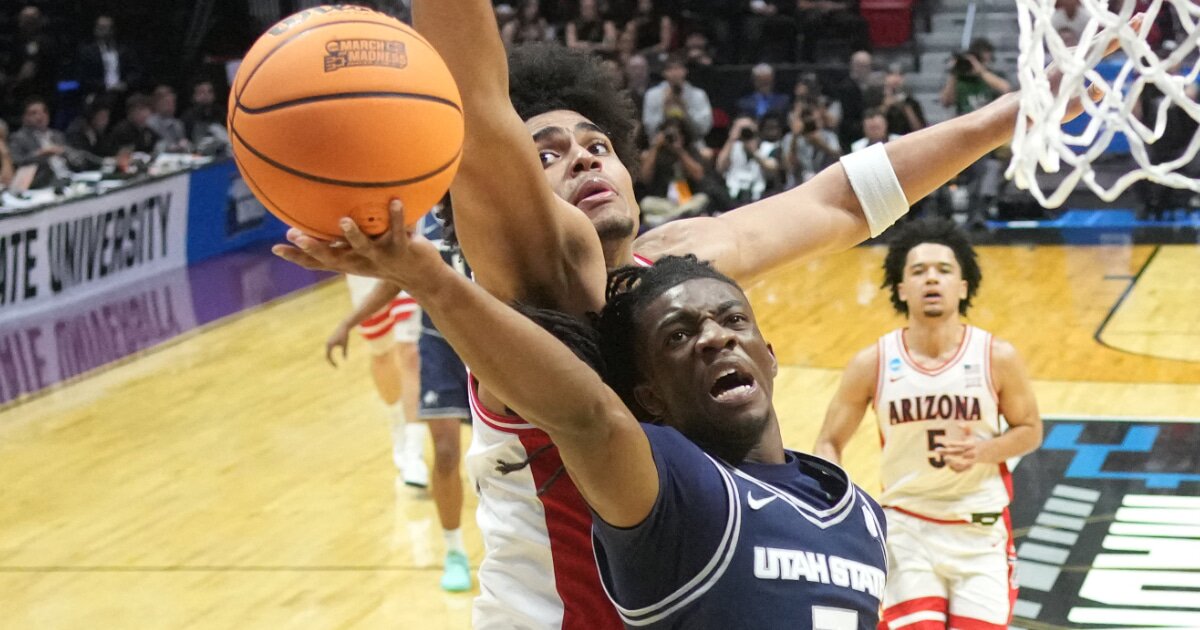
Utah State transfer guard Kolby King has committed to Auburn , according to On3’s Joe Tipton . He was part of an eligibility lawsuit in Ohio and is able to play in 2026-27 after a judge’s ruling.
King played the 2025-26 season at Utah State after starting his career at St. John’s , Tulane and Butler . With the Aggies, he averaged 7.5 points, 3.3 rebounds and 1.6 assists per game. His best season came in 2023-24 with Tulane when he put up 10.4 points, 3.6 rebounds and 1.8 assists on average.
$19.99 gets you a FULL year of On3 | Rivals national coverage
King was one of the 15 plaintiffs in a lawsuit filed in July, which resulted in a preliminary injunction. Xavier’s Filip Borovicanin and Cincinnati’s MJ Collins were among the group that filed suit after the NCAA announced an age-based, five-year eligibility rule change, as well.
The ruling allowed the athletes in the suit to enter the transfer portal outside of the NCAA’s window, as well. As a result, Kolby King will now get ready to make his way to Auburn to play for Steven Pearl and the Tigers.
The age-based eligibility model calls for an athlete’s eligibility clock to begin upon initial full-time enrollment in college or at the beginning of the academic year following their 19th birthday, whichever occurs earlier. The age-based eligibility implementation began this summer. Recruits starting in 2027 are age-based only.
The lawsuit in Ohio was one of a number the NCAA faced after announcing the age-based eligibility rule. A separate, landmark case in Colorado has become the most notable after Judge Charlotte Sweeney granted a preliminary injunction that stated all athletes from the Class of 2022 can be eligible for the 2026-27 school year.
After granting the injunction, Sweeney later clarified her ruling and said transfer rules would not enjoined, meaning athletes could not enter the portal if they fall under the class in that case. Additionally, roster limits in place under the House v. NCAA settlement also remain in effect, meaning schools cannot go beyond that figure if athletes decide to come back.
The NCAA then filed for a stay of the injunction pending appeal, which Sweeney denied this week. However, the governing body directly appealed to the Tenth Court, although the injunction remains in place.
In the meantime, NCAA chief legal officer Scott Bearby reaffirmed this week the association does not plan to retroactively apply the age-based eligibility rules. The organization also called for the permanent reversal of Sweeney’s decision.
“The Division I Cabinet, including its student-athlete members, carefully considered whether to make the age-based eligibility rule apply retroactively, and decided that doing so would not be in the best interest of all current and future college athletes,” Bearby said .
“We stand behind and will continue to fully defend the membership’s decision. The injunction should never have been granted, and we have asked the Tenth Circuit to permanently reverse it.”