This is one outlet's own report from Wired — the article as it was filed. Other outlets are covering the same event; open the full story to compare every source side by side.
Gene-Edited Puppies Will Melt Your Heart—but Won’t Trigger Your Allergies
As an undergrad at Harvard and then a research associate at Columbia University, he was using Crispr, the Nobel Prize–winning gene editing technology, in lab experiments. He wondered, could he use gene editing to make allergy-free dogs—and help his pet ownership dream come true?
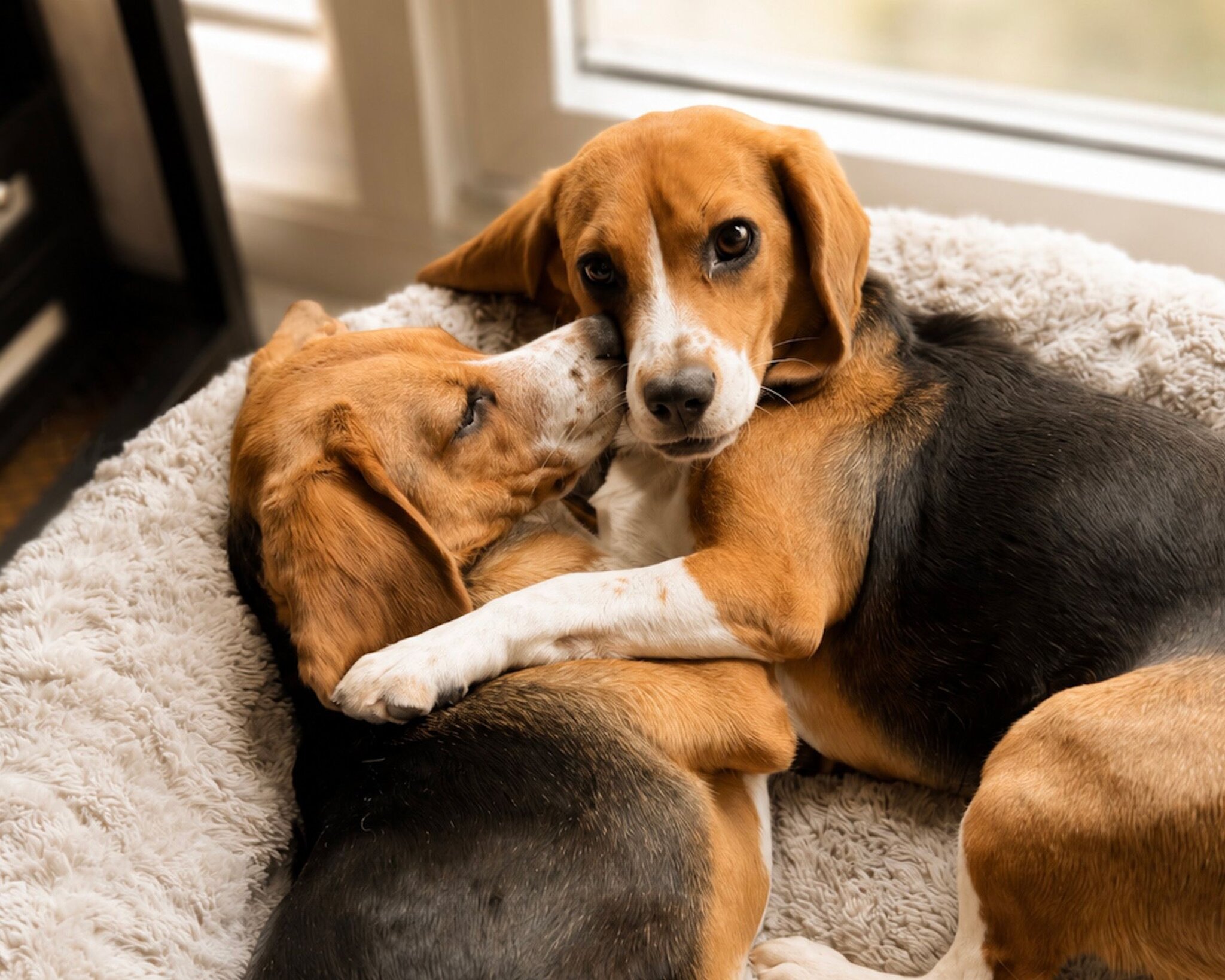
The answer came in beagle form. Bailey and Alfie are two young beagles that can do tricks like any other dog, but they lack the protein that causes sniffles. They’re the culmination of years of work at Kindred Companion Sciences, a biotech company Walker founded in 2020 that emerged from stealth this week with the two pups in tow.
In a scientific paper published on Wednesday in The Crispr Journal, Walker and his colleagues detail how they used gene editing to remove an allergy-causing protein in the dogs. The culprit for most dog allergy-sufferers is a protein called Can f 1, which is found in dander, hair, and saliva. It’s the most common dog allergen, causing reactions in more than half of people with dog allergies. (There are several other Can f proteins that can cause allergies.) Studies have found that even dog breeds labeled as hypoallergenic often carry equal or higher levels of these proteins compared to other dogs.
“This motivated the question of whether we could use gene editing to directly get rid of that allergen at its source,” Walker says.
The Kindred team used Crispr to knock out the gene that produces Can f 1 in skin cells taken from a female beagle. They then used a cloning method called somatic cell nuclear transfer to inject the edited cells into eggs from donor beagles. After creating 25 embryos with the Can f 1 gene edit, they transferred them to a surrogate. Two of the embryos developed to term, resulting in the birth of two puppies.
The dogs’ birth weights were normal, and they had no congenital abnormalities. But the team needed to know whether the allergy-inducing protein had actually been eliminated. First, they sequenced the dogs’ DNA to confirm that the edit was present. Then, they took samples of the dogs’ saliva and dander to measure levels of the Can f 1 protein. Testing showed no detectable protein compared to samples from non-edited dogs, including a beagle, poodle, and golden doodle, which had clear Can f 1 signals.
To make sure the dogs wouldn’t cause allergic reactions in people, Walker served as the guinea pig for a skin prick test, which involves applying small drops of allergens in liquid form on the skin and gently pricking the surface to see if there’s a reaction. Drops from the edited dog did not elicit a skin response ,while drops from a non-edited dog did.
The true test, though, was whether someone could live with one of the dogs without a reaction. Walker has been the lucky volunteer for that test: He has lived with Bailey for the past year and a half. During that time, he’s never had an allergic reaction, but he has experienced the joy of having a canine companion. During our Zoom call, Bailey was scampering around in the background, and Walker picked her up to show her off at one point with nary a sniffle or watery eye in sight. (The other dog, Alfie, lives with his cofounder Nick Gavin.)
This isn’t the first attempt to make allergen-free pets using gene editing. A few years ago, a cat graced the cover of the same journal that published Kindred’s findings, when researchers from Virginia-based InBio published a study on using Crispr to edit the main allergen in cat cells. They did not produce any gene-edited cats, but a group in South Korea did and published about it in 2024. The resulting cat, named Alsik, had “extremely low” levels of the cat allergen Fel d 1 compared to normal felines.
Fyodor Urnov, a gene editing expert at UC Berkeley, approves of this use of Crispr. “Editing can, and should, be applied to solving legitimate problems that humanity has,” he says. “Dogs are a human's best friend, now potentially more so because of one tiny gene edit.”
He says gene editing could also be used to improve dogs’ health, particularly in cases where problems have been induced by breeding, while keeping the rest of the breed’s traits intact.
Alfie and Bailey continue to receive regular veterinary exams and they will for the rest of their lives. The Kindred team also checked for so-called off-target edits—unintentional changes at the wrong place in the genome—and didn’t find any. All of the animal research was conducted at licensed facilities under veterinary supervision, Walker says.
The company started with beagles because of their use in animal research, but it plans to expand to other breeds and has an interest in making allergy-free service dogs. Walker says the goal is to create “founder animals” with the cloning technique that could be then used for breeding more dogs that lack the allergen.
“Every cell that's derived from that embryo carries the edit, which means that if you mate two animals with the edit, their pups will also have the edit,” Walker says. He did not provide a timeline on when the allergy-free dogs will be commercially available.
He says the company is not interested in using gene editing for “novelty” or “cosmetic” reasons. A gene editing firm in Texas, Embryo Corporation (formerly the Los Angeles Project), however, is trying to engineer glow-in-the-dark rabbits and actual unicorns. The question of enhancement has also been a hot-button issue for human gene editing.
Walker is just happy to finally be a dog owner. “She's just brought so much joy and activity and community into my life,” he says of Bailey.
AIPROPX is an independent multi-source news index — we track, compare, and connect coverage from across the web into one place you won't find anywhere else.