This is one outlet's own report from Kotaku — the article as it was filed. Other outlets are covering the same event; open the full story to compare every source side by side.
It is the end of Kotaku 's first Warp Week, in which we've take you back in time to a specific year in video game history to look at the good, the bad, and the strange. This time we set our sights on 2002, reflecting on the PlayStation 2, GameCube, and Xbox era; the games that were pushing the limits of the medium and that were shaping conversations about its future. Naturally, we had to end the week by looking back at the best games from the year. We didn't rank them, so don't get mad at the order; just tell us the things you think should have been on this list in the comments!
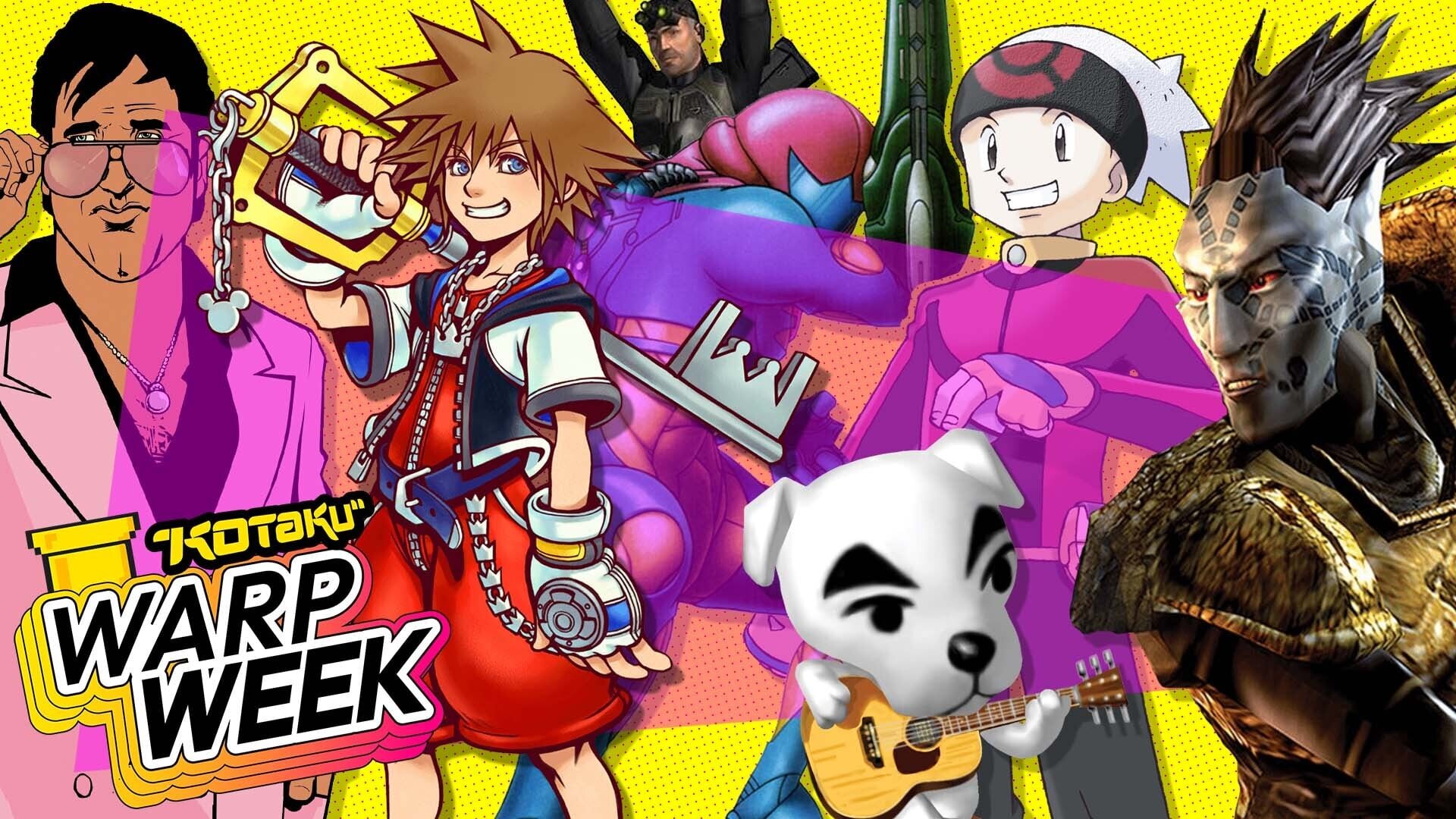
Rockstar’s open-world sequel to GTA 3 could have ended up on this list based solely on its soundtrack and vibes. But Vice City is so much more than that. It offers up what was, at the time in 2002, a vast urban playground drenched in neon and sunshine. Today, GTA: Vice City might seem small, but at the time I remember playing it for hours and feeling like I had only scratched the surface of its 1980s simulation. — Zack Zwiezen
Ten years prior to the release of The Elder Scrolls III: Morrowind , a game arrived on PC called Ultima Underworld: The Stygian Abyss , and it changed my life. The landmark release from what would later become Looking Glass Studios made me feel immersed in its world like no game before it had. Not only could I swing weapons at my enemies—standard stuff even then, of course—but I could pick objects up, drop them, throw them, steal them, eat them. And I was no longer limited to the grid-based movement of so many other dungeon crawlers and RPGs, but I could move step by step, forward or back, and at any angle I wished. I could even look up and down, something the following year’s first-person sensation, Doom , wouldn’t match!
Of course this kind of immersive experience continued to advance rapidly throughout the decade that followed, with games like 1994’s System Shock , 1999’s Thief , and Bethesda’s own Arena and Daggerfall , among many, many other games. But it wasn’t until 2002’s Morrowind that I felt another Ultima Underworld -style leap had taken place. Here was a massive world, not quite as massive as Daggerfall ’s but so much more cohesive and memorable, more hand-crafted and alive. Here was a game in which I could pursue the main quest and become a savior to all, or spend dozens and dozens of hours wandering around, pursuing side activities, and casting spells or finding items that made me invisible, or that let me fly, or that made me zoom around at incredible speed. You never knew what remarkable new item you might discover, what new ability you might attain through magic or other means.
Part of what made Morrowind feel so immersive and alive was its willing to risk giving you game-breaking abilities, and while later Elder Scrolls games have of course been more refined and elaborate, they’ve also been a bit more limiting, a bit more rigidly structured, not quite as filled with the sense that just about anything is possible. And as a result, no big fantasy RPG since has quite pulled me into its world the way Morrowind did, all those years ago. — Carolyn Petit
For a large chunk of 2002 (and 2003), Blizzard’s incredible RTS completely consumed my weekends as a young lad. I played through the campaign, burning voice lines and sound effects into the deepest parts of my brain. “ Work, work” is still seared into my gray matter decades later. Then I discovered online multiplayer and the ability to make my own maps, and Warcraft 3 stole away many more hours of my youth. What a game. And what a damn shame we’ll never get a Warcraft 4. — Zack Zwiezen
As much as I love New Horizons , sometimes I long for the days when Animal Crossing was on some real weirdo stuff. The original Animal Crossing was truly like nothing else, not even the other cartoonish sims like Sim City and Harvest Moon that it tends to be grouped with now. The characters were strange, even rude animal neighbors; its world was based on a real-time clock that slowed progress to a year-long crawl; and gameplay mostly consisted of finding cool things to decorate your house with. And yet Animal Crossing was so compelling in that strangeness: we fell in love with our neighbors’ quirky personalities and the steady changes we saw take over our towns from day to day and month to month. Animal Crossing has since gotten bigger, kinder, and more full. But I still get a lot of joy out of revisiting that strange, cylindrical world on the GameCube where a mole yelled at me for shutting off without saving, and where I was in constant, horrific debt to a raccoon. — Rebekah Valentine
There are certain games that stick with me forever. Splinter Cell is one of them. Not just because it was a tense stealth-action game that offered many options and felt great to play, but also because it looked incredible. I remember being truly floored by the lighting and shadows in the original Splinter Cell. It seemed photorealistic. Sure, looking at it now, it shows its age, but I still contend that it holds up pretty damn well considering Ubisoft put it out over 20 years ago. This is also the game that gave the world Sam Fisher, voiced by Michael Ironside, and what a gift. Ubisoft, please make more Splinter Cell games. — Zack Zwiezen
I bet you can finish this phrase, “When you walk away, you don’t hear me say -” and I bet that as you do, you can see the exact commercial playing in your head that taught the phrase to you. Kingdom Hearts was a cultural moment. It’s Final Fantasy for kids born in 1997. Tetsuya Nomura worked incredible eldritch magic to get Disney to go, “yeah sure, why not?” granting Square Enix access to the most protected and coveted IP on the planet, which the mad-scientist developers then spliced together with their own franchise of moody twinks with big swords and somehow, it fucking worked . Kingdom Hearts worked because it both did and did not take itself seriously. Sora could bounce around with Donald Duck and Goofy, swinging a f...
AIPROPX is an independent multi-source news index — we track, compare, and connect coverage from across the web into one place you won't find anywhere else.