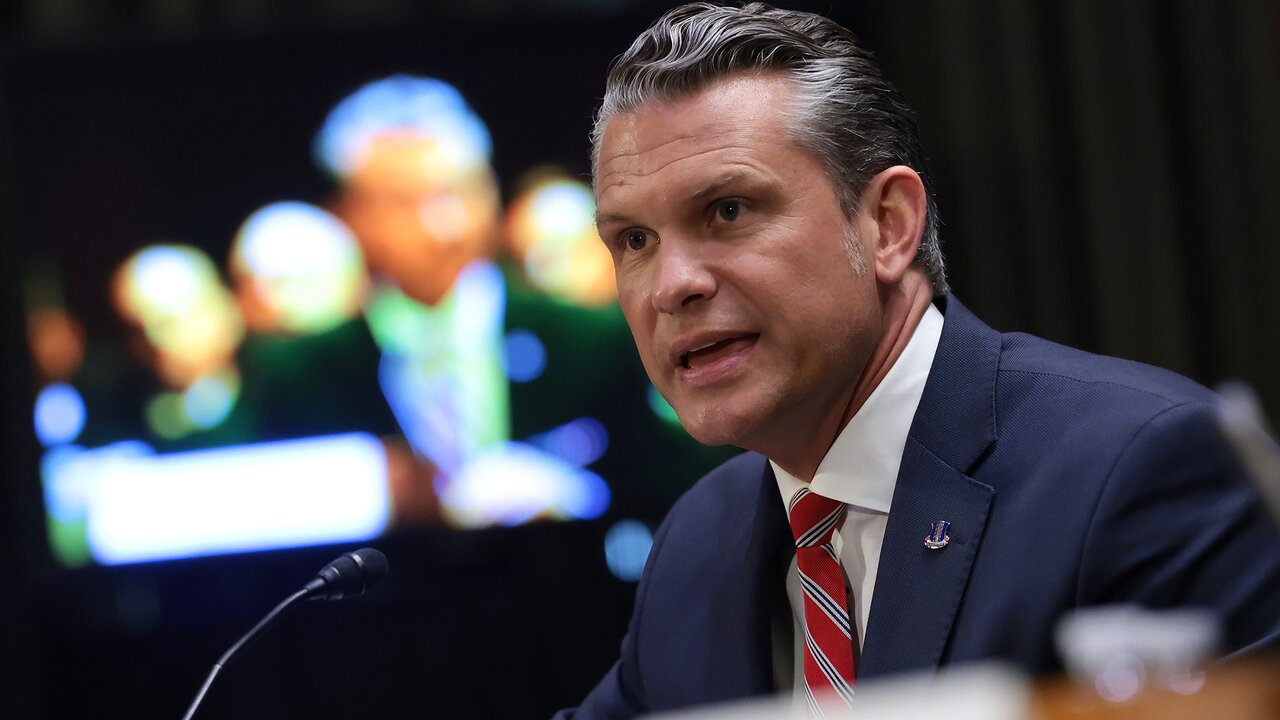
As recently as 2019, U.S. military health researchers had concerns about testosterone levels among the troops. Their worries were not that male service members didn't have enough of the hormone, as current Defense Secretary Pete Hegseth fears. Instead, experts worried about the troops' inappropriate use of testosterone replacement therapy (TRT), the practice of using injectables or gels to increase a person's circulating testosterone.
"Out of every 1,000 male service members, almost 3 are inappropriately receiving TRT," researchers wrote in a report published on Health.mil , the military's health system website. (That report is available on the Wayback Machine .)
This could lead to harmful side effects, the report authors noted.
"Those being inappropriately treated may experience adverse effects of the medication," including obstructive sleep apnea and edema, the report continued. TRT may worsen sleep apnea and cause swelling in the limbs from water retention . "These adverse effects have the potential to impact deployability and medical readiness."
In short, supplementing testosterone unnecessarily could reduce military readiness, rather than boost it, per the report authors. Now, in a reversal of these concerns, more service members might find themselves offered TRT in the wake of a new military policy announced July 15 by the Department of Defense. It states that all active-duty and reserve service members' testosterone levels will be tested annually starting at age 30.
It is unclear how the policy might affect female service members. Live Science contacted the Department of Defense, which declined to answer questions about the expected testing protocol or criteria for offering service members TRT.
Such an initiative goes well beyond what medical organizations recommend regarding hormone screening for men, experts told Live Science. And while the screening could catch some service members who actually need treatment, the policy might also lead to overtreatment and, in turn, unwanted side effects.
"One of my big, big concerns around this is, how are these tests going to be conducted?" said Luke Cox , a lecturer in sport and exercise science at Swansea University in the U.K. who studies performance-enhancing drugs, including steroidal hormones like testosterone.
Testosterone and military readiness
Testosterone has strong cultural connections with hypermasculinity. As the primary hormone responsible for the development of male sexual characteristics, it's been associated with concepts of strength, aggression and virility . Hegseth continued this pattern by tying the hormone to military readiness in a video announcing the policy change.
"[I]t's about restoring and optimizing your natural capabilities, projecting your longevity and ensuring you have the biological foundation required to sustain the fight," Hegseth said.
That rhetoric aligns with promises made in advertisements for TRT , which pitch testosterone as a tool to "attain that higher level of living," Cox told Live Science. The clinical trial data is more circumspect, however.
In men with genuinely low circulating testosterone levels — often defined as lower than 300 nanograms per deciliter (ng/dL) — TRT does have benefits. (This 300 ng/dL threshold isn't the universal definition for "low testosterone," as not everyone below that line has troubling symptoms. We'll unpack that later.)
Much of the clearest evidence of benefit is for sexual symptoms: In a large clinical trial , men with low testosterone saw increased sexual desire and sexual activity, such as masturbating or having sex, after TRT. For men whose levels are not low, additional supplementation hasn't been shown to have a clear benefit in the bedroom .
TRT has been shown to improve mood and reduce depressive symptoms in men with low testosterone, and in older men, it's also been shown to improve bone density . Boosting testosterone also boosts muscle mass in middle-aged and older men.
One side effect of TRT is that it often dramatically lowers sperm count, because supplementing testosterone prompts the body to stop making it in the testes. (Image credit: SCIEPRO/SCIENCE PHOTO LIBRARY via Getty Images)
Most of this research has been done on men over age 40, because testosterone naturally declines with age. Low testosterone is rarer in younger men, although exact estimates of its prevalence vary . Estimates also vary among older age groups, but a large study called the European Male Ageing Study found that 0.1% of 40- to 49 year-olds had low testosterone, along with symptoms such as fatigue or low sexual desire. That number rose to 5.1% among those in their 70s.
In 2024, 42.8% of active-duty military members , including men and women, were 25 and younger. Only 8.3% were 41 or older. But the prevalence of low testosterone is generally on the rise, said Dr. Joshua Halpern , chief scientific officer and regional medical director at Posterity Health and a reproductive urologist at Northwestern University's Feinberg School of Medicine.
It will be very important for them and their physicians to understand the risks of treatment and the alternatives that may be more appropriate for preserving their fertility.
Dr. Joshua Halpern, Posterity Health and Northwestern University's Feinberg School of Medicine
Studies suggest that testosterone levels are lower, on average, in young men today than they were in the year 2000. Scientists have theorized that this trend may stem from increases in body mass index , as well as other factors, such as sedentary lifestyles, changing diets and exposure to environmental toxins, according to a 2020 article in Urology Times .
"While active service members are typically among the healthiest of men, and therefore at lower risk for testosterone deficiency, a significant proportion of service members could have a low testosterone number," Halpern told Live Science. "But that doesn't necessarily mean they should receive treatment."...