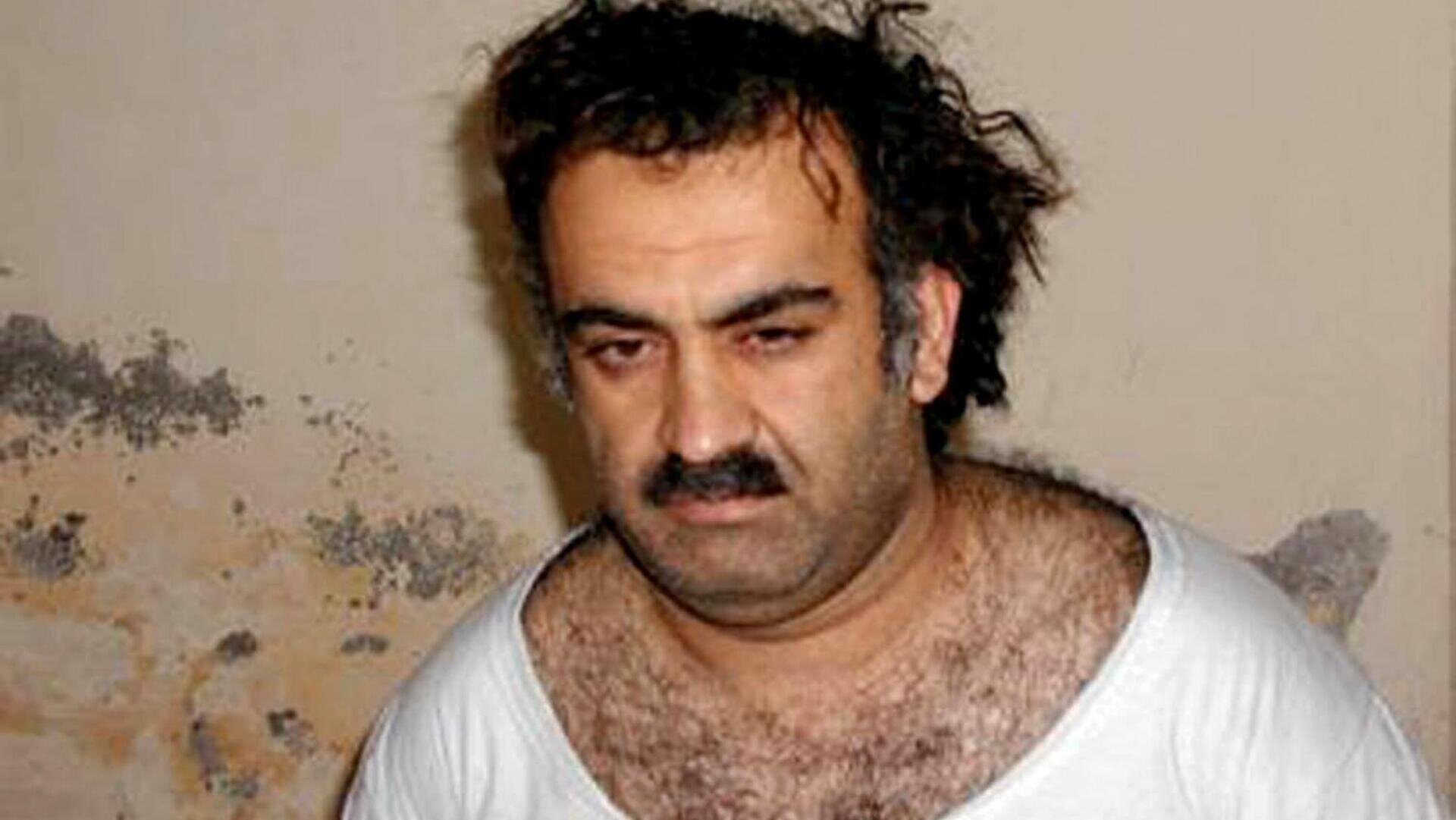
A spokesman for the US military court at Guantanamo Bay said Thursday that Khalid Sheikh Mohammed – the alleged mastermind of the September 11, 2001 attacks on the United States – will go on trial before a US military court in June 2028. Mohammed, also known as "KSM", was considered one of Osama bin Laden's top lieutenants before he was captured in March 2003.
Issued on: 27/08/2026 - 15:27 Modified: 27/08/2026 - 16:50
By: FRANCE 24 Khalid Sheikh Mohammed, the alleged mastermind of the September 11, 2001 attacks on the United States, will go on trial before a US military court in June 2028, an official said Thursday.
A spokesman for the US military court at Guantanamo Bay, Cuba , where Mohammed is incarcerated, said the trial would begin on June 5, 2028.
Mohammed, also known as "KSM," was considered one of al Qaeda leader Osama bin Laden 's top lieutenants before he was captured in March 2003 in Pakistan .
He was imprisoned in secret CIA facilities for three years before arriving at the US naval base in Guantanamo Bay in 2006.
To display this content from YouTube, you must enable advertisement tracking and audience measurement.
One of your browser extensions seems to be blocking the video player from loading. To watch this content, you may need to disable it on this site.
His trial has been repeatedly delayed and a plea deal that would have seen the death penalty taken off the table was withdrawn last year.
The trained engineer – who has said he masterminded the 9/11 attacks "from A to Z" – was involved in a string of major plots against the United States, where he attended university.
His deadliest was the 9/11 operation, which saw nearly 3,000 people killed after hijacked planes rammed into the Twin Towers in New York and the Pentagon in Washington, with another crashing in a Pennsylvania field.
Mohammed also claims to have helped in the 1993 World Trade Center bombing that killed six people and to have personally beheaded US journalist Daniel Pearl in 2002.
The United States uses Guantanamo, an isolated naval base, to hold militants captured during the "War on Terror" that followed the September 11, 2001 attacks in a bid to keep the defendants from claiming rights under US law.
The facility held roughly 800 prisoners at its peak, but they have since slowly been sent to other countries. A small fraction of that number remains.
Page not found The content you requested does not exist or is not available anymore.