The season gone (1966/67) had been disappointing, to say the least. With a squad that looked capable, Ian McColl’s team had spent most of the season looking nervously at the relegation places and finished in seventeenth position. A thrilling fifth-round FA Cup contest against Leeds that required three games to sort a winner gave an indicator of what this team could be capable of, but really, the high points of 1966/67 were few and far between!
The youth team had brought high hopes and silverware in the shape of the FA Youth Cup, and a number of that team had made their full debuts.
Many supporters (and I was one of them) had great expectations coming into this new campaign that Kerr, Hughes, Todd and Suggett would augment the experience and skill of Jimmy Monty, Slim Jim Baxter, Bullet Mulhall, Cec and Len the flowerpot men, Martin Harvey, Geordie Herd, big Neil Martin and, of course, King Charlie Hurley to deliver a cracking season.
Ian McColl had added to this squad in the close season. Brian Heslop, a young nineteen-year-old defender who could play all three half-back positions, had been bought from Carlisle for £5,000. Not too much was known about this lad; he seemed to be one for the future.
McColl had also gone to the other end of the player spectrum and, for the same price, signed the very experienced Ralph Brand from Manchester City. Brand had a stunning record from his time at Glasgow Rangers. The thirty-one-year-old was still Rangers’ top scorer with 206 goals in 317 games when he came to Sunderland. In Brand’s earliest years at Ibrox, Ian McColl had been Brand’s team captain. From 1960 to 1965, Brand had Jim Baxter playing behind him and supplying a veritable deluge of assists from that famed left foot nicknamed “the claw”. This was a golden era for the Ibrox team that Brand and Baxter were key ingredients of, as Rangers went on to dominate north of the border, winning three Scottish titles, three Scottish Cups, four Scottish League Cups and finishing runners-up in the 1960/61 UEFA Cup Winners’ Cup. Brand had a phenomenal record of scoring in cup finals and the big games for Rangers.
When Ian McColl had become Scotland manager in 1960, he capped Brand eight times in two years. Brand rewarded him with eight goals in these eight games. It was only the emergence of Dennis Law that restricted Brand’s international career.
In 1965, Brand had been transferred to Man City for £30,000, around the same time his on-field team-mate (and lifelong friend) Jim Baxter had gone to Sunderland.
Brand endured a torrid time at Maine Road, suffering from injuries, a loss of form and a change in the managerial direction of Joe Mercer and Malcolm Allison. He played only twenty-two games in two seasons, scoring three goals! Ian McColl stepped in with a £5,000 offer and Brand agreed to the move, hoping to re-ignite the autumn of his career alongside his former international manager/captain and his on-field partner in crime and mayhem, Slim Jim.
A single goal from Neil Martin at Roker Park against Middlesbrough the previous Saturday had got pre-season off to a winning start with an encouraging display. Hull City were the opposition for this warm-up game and Boothferry Park was the venue.
John Parke had been taken ill, so Len Ashurst was the only change to the starting eleven from the previous game. Heslop and Brand were on the bench and both were expected to play some part in the game.
With the season due to start at Elland Road the following week, this was a crucial workout for what probably would be the team that would start against Leeds in seven days’ time.
If Ian McColl was looking for a blistering start to this match, he got it, though not in the manner he would have preferred! He may have been thankful that he was not actually at this game. The rumour was he was in Glasgow running the rule over twenty-four-year-old inside forward/centre forward Alex Willoughby (a former team-mate of Brand & Baxter) with an average scoring record of a goal every one and a half games.
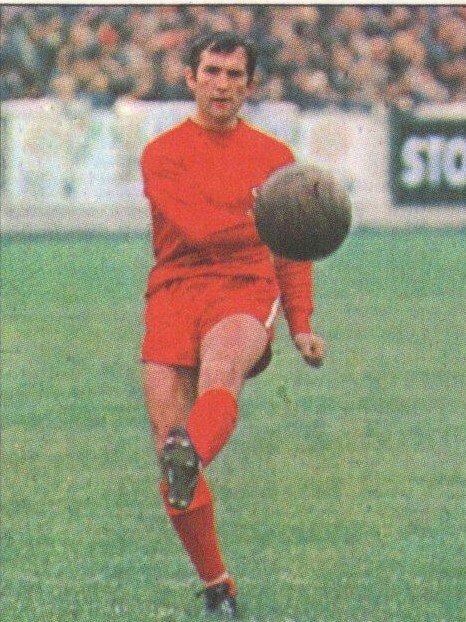
Sunderland had taken the field in their new all-red kit, but in a torrential downpour of biblical proportions.
Within ninety-two seconds, they had shipped two goals as Hull’s young wingers ripped into and past our two full-backs with alarming ease. Young left-winger Butler skipped past Cec Irwin and caressed a lovely cross that Heath, losing his marker Ashurst, flicked past Montgomery from close range.
Straight from kick-off, Sunderland lost the ball and Monty had to parry a raker of a shot from Houghton. The rebound fell to centre-forward Chris Chilton, who hammered in from fifteen yards out.
Sunderland had generally displayed an alarming inability under Ian McColl to come back from conceding goals, so this must have had the alarm bells ringing for the sizable number of Roker fans in the crowd. The team did respond to the setback, though, very quickly establishing a good amount of possession and looking dangerous as they worked the ball all over the park, with Todd, Herd, Suggett and Mulhall looking in particularly good nick.
On twenty-four minutes, George Mulhall lived up to his nickname as he bulleted a shot past Swan from thirty yards out to reduce the deficit. This was a lovely worked goal from defence through midfield and no more than Sunderland deserved.
With half-time approaching, Sunderland were in complete control, with Neil Martin giving a masterclass in mobile centre-forward play.
The second half saw Brian Heslop come on for Martin Harvey, for his second game, and Ralph Brand come on for goalscorer George Mulhall to make his debut.
Within seven minutes, Sunderland were leading by three goals to two. Neil Martin was the provider for both goals and the debutant Brand scored the brace. Both goals saw some sharp, accurate passing and movement. Neil Martin crossed from the right on fifty minutes, with Brand ghosting in to head past Swan for the equaliser. Just two minutes later, Martin controlled an a...