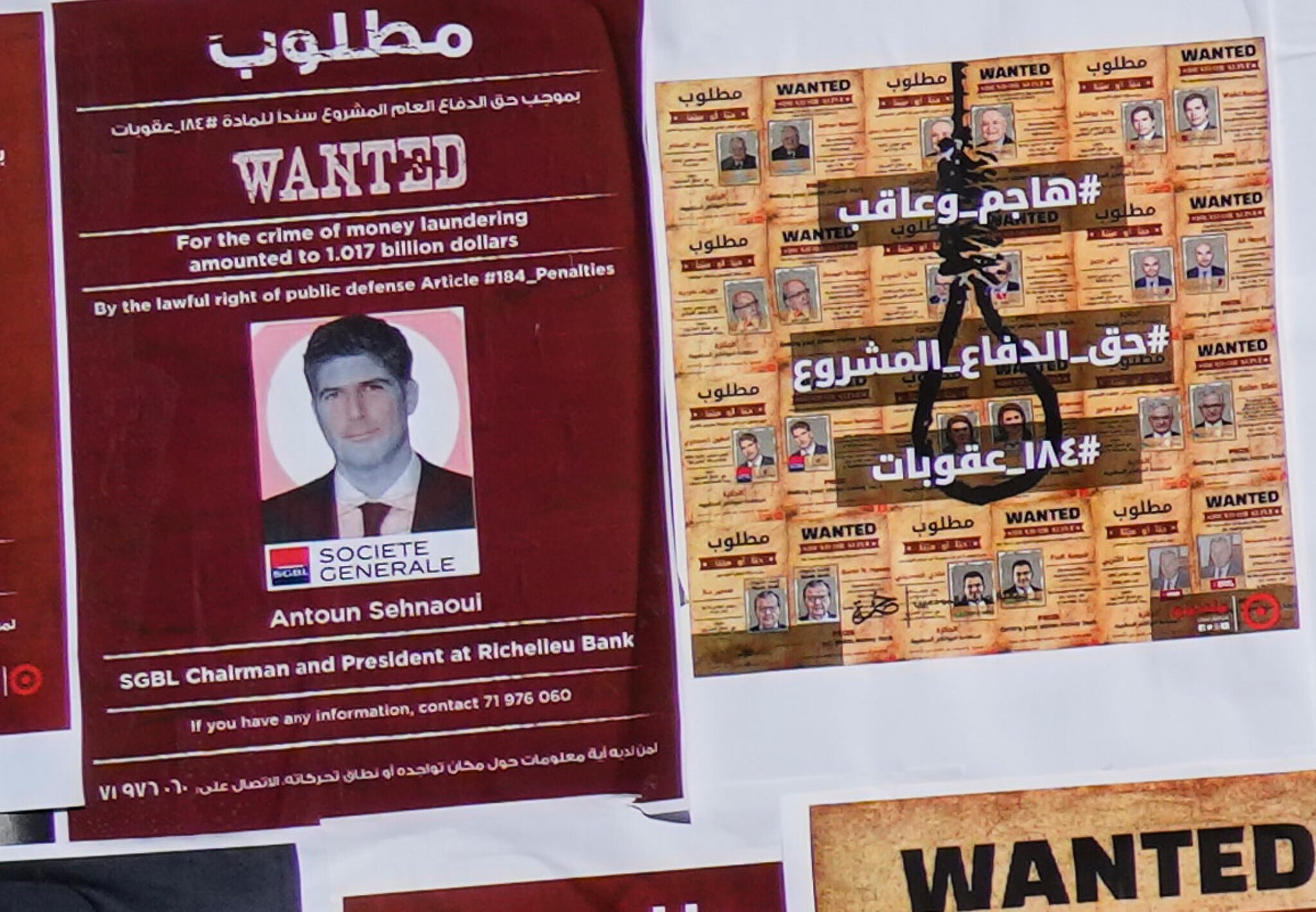
BEIRUT, Lebanon — More than a dozen Lebanese lawyers filed a complaint at the prosecutor's office in Beirut on Wednesday against a prominent local banker, saying he violated the country's laws by meeting with Prime Minister Benjamin Netanyahu in Washington, DC, this week.
Lebanon and Israel have been holding US-backed direct talks for the first time in decades over the past three months, seeking an end to the latest fighting between Israel and Hezbollah, the Iranian-backed Lebanese terror group. The talks are aimed at disarming Hezbollah, securing an IDF withdrawal from southern Lebanon, and progressing to a peace accord between the countries.
Lebanon's laws prevent its citizens from having contact with Israelis, as the neighbors have technically been in a state of war since Israel was established in 1948. A 1955 law bans dealing with Israel or having contact with Israelis and punishes offenders with up to 10 years in jail.
Axios reporter Barak Ravid posted a photo on X of the banker, Antoun Sehnaoui, sitting at a restaurant table with Netanyahu and his wife, Sara. Ravid wrote that Sehnaoui and former US envoy Morgan Ortagus hosted a dinner on Monday in memory of the late US senator Lindsey Graham that was attended by Netanyahu and US officials.
A Sehnaoui-linked website, This is Beirut, also reported details of what it called the "special dinner." Sehnaoui's lawyer in Beirut did not immediately respond for comment.
The complaint said Sehnaoui committed "the crimes of contacting and dealing with the Israeli enemy, violating the Israel boycott law, the crime of treason and state security crimes."
????????????????????????Lebanese businessman and banker Antoun Sehnaoui and former U.S. envoy Morgan Ortagus hosted a dinner in memory of Sen. Lindsey Graham at the Four Seasons in Washington, D.C., on Monday night ????????The event was attended by Israeli Prime Minister Benjamin Netanyahu and his wife… pic.twitter.com/00v3Q6EK28
— Barak Ravid (@BarakRavid) July 28, 2026
The latest conflict between Israel and Hezbollah started March 2, after the Lebanese terror group fired rockets into Israel to support Iran, its main backer. In response, Israel launched an aerial campaign and increased its troops' ground presence in Lebanon. Last month, Israel and Lebanon reached a deal calling for the Lebanese military to deploy in areas in southern Lebanon where Hezbollah had a military presence and influence, and for Israel to withdraw from its buffer zone in the south, dependent on Hezbollah disarmament. Conflict has also been limited since that agreement took effect.
One of the lawyers, Hassan Bazzi, said Sehnaoui violated the law and offended national sentiments. Bazzi said the lawyers hope the prosecutor's office performs its duties "effectively and swiftly."
Another lawyer, Mohammed Hajj Hassan, called Sehnaoui's meeting with Netanyahu "a public offense," and now the judiciary is expected to investigate the case, which could lead to an arrest warrant.
It was not immediately clear how prosecutors will deal with the case. In the past, they issued arrest warrants in similar cases for Lebanese citizens outside the country.
A Lebanese Foreign Ministry official refused to comment when contacted by the AP.
Sehnaoui, who has been mostly based in the US in recent years, has several businesses in Lebanon and abroad in sectors including banking, media, and the film industry.
Like other senior bankers, Sehnaoui was harshly criticized following Lebanon's historic economic meltdown in 2019, when most people lost access to their money. The economic crisis was described by the World Bank as among the worst in the world since the 1850s.
Sehnaoui's meeting with the Israeli leader occurred as some in Lebanon have called for abolishing the law banning contact with Israel and Israelis.
Times of Israel staff contributed to this report.
The war with Iran has been draining for all of us in Israel. But when I heard about a high casualty incident – ballistic missile impacts in Arad and Dimona that left nearly 200 people wounded – I drank a cup of coffee, packed a bag, and headed south.
There, I spoke with Shilgit, the head of an after-school program for underprivileged youth. Standing outside her destroyed center, Shilgit said it was a miracle that no children were hurt and spoke about the community coming together in the hours since.
As a Times of Israel reporter, I’m committed to telling stories of resilience like Shilgit’s. But my colleagues and I can't do this alone. If you value work like this, please consider joining our reader support group, The Times of Israel Community. Your financial support is essential to keep real human reporting like this going.
We’re really pleased that you’ve read X Times of Israel articles in the past month.
That’s why we started the Times of Israel - to provide discerning readers like you with must-read coverage of Israel and the Jewish world.
So now we have a request. Unlike other news outlets, we haven’t put up a paywall. But as the journalism we do is costly, we invite readers for whom The Times of Israel has become important to help support our work by joining The Times of Israel Community.
For as little as $6 a month you can help support our quality journalism while enjoying The Times of Israel AD-FREE , as well as accessing exclusive content available only to Times of Israel Community members.
Thank you, David Horovitz, Founding Editor of The Times of Israel