This is one outlet's own report from Forbes — the article as it was filed.
AIPROPX ReportForbes · 54m ago
The Impermanent Lightness Of Streaming, From Amazon To GTA 6
Media The Impermanent Lightness Of Streaming, From Amazon To GTA 6 By Emil Steiner ,
Forbes contributors publish independent expert analyses and insights. I cover the intersection of culture and media. Follow Author Aug 31, 2026, 06:00am EDT --:-- / --:-- This voice experience is generated by AI. Learn more . This voice experience is generated by AI. Learn more . Summary The apparent closure of Columbia House, a mail-order music club, highlights a broader shift in media consumption from ownership to impermanent access. While digital streaming offers convenience, it disrupts the traditional concept of owning content. Services like Netflix frequently remove licensed titles, and "purchased" digital goods, such as Amazon ebooks or video games, can become inaccessible or unplayable if licenses expire or servers shut down. This has led to legal challenges, with California enacting laws to clarify that "buying" digital content often means acquiring a revocable license. Consumers lose control over their media, including resale rights and the ability to preserve content, contrasting sharply with the enduring nature of physical media. This digital architecture prioritizes continuous access over lasting possession, making cultural memory increasingly dependent on corporate decisions.
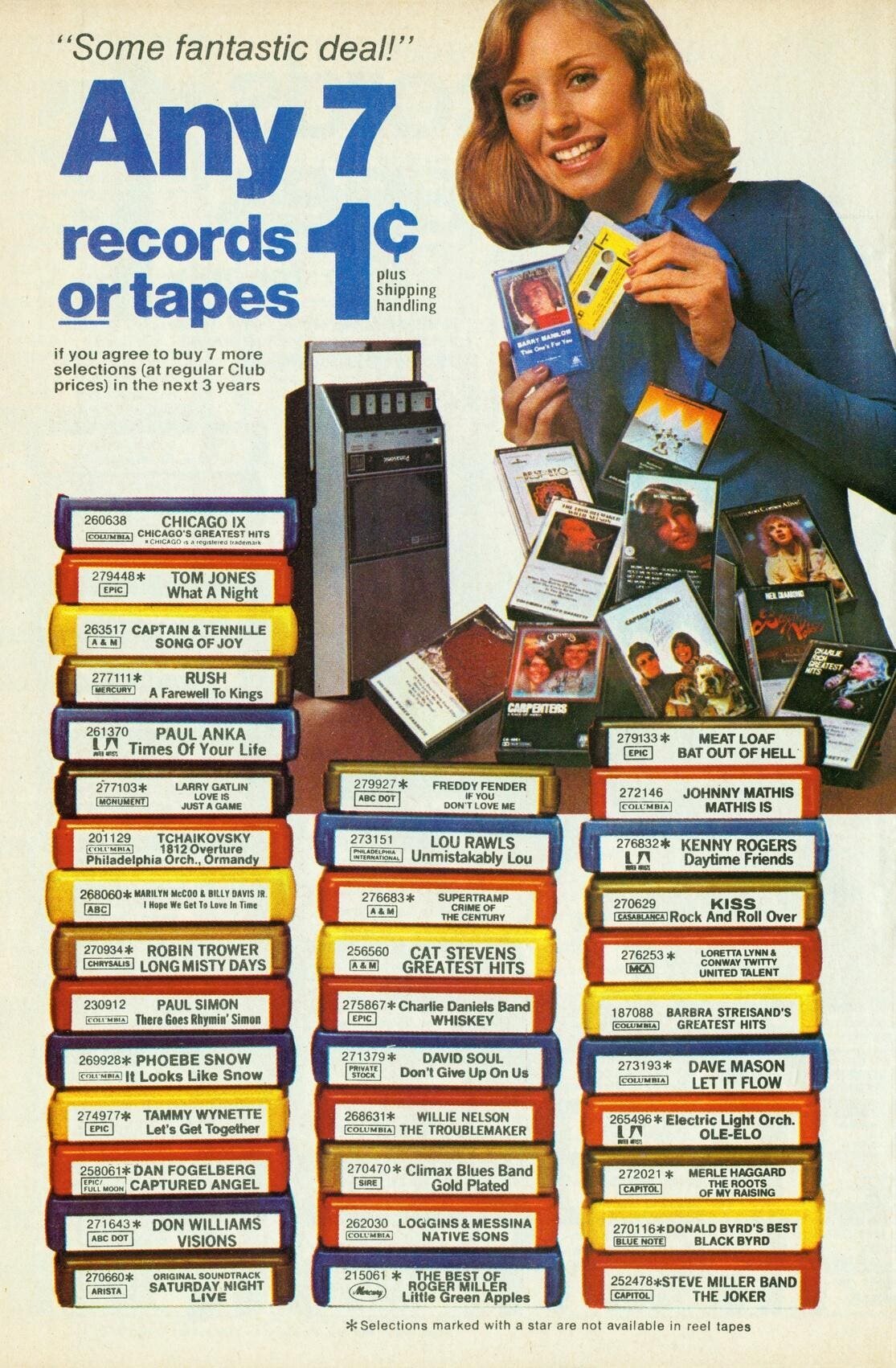
In mid-August, reports circulated that Columbia House, the mail-order music club that taught generations how much fine print could hide behind “12 CDs for a penny,” was finally closing. After 71 years of dubious accounts and unpaid shipping and handling, a message appeared on its website saying the company would stop taking new orders on September 15. The message has since disappeared, and Columbia House has not replied to my repeated email inquiries. But its apparent demise has sparked nostalgic coverage of a time when you could hold on to the music you loved.
At its 1996 peak, Columbia House claimed 16 million members. How many of them were like my friend and his three brothers who opened at least 10 accounts from the same home address with first names from The Blues Brothers (Jake, Elwood, Cab, Aretha…) we’ll never know. Nonetheless, the club continued selling music until the late 2000s. After a 2015 bankruptcy , it survived another decade hawking DVDs through Edge Line Ventures LLC, which operates the brand under license .
These days the music Columbia House shipped can be summoned on Spotify faster than I can locate and open the Memorex cases. But those discs were mine. Columbia House could send me bills and charge me late fees, but once a CD arrived, the company could not make it vanish. I could play it, lend it, sell it, scratch it, copy songs onto a mixtape or gift the whole collection to my cringing children.
That increasingly quaint bundle of rights is what streaming has disrupted. Media have never been easier to carry and never been harder to keep.
Consider Netflix. When the company introduced “ Watch Now ” in January 2007, its mail service offered more than 70,000 DVD titles. Its new streaming feature had about 1,000 movies and television programs. Streaming was initially an add-on to the physical business, not its replacement.
That changed quickly. A 2008 deal with Starz added roughly 2,500 titles at a time when Netflix had more than 12,000 streaming choices, compared with about 100,000 DVDs. Television became central to its strategy , though binge-watching shows was still a niche hobby of super fans. The silver screen was high art and cost more, while the small screen was yet to shake its “Vast Wasteland” 20 th century identity . Netflix recognized TV’s reputation was in flux, and it seized the moment to acquire the rights to seasons of remaindered programs from studios. By the fourth quarter of 2011, television accounted for over 60% of the more than 2 billion hours Netflix subscribers streamed.
While prestige content during television’s Platinum Age is often credited for making mass consumption of shows a form of cultural expression, streaming services solved two major problems of binge-watching physical media: access and space. Through OTT platforms, the video store came to us and never sold out. Then it followed us onto laptops, phones, even outdoor televisions . Advances in devices and broadband speeds helped usher in Peak TV , an era when the explosion of available programming made it seem we could watch whatever, wherever, whenever.
But that infinite library was more abridged and impermanent than people realized at first.
On September 1, millions of U.S. Netflix subscribers will lose access to dozens of licensed films, including the original Rocky movies, the Creed trilogy, The Big Lebowski , The Breakfast Club , Schindler’s List , and Little Miss Sunshine .
Fans who want to access them in the U.S. (VPNs notwithstanding) will have to do so through other streaming platforms. That accessibility shift speaks to the fleeting nature of cultural consumption today, in which it can increasingly feel like nothing is owned, only experienced as permitted by inscrutable algorithms and user agreements.
The evolution of ownership this century has been subtle, with convenience spinning an illusion of progress while eliding consequences. In 2009, Amazon deleted purchased copies of George Orwell’s 1984 from customers’ Kindles. A publishing rights dispute had voided Amazon’s license to sell the ebook , and Amazon refunded those customers who had bought it. But the mass, remote erasure of literature sounds like something the Ministry of Truth would do.
That buy/rent distinction may be (slightly) clearer with Netflix. We pay for a subscription, and nobody reasonably expects every title to remain there forever, though we often forget that. It becomes murkier when a digital storefront presents a button marked “Buy,” especially when it also presents a cheaper button marked “Rent.”
California has begun treating those words as a consumer-protection problem. A law that took effect in 2025 generally bars sel...
AIPROPX is an independent multi-source news index — we track, compare, and connect coverage from across the web into one place you won't find anywhere else.