This is one outlet's own report from Motor1 — the article as it was filed. Other outlets are covering the same event; open the full story to compare every source side by side.
Weaver led the original Juke\u2019s exterior design and worked on the Qashqai.
Nissan is aiming to cut the time to bring new models to market roughly in half.
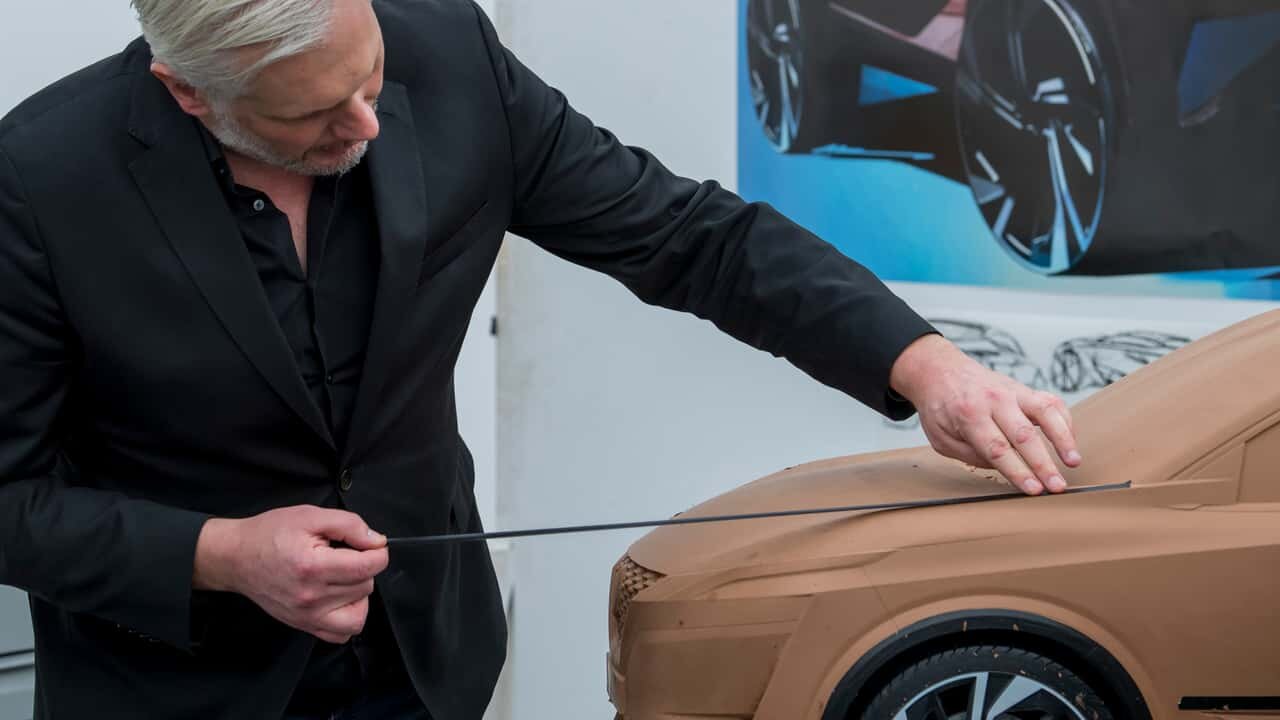
Should the man who drew the Nissan Juke\u2019s cartoon-wild curves be in charge of every future Nissan you see on the road? Nissan thinks so. Matthew Weaver, the lead exterior designer behind the first-generation Juke, is moving up to corporate executive of global design, taking over the studio that shapes everything from city hatchbacks to flagship SUVs.
The change ends nearly a decade with Alfonso Albaisa as design boss, a run that started in 2017 and caps close to 40 years with the brand. He steps down around October 1, 2026 and stays on as adviser until December 31, 2026. For you, it means the next wave of Nissan EVs and crossovers will carry a new signature from someone who has never played it safe.
Matthew Weaver becomes Corporate Executive, Global Design October 1, 2026
Matthew Weaver Replaces Albaisa At Nissan Design
Under the announced plan, Weaver becomes Nissan\u2019s global design chief in October after more than two decades inside the company. Albaisa, who has led global design since 2017 and spent nearly 40 years at Nissan, formally steps down on October 1, 2026, then remains as an adviser through the end of that year to smooth the handover.
Weaver and Albaisa already have shared history: they worked together on the original Juke, a car that split opinion but made sure nobody ignored Nissan in the small crossover space. Weaver joined Nissan in 2001, led the European design team for years, then moved to global headquarters in Japan, with key work on European favorites like Qashqai alongside his Juke credit.
The leadership change lands as Nissan rethinks its product cadence and identity. Under CEO Ivan Espinosa, the brand is cutting vehicle development times roughly in half from the old 55-month cycle, leaning harder on digital tools and tighter \u201cfamily\u201d planning so new models can be signed off and launched far quicker than before.
What Weaver\u2019s Promotion Means For Future Nissans
Nissan says Weaver will build on the direction set under Albaisa while adapting the brand\u2019s design language for a faster, more electrified lineup. That matters because design work for headline projects\u2014a new-generation Skyline, the next Xterra off-roader, and a Rogue with e-Power hybrid tech\u2014was already underway and previewed at the April 2026 global "Vision" event.
If you want a sense of his instincts, look at how Nissan\u2019s European crossovers have stood out. The original Juke used exaggerated fenders, high-mounted lamps, and a stance that made compact hardware feel playful instead of cheap, while Qashqai helped define the family crossover template in Europe and more recent facelifts have pushed surfaces and graphics toward cleaner, more technical lines that suit EV front ends.
All of that now gets plugged into Nissan\u2019s shorter development cycles and earlier design sign-offs, giving Weaver more chance to protect bold proportions on the way to production. If Nissan sticks to that faster process, the next wave of Juke-, Qashqai-, and Rogue-size models could look bolder and more consistent than the mixed bag you have seen over the past decade.
Motor1's Take: Weaver taking the top seat shifts where design gets its say. Expect a clearer, more unified Nissan look that favors stronger proportions and bolder front-end treatments on compact crossovers and EVs.
This matters most if you care about styling consistency and early concept work. Pay attention to concept reveals and early proportion sketches\u2014those will show whether Nissan truly shortens its decision loop and lets design set the tone.
AIPROPX is an independent multi-source news index — we track, compare, and connect coverage from across the web into one place you won't find anywhere else.