This is one outlet's own report from TechRadar — the article as it was filed.
AIPROPX ReportTechRadar · 1h ago
I just did a full solar install instead of waiting for plug-in solar in the UK
I live in Scotland and just got my solar install up and running a few days ago. While it's obviously still very early days, I'm really happy with how it's all going so far — and with my decision to go for a full panel and battery system.
Was I tempted to wait for plug-in solar when the news filtered through earlier this year that this option was to become officially available with kits in the UK? No, because I wanted a full solar setup for a few reasons that I'll detail here — along with my initial thoughts on how my system is working (although I've already dropped a spoiler on that).
That's not to say plug-in solar isn't going to be a good choice for some, of course – it promises to provides a low-hassle route into electricity bill savings for renters and those with limited roof space. But it has distinct limitations compared to a full solar array.
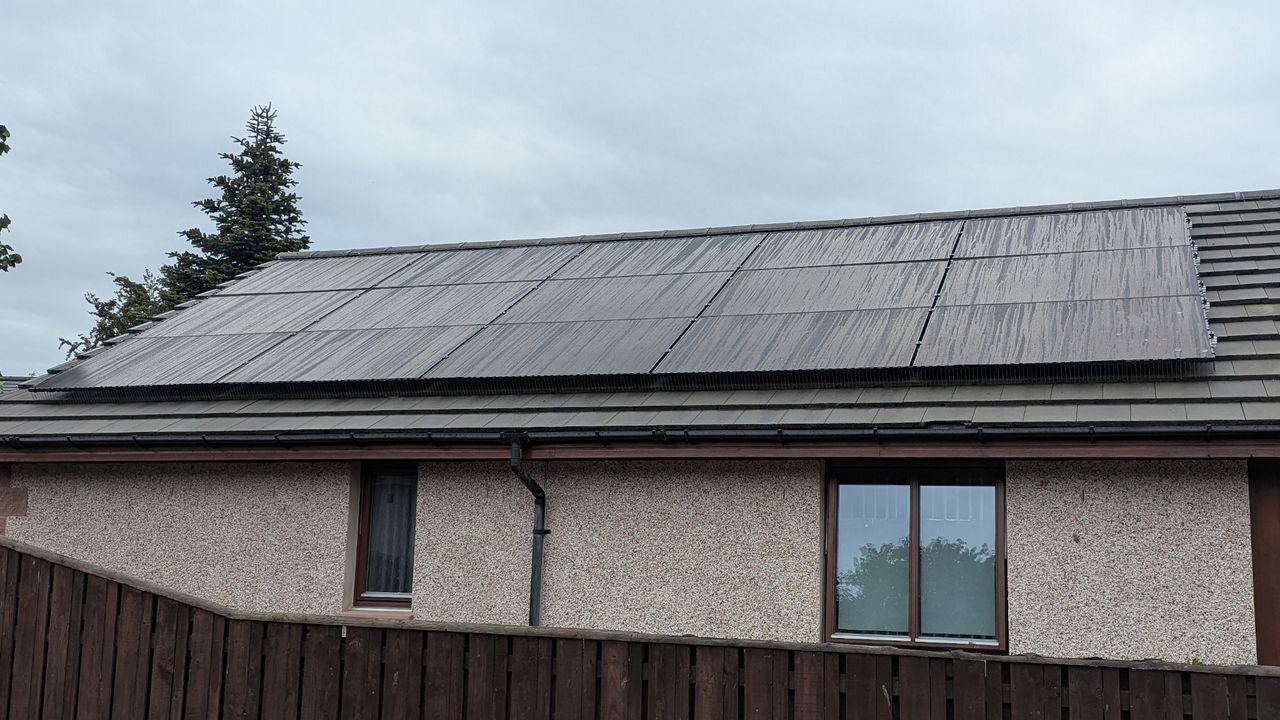
So, here are the main reasons why I wanted that full setup — a bank of 15 roof-mounted panels, a battery, and a gateway — after which I'll come back to the merits of plug-in solutions.
1. Staying put with a south-facing roof
(Image credit: Darren Allan)
A full solar setup with an array of panels plus a beefy battery (in my case, a Tesla Powerwall 3 with a 13.5kWh capacity) is, of course, a considerable financial commitment for homeowners.
It's much easier to make that commitment if you know that you'll be living in the house for a long time, as in that case, year by year, you'll make your money back in electricity savings (eventually, or that's the hope).
I'm intending to stay put in my current house for 10 to 15 years, and towards the latter end of the scale, the solar should pay for itself, due to a combination of savings on my electric bill (which will effectively be hardly anything going forward, save for the standing charge for having a grid connection) and selling spare energy back to the grid (solar export).
I may be in the house for even longer, and at that point, it's just free electric, which is obviously a nice thought (especially if utility bills keep on increasing in the way they have been). My house is ideal for solar, having a near-south-facing roof and no shading issues — so given my plan to stay long-term, it seemed crazy not to get a solar array, really. The only issue was saving up to pay for it (which admittedly took quite some time).
It was a very cool moment when the mains switch was flipped off and our house carried on fully powered, just as normal.
As for the rough math of what I'm saving with solar, based on some very limited data thus far (just a few days), it's a saving of closing on £500 per year (around $680 / AU$950) in electric bill reductions, and approximately £400 (about $550 / AU$760) in export earnings. The latter is a rougher figure, but it should hopefully pan out or thereabouts — for a total of something like £900 (or $1,230 / AU$1,710) in terms of annual gain.
What's been interesting is that I'm really surprised how much solar generation I get when it's cloudy. I can still hit 1kWh or even closer to 2kWh of power from the panels on a normal kind of cloudy day.
Even with what I consider to be pretty thick cloud and rain (yes, the Scottish summer in the north of the country has been quite different to the English one), I'm still generating enough to power my baseline house needs (0.3kWh), meaning general operation when no larger appliances are switched on (especially the dreaded kettle).
Of course, I'd read up on modern panels and knew they performed better in cloudy conditions, but I wasn't expecting them to be this good.
2. Working from home factor
(Image credit: Darren Allan)
I work from home writing articles for TechRadar (alongside other freelance), and my wife works from home, too. So having a house with full off-grid capability was important to us as a result, and this is something you only get with a solar array combined with a battery, and a gateway is needed too.
The gateway allows for the solar to run independently off the grid (in 'island mode' with its own earthing rod), so if the mains power goes off completely, the house will keep running under its own steam.
This means if there's a power outage, the house is still running off solar (and the battery), and we both still have power for our computers and so on. We can keep on working without disruption (an additional financial gain in this event). Note that without a gateway, you won't be able to run off solar in a power cut — the solar inverter will shut itself off when it detects the grid has gone out (for safety reasons).
When the installing electrician tested the system, he had me switch on all the ceiling lights in the living room. It was a very cool moment when the mains switch was flipped off and our house carried on fully powered, just as normal, with the solar system kicking in so quickly that the lights didn't even flicker in the slightest.
My decision to go for the off-grid running capability was also influenced by a degree of looking to the future. Now, I admit this may sound a bit 'tinfoil hat', but I don't think it's inconceivable that there could be hiccups with the national grid in the UK (or elsewhere perhaps) as the years roll on. Whether that might be infrastructure related problems, geopolitical issues and wider energy security concerns, or the likes of hackers, I don't think it's unwise to have a degree of energy independence.
Granted, I don't believe that major-scale disruption is at all likely, but it doesn't hurt to have an insurance policy against the prospect of more regular power outages, especially when both our livelihoods depend on being able to work from home.
The gateway made my system about 10% more expensive roughly — maybe a bit less actually, I don't know for sure as the labor costs weren't broken down on my installation invoice — but I think that was a price worth paying.
3. Environmental benefits
(Image credit: NASA/Reid Wiseman)
This is likely true of everyone adopting solar —...
AIPROPX is an independent multi-source news index — we track, compare, and connect coverage from across the web into one place you won't find anywhere else.