This is one outlet's own report from Forbes — the article as it was filed.
AIPROPX ReportForbes · 2h ago
Iran Ground Offensive Against U.S. Bases Inconceivable, Analysts Say
Aerospace & Defense Iran Ground Offensive Against U.S. Bases Inconceivable, Analysts Say By Paul Iddon ,
Forbes contributors publish independent expert analyses and insights. Paul Iddon is a freelance journalist focused on Middle East affairs. Follow Author Jul 27, 2026, 09:57am EDT Jul 27, 2026, 10:48am EDT --:-- / --:-- This voice experience is generated by AI. Learn more . This voice experience is generated by AI. Learn more . Summary Iranian officials have threatened ground offensives against US bases or regional states like Kuwait and Bahrain if the US targets Iranian territory, even proposing capturing American soldiers. This follows recent drone and missile attacks on Kuwait and Bahrain. However, analysts are highly skeptical of Iran's ability to execute large-scale conventional ground operations. Experts cite Iran's doctrine of irregular warfare, limited conventional projection capabilities, and the strong US/coalition presence in the region. Any significant troop movement would be vulnerable. While rhetoric is high, more plausible Iranian actions would involve asymmetric tactics or special operations, not conventional invasions, despite historical parallels to Saddam Hussein's unrealistic war plans.
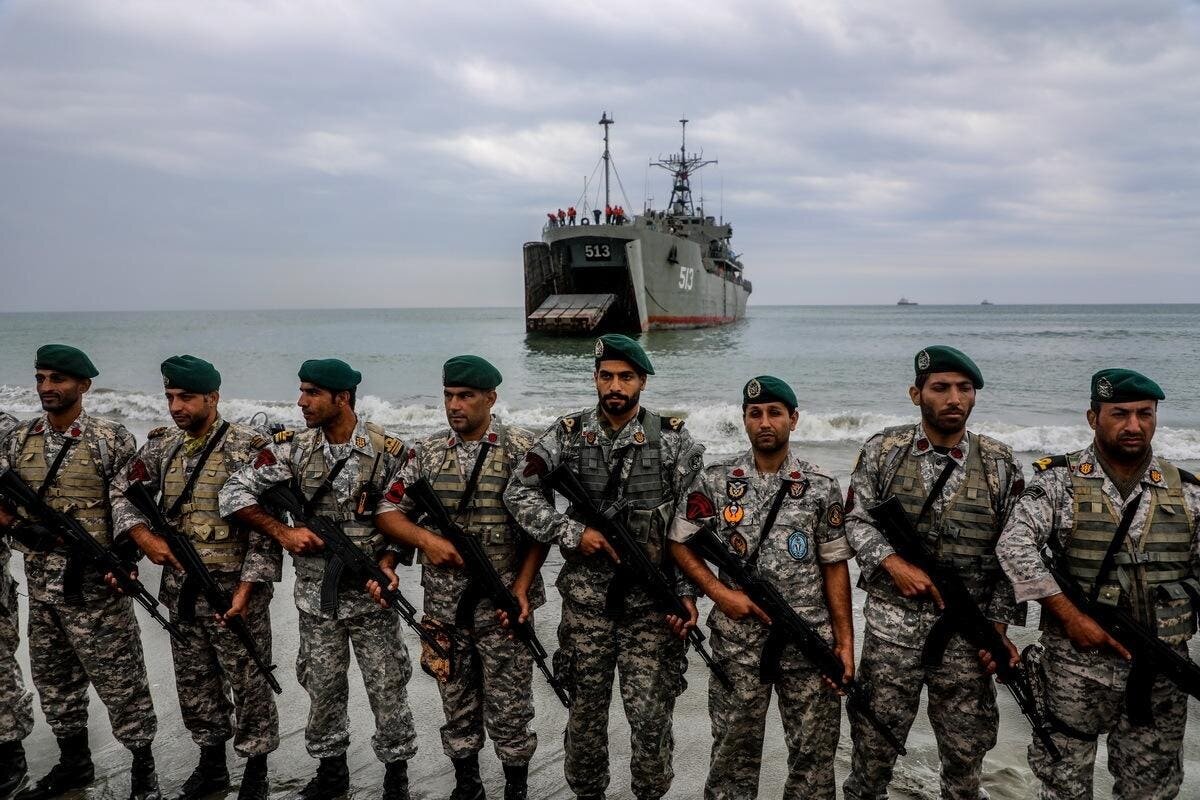
Iranian officials have repeatedly warned that Tehran could mount a ground offensive in the region targeting U.S. bases if American troops move to seize Iranian islands or territory. One former foreign minister has even proposed launching such an offensive to capture U.S. soldiers and bring them back to Iran. However, Iran analysts are highly skeptical that Tehran will prove capable of launching any such large-scale ground offensives any time soon.
Iranian MPs have singled out Kuwait and the island kingdom of Bahrain as possible targets for ground attacks. “If the United States puts boots on the ground in Iran, we may also launch ground attacks on Kuwait and Bahrain,” declared Ahmad Bakhshayesh Ardestani, a member of the Iranian parliament’s National Security Committee, in mid-July.
Former Foreign Minister Manouchehr Mottaki, also a parliament member, went even further. “I have been advocating for a ground war for a long time,” he said . “We should seize one of the U.S. bases in the region, capture its forces, and bring them back to our country.”
Iran has already subjected Bahrain and Kuwait to repeated drone and missile attacks in recent weeks, with these states, alongside Jordan and Iraqi Kurdistan , taking heavy fire. The Wall Street Journal reported that both Gulf states executed covert airstrikes against Iran in early July using intelligence provided by the United Arab Emirates in direct retaliation for these attacks.
Arash Azizi, a lecturer at Yale University and author of ‘The Shadow Commander: Soleimani, the US, and Iran’s Global Ambitions’ as well as an upcoming book on the history of Iran-Israel relations, believes such talk about seizing Kuwaiti or Bahraini territory or U.S. bases in these countries is “baseless.”
“Not only will it struggle militarily to stage such operations, but its doctrine for years has been based on irregular warfare and covert operations, not outright ground military offensives,” Azizi told me.
Kuwait’s strategic Bubiyan island is one speculated target of any hypothetical ground attack. The U.S. military base at Camp Arifjan in Kuwait is a mere 62 miles from Iran. Bahrain hosts a major U.S. naval base, the Naval Support Activity Bahrain, that’s located approximately 128 miles away from Iranian territory.
Farzin Nadimi, a defense and security analyst and Senior Fellow of the Washington Institute for Near East Policy, also noted that seizing and holding any U.S. base or mounting any conventional seizure of Kuwait’s Bubiyan island or Bahrain would prove “extremely difficult under current conditions.” Additionally, while Iranian officials talk about a ground offensive, Bubiyan and Bahrain are islands, which would necessitate amphibious operations or sizable airlifts.
“Iran’s conventional ground-force projection capabilities across the Persian Gulf are limited, and the region currently features a heavy concentration of U.S. and coalition air power, ISR (intelligence, surveillance, and reconnaissance), naval forces, and rapid-reaction capabilities,” Nadimi told me.
Iran also has limited amphibious and sealift capabilities, and months of U.S. and Israeli strikes have degraded its C4ISR (Command, Control, Communications, Computers, Intelligence, Surveillance and Reconnaissance), air defenses, and logistics. Any concentrated buildup of troops or vehicles would find itself under real-time surveillance and vulnerable to air and naval attacks.
“Also, Bubiyan Island is close to Iranian waters but heavily monitored,” Nadimi said. “Bahrain is an island nation hosting major U.S. naval infrastructure (including 5th Fleet elements), making any approach highly visible and contested.”
“Even though the majority of Bahrainis are Shia and some of them might theoretically collaborate with Iranian infiltrators, Saudi Arabia is likely to quickly intervene with full force in defense of the island,” he added.
“Therefore, Mottaki’s public suggestion appears more rhetorical and domestic-political than operationally realistic.”
Ironically, Mottaki’s suggestion echoed one made by Iran’s former rival Saddam Hussein after he fatefully invaded and annexed Kuwait in 1990.
Much like Iran wasn’t intimidated by the pre-war U.S. buildup earlier this year ahead of the war, Iraq’s dictator wasn’t intimidated by America’s Operation Desert Shield buildup ahead of the 1991 Persian Gulf War that utterly devastated Iraq’s military. During that period, he told his intelligence chief, Wafiq al-Samarrai, of his plan to defeat an American offensive. Iraq could overcome America’s overwhelming firepower, Hussein reasoned, by somehow capturing thousands of U.S. troops, tying them to Iraqi tanks , and then advancing into eastern Saudi Arabia. Hussein was certain that the U.S. wouldn’t f...
AIPROPX is an independent multi-source news index — we track, compare, and connect coverage from across the web into one place you won't find anywhere else.