This is one outlet's own report from Gothamist — the article as it was filed. Other outlets are covering the same event; open the full story to compare every source side by side.
MTA settles suit to make subway elevators more reliable
A non-profit newsroom, powered by WNYC. Gothamist Listen Live Donate News MTA settles suit to make subway elevators more reliable By Ramsey Khalifeh Published Jul 29, 2026 at 4:07 p.m. ET
Twitter Reddit Email Never miss a story Email address By submitting your information, you're agreeing to receive communications from New York Public Radio in accordance with our Terms . By Ramsey Khalifeh Published Jul 29, 2026 at 4:07 p.m. ET
Twitter Reddit Email We rely on your support to make local news available to all Make your contribution now and help Gothamist thrive in 2026. Donate today
Gothamist is funded by sponsors and member donations
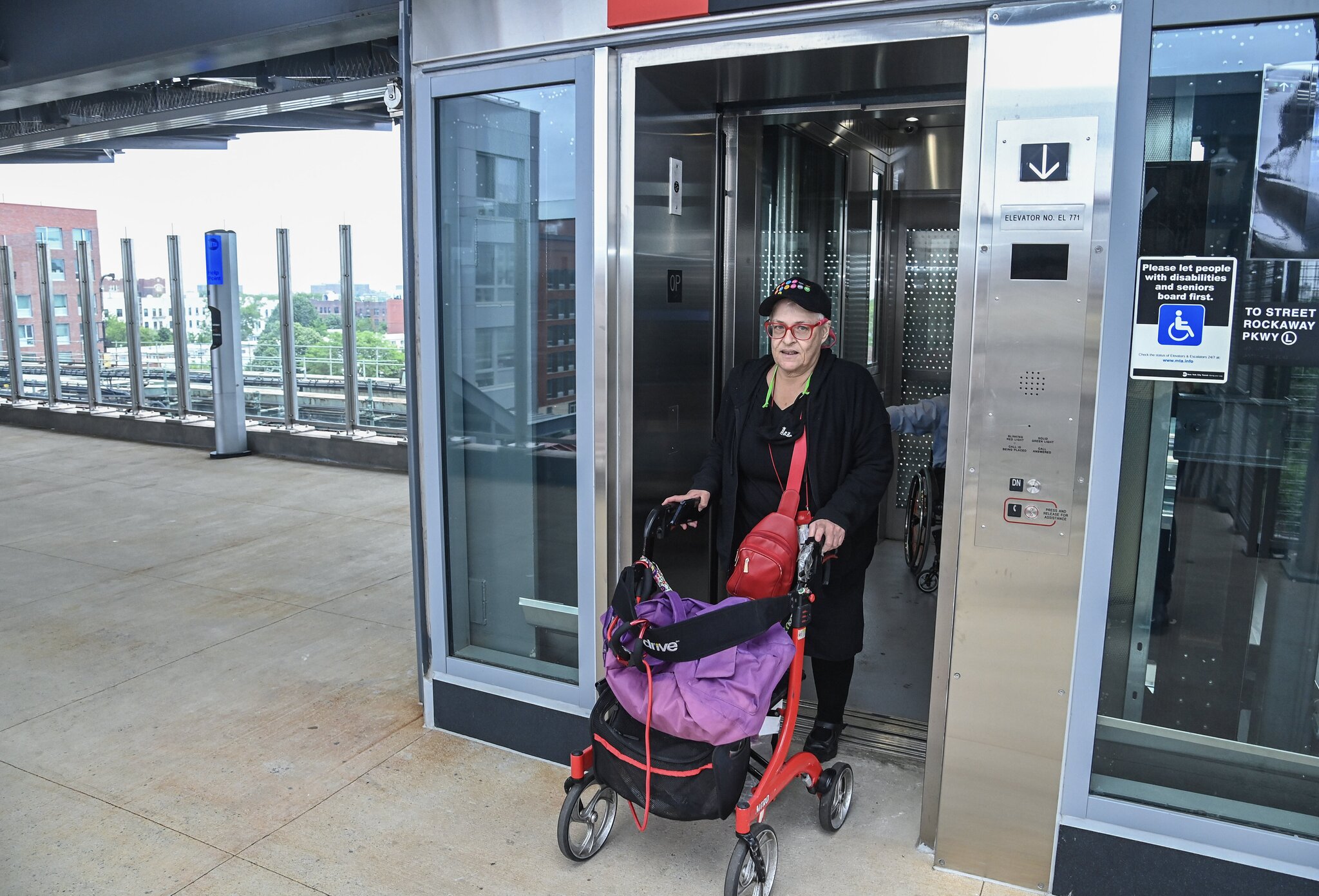
The MTA announced a settlement with disability advocates on Wednesday to end a multiyear legal dispute over high rates of broken and out-of-service subway station elevators.
MTA Chair Janno Lieber and a group of advocates who sued the agency in 2017 held a signing ceremony to bring the case to an end.
The advocates sued over the subway’s lack of accessibility. At the time, just 112 of the system’s 472 stations had elevators or ramps. That figure has since grown to 161 stations.
In 2022, the MTA settled a separate lawsuit and agreed to make 95% of the stations accessible by 2055. But disability advocates kept pushing to make those elevators more reliable, arguing the system faced at least 25 elevator outages per day for a median outage time of around four hours, or sometimes for months.
Lieber noted elevator reliability has improved, and they work between 95% and 98% of the time. The settlement agreed to keep the rate above 95%.
“Over time, as elevator availability, which is, what, 97 to 98% every month now, as availability has improved, the issues in that dispute narrowed just down to the question of how we are informing customers of long-term elevator outages,” Lieber said, referring to when the transit agency has to replace an elevator to keep up the system’s state of good repair.
Under the agreement, the MTA will be required to notify the public in advance of any elevator outages at subway stations with accessible entrances. Other American transit agencies, like Chicago’s CTA, post the entire system’s elevator outages at each station, letting disabled riders know if they’ll be unable to exit at their destination.
The signed settlement agreement will be sent to a Manhattan federal judge for approval.
Sharon McLennon Wier, executive director of the Center for Independence of the Disabled and one of the lawsuit’s plaintiffs, said the settlement helps all New Yorkers, not just those with disabilities.
“We all want to get to work, have fun, get to school and the subway is the best way, the fastest way to get there,” she said. “But we’ve struggled in trying to make sure that people with mobility disabilities, sensory disabilities actually have the ability to get on a subway car and not have to deal with delays in understanding if an elevator is working or not working.”
MTA Chief Accessibility Officer Quemuel Arroyo said more than 90% of Long Island Rail Road and Metro-North Railroad stations are now fully accessible.
Ramsey Khalifeh is a transportation reporter on the NYC Accountability desk covering the largest transit system in the country. He was previously a general assignment reporter at Gothamist and worked on the Boston Globe's metro and copy desk. Got a tip? Email [email protected]
“Why are we being targeted?” one Staten Island resident asked.
On the Upper East Side, public shaming has helped spur compliance with measures to prevent Legionnaires’ disease, city officials say.
Catch up on the most important headlines with a roundup of essential NYC stories, delivered to your inbox daily.
Gothamist is a website about New York City news, arts, events and food, brought to you by New York Public Radio.
AIPROPX is an independent multi-source news index — we track, compare, and connect coverage from across the web into one place you won't find anywhere else.