This is one outlet's own report from TechCrunch — the article as it was filed. Other outlets are covering the same event; open the full story to compare every source side by side.
Back by popular demand: Save up to $300 on Disrupt
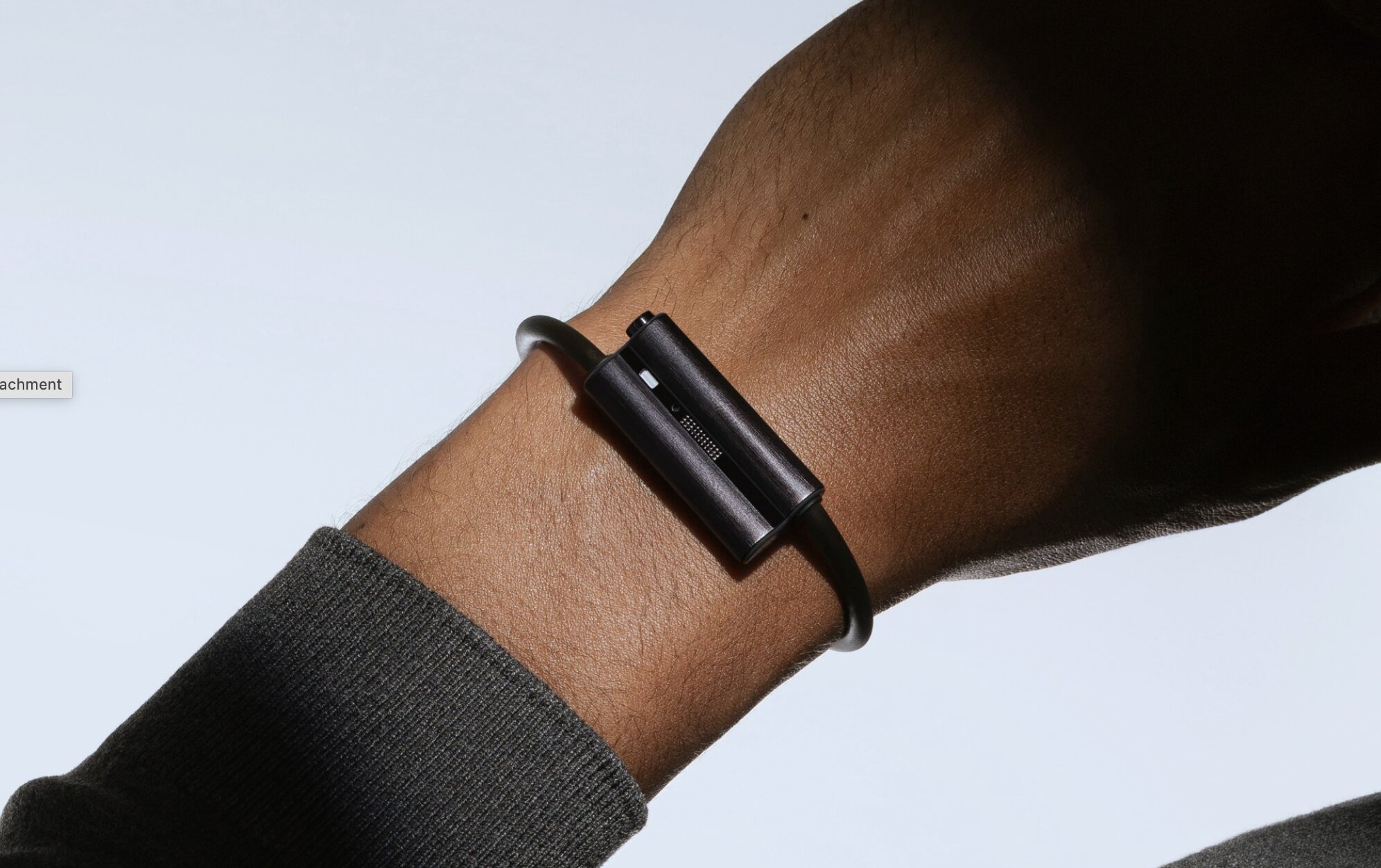
Fitbit founders launch Luffu Link, an LTE health and safety band Aisha Malik 5:00 AM PDT · August 25, 2026 Luffu , a new startup from Fitbit's co-founders James Park and Eric Friedman, on Tuesday launched Luffu Link, an LTE-enabled health and safety band designed to monitor the wearer's overall health, both physical and mental. The wearable combines all-day health sensing, voice logging, location awareness, and the ability to get help from trusted contacts into a single device, even when no phone is nearby.
The currently $250 device is available for pre-order and is expected to ship in early 2027. It comes in three colors: halo gold, onyx black, and sterling blue.
Luffu Link represents the next step in the startup’s mission to develop an intelligent family care system, as it complements the Luffu health-monitoring app , launched earlier this year. The app uses AI in the background to gather and organize family information, learn day-to-day patterns, and flag notable changes so families can stay aligned and address potential well-being issues.
Luffu was born out of Park and Friedman’s own experiences caring for their families and aging parents. They built Luffu to give families a clearer picture of a loved one’s health without constant check-ins or making them feel monitored.
“When you become a family caregiver, or the CEO of the family, these people are spending an enormous amount of time doing it,” Park said in an interview with TechCrunch. “Research shows over 27 hours a week on average, which is a crazy amount of time…I think technology can play a big role in helping reduce this load, but as we found out, the tools to help them are pretty fragmented," he said.
Link users can press a button to capture information in the moment by voice, like updates about medications, symptoms, meals, mood, reminders, and more. The Luffu app then organizes that information and incorporates it into the family’s broader context. The company sees its market as including family caregivers, independent older adults, and health- and safety-conscious adults who want to stay on top of their health.
The wearable also continuously collects standard health and wellness data, such as activity, sleep, resting heart rate, calories burned, heart-rate variability (HRV), and breathing rate to identify daily patterns, track changes over time, and provide personalized insights or alerts.
“Link does a lot of what a typical health tracker would do, but it's not just about tracking," Park said. "It's about what Luffu does with that data. It's looking for patterns, so maybe your activity has been unusually low," he continues.
"Maybe your sleep patterns have changed. Maybe that change happened after a new medication. So it's looking at all this data, and it's not to give families another dashboard full of graphs — I designed a lot of that at Fitbit — it's to help answer some key questions like 'what changed? Does it matter? Does somebody need to know?' And people can just continue to live their life without feeling like they're being constantly monitored.”
The device uses built-in GPS to keep trusted contacts informed of a wearer’s location, including where they have been and when they enter or leave specific areas. A quick double press also lets the wearer check in with family members without making a call or sending a text. Additionally, built-in LTE lets wearers send a help request without needing to use a phone. (The LTE data service is included so it doesn't require a separate carrier plan.)
For example, the wearer could press the button and say something like, “I fell and hurt my wrist. Can someone come get me?” Link will then send the voice message along with the wearer's location, battery level, and health data, like their heart rate and recent activity, to trusted family members.
Unlike other screenless wearables on the market that are focused on individual health and fitness, Link is designed around everyday health and family connection, the company says.
“There's a trend to have no screens on this new class of wearables, but here, it's very purposeful,” Park explained. “We want to be in the background. Link is designed to be on your wrist as a quiet guardian throughout your day, and we also wanted to make this feel nothing like a traditional wearable, nothing like a generic-looking fabric brand or a wrist thing with a screen or a bulky pendant that you're wearing for emergency purposes. So, the device takes a lot of cues from jewelry.”
The startup teased that it's developing a home device that extends Luffu into the home, marking the next step in its intelligent family care system.
While Link is currently available for pre-order at a discounted price, its expected retail price is $300.
When you purchase through links in our articles, we may earn a small commission . This doesn’t affect our editorial independence.
Aisha is a consumer news reporter at TechCrunch. Prior to joining the publication in 2021, she was a telecom reporter at MobileSyrup. Aisha holds an honours bachelor’s degree from University of Toronto and a master’s degree in journalism from Western University.
You can contact or verify outreach from Aisha by emailing [email protected] or via encrypted message at aisha_malik.01 on Signal.
October 13 – 15 San Francisco In less than 48 hours, your chance to save up to $300 on your tickets will end!
Inherent, founded by DeepMind alumni, says its AI 'teammate' just outperformed Anthropic and OpenAI at replicating research Anna Heim
Michael Polansky is training an AI model on skin that’s still alive Connie Loizos
How AI accounting startup Rillet raised $100M and became a unicorn in 48 hours Dominic-Madori Davis
Tesla’s solar roof is dead — here’s what went wrong Tim De Chant
Oura faces lawsuit accusing it of misleading consumers about sleep-tracking accuracy Aisha Malik
AIPROPX is an independent multi-source news index — we track, compare, and connect coverage from across the web into one place you won't find anywhere else.