This is one outlet's own report from Motor1 — the article as it was filed. Other outlets are covering the same event; open the full story to compare every source side by side.
The US imposed 50% tariffs on roughly $20 billion of Canadian exports, including vehicles.
Canada will retaliate dollar-for-dollar starting September 8, targeting US steel, dairy, farm equipment and pulp and paper.
Trucks broke the deal as much as the tariffs did. Canada and the US had lined up a plan to cut auto duties to 15% from 25%, but the White House wanted that break reserved for light vehicles only, leaving medium and heavy trucks stuck at the higher rate and under fresh 50% duties on a wide range of Canadian goods, as first detailed by outlets including Automotive News.
Prime Minister Mark Carney announced the collapse of trade talks on August 21, stating that Washington "asked too much and offered too little." This breakdown clears the way for a 50% tariff wave on Canadian exports, including automobiles, which Carney later estimated would impact closer to $28 billion in goods, up from an initial $20 billion. In response, Canada has vowed to implement dollar-for-dollar retaliation starting September 8.
BrightDrop EV production at CAMI Assembly in Ontario, Canada
The proposed framework looked simple on paper, with the US tariff on Canadian-built vehicles dropping to 15% from 25%. Reporting in the final 72 hours of talks described a fight over which vehicles would qualify, and Canadian officials say US negotiators tried to carve out trucks at the last minute.
Carney told reporters that tariffs on medium and heavy trucks played a major role in killing the agreement, with Ottawa pushing for the lower rate across the board and Washington limiting it to passenger cars and light pickups, a split that negotiators could not close before the deadline.
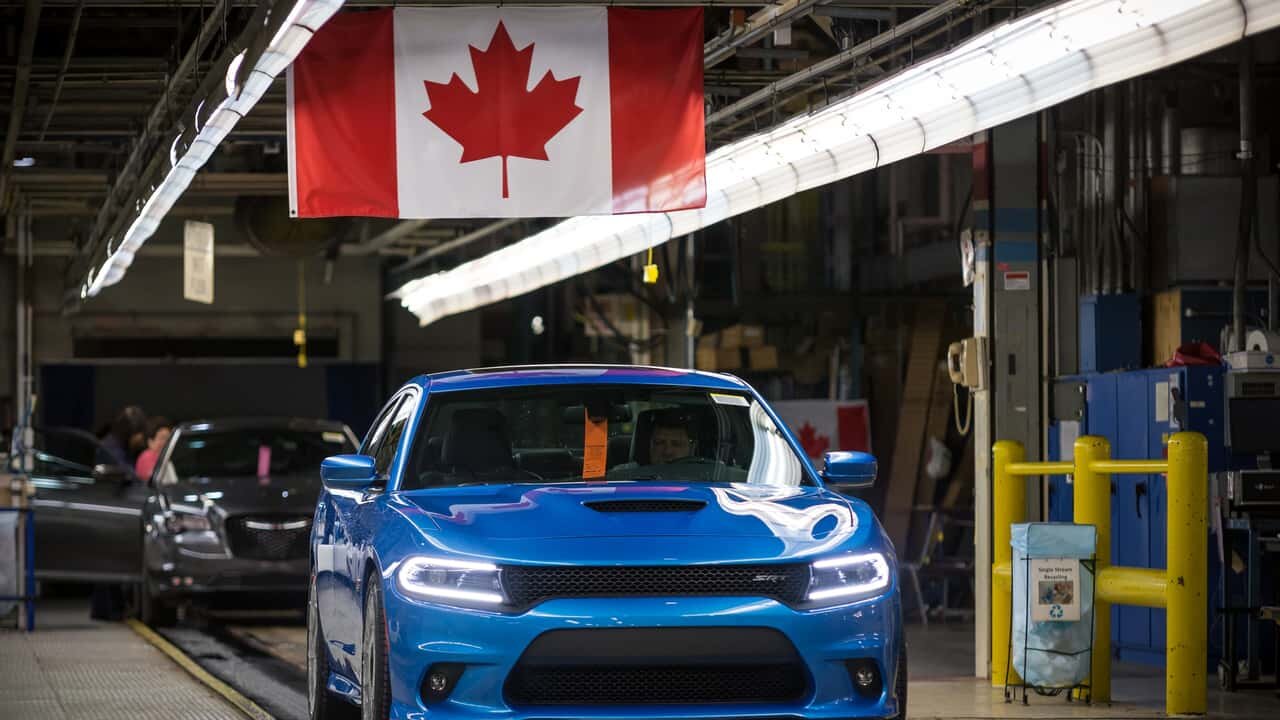
Canada builds plenty of both categories. Plants in Ontario turn out everything from Canadian-built vehicles sold heavily in the US market to commercial trucks that fleets depend on, so excluding heavier vehicles from relief was never a minor technical detail for Ottawa.
With talks dead, the 50% tariff wave is in effect on a wide range of Canadian exports from steel and pulp and paper to consumer goods and vehicles, with the total value estimated between about $20 billion and $28 billion, and Canada ready to match those duties on US steel, dairy, farm equipment, appliances, electronics, furniture, wine and other goods starting September 8.
Automakers with cross-border plants now face higher costs on every truck and SUV built in Canada, costs that often land on sticker prices or force production shifts. Some companies had already been trimming EV plans amid tariff uncertainty, part of a broader pattern of EV models canceled or delayed in the US market this year.
Motor1's Take: This split leaves manufacturers and parts suppliers with a clear headache: higher costs or production shifts, and much of that burden will likely land on prices and EV plans already under strain. Supply chains that cross the border will feel it first, and small suppliers in particular may speed up moves to source or build in the US or Mexico to avoid uncertainty.
More On Tariffs: GM Expects to Lose '$4 to 5 Billion' Over Tariffs Toyota RAV4 Production Might Stay In America Over Tariffs: Report Canada Slaps 25% Tariff on Vehicles Imported From the US So It Begins: Stellantis Idles Canada, Mexico Plants Over Tariffs
AIPROPX is an independent multi-source news index — we track, compare, and connect coverage from across the web into one place you won't find anywhere else.