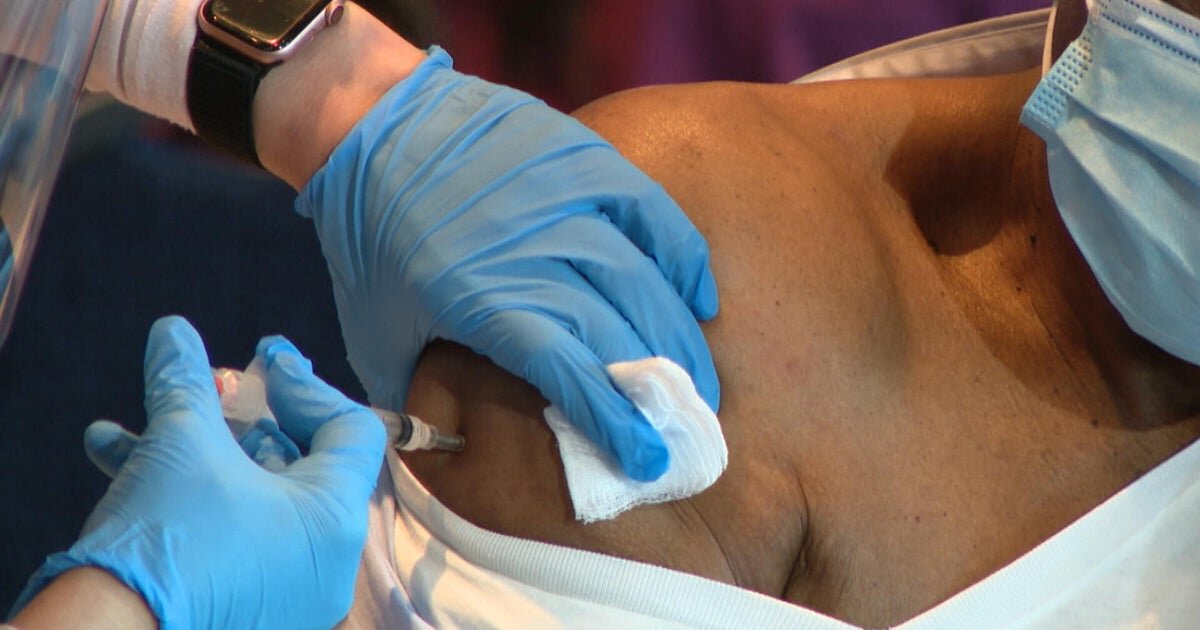
From inoculations against polio and smallpox to protections from measles and tetanus, vaccines are critical health care tools that have saved more than 150 million lives in the past 50 years.Rarely, they can also have side effects.This week on 60 Minutes, correspondent Jon Wertheim reports on vaccine court, a little-known legal forum that has, for almost four decades, been compensating Americans who say they were injured by vaccines. Whether a person developed chronic arthritis after receiving an MMR vaccine or a shoulder injury resulting from a misplaced tetanus shot, the vaccine court is intended to provide an efficient way to compensate claimants without overwhelming vaccine makers with legal fees.But for the more than 11,000 people who say they were injured after receiving a COVID vaccine, finding compensation is currently a little more complicated.History of the VICPIn the 1980s, there was a public health scare over the DTP vaccine, an older version of today\u0027s DTaP. At that time, families who said their children had been injured by the vaccine successfully sued the drug manufacturers in civil court. This caused all but one of those drug companies to stop production of the DTP vaccine.Members of Congress and public health officials were concerned that if vaccine manufacturers weren\u0027t given some form of legal protection, they might stop other vaccine production, putting the public health at risk. In response, Congress passed a bipartisan bill establishing the Vaccine Injury Compensation Program (VICP). The program acknowledged both that vaccines could cause injury while also partially shielding drug manufacturers from liability so they would continue to produce vaccines.Vaccine court is part of that program. It allows people who claim vaccine-related injuries to seek compensation through a simplified legal process. There\u0027s no jury in vaccine court. Instead, cases are decided by one of eight judges called special masters. The court is no-fault, which means that petitioners who bring claims don\u0027t have to prove negligence. They just prove that more likely than not, their injury was caused by the vaccine.The money for this program comes from a 75-cent tax added to every dose of recommended childhood vaccinations. Since the Vaccine Injury Compensation Program began, some 13,000 Americans have received more than $5 billion in payouts.This program is structured around the Vaccine Injury Table, listing vaccines and eligible injuries. When the VICP began, it included six vaccinations. Today, that table has expanded to 16 immunizations, including the seasonal flu vaccine and those that inoculate against HPV.Vaccine injuries remain very rare, but when they do occur, they can range from a physical injury in the shoulder because the needle is misplaced, to rare, severe cases in which a vaccine triggers a neurological condition.Where COVID sits todayThe vaccines that protect against COVID-19 are not among those included on the Vaccine Injury Table. That is because, to date, they are still included in a separate program for emergency measures.In 2005, Congress established the Public Readiness and Emergency Preparedness Act (PREP Act) to ensure public health during emergencies. The legislation partially shields manufacturers and health care workers from most lawsuits related to the use of certain medical treatments during public health emergencies, including vaccines. People who do experience serious harm or death due to these medical measures may be eligible for compensation through the Countermeasures Injury Compensation Program (CICP). This program only covers severe injuries or fatalities caused by approved emergency treatments. Unlike VICP, the CICP is an administrative program. It has a one-year statute of limitations and is more restrictive than the vaccine court program, which is a judicial program with a three-year statute of limitations for vaccine injuries. In vaccine court, claimants can also be compensated for pain and suffering. As of June, more than 14,000 claims of injuries or deaths have been brought to the countermeasures program regarding COVID-19 countermeasures, with about 11,000 stemming from COVID-19 vaccinations. More than 7,000 Covid-19 countermeasure claims have been denied, while 109 have been determined as eligible for compensation. Only 60 claims have been compensated as of June. The most common injuries compensated have been cases of myocarditis.The COVID vaccines are considered safe and effective by public health organizations, including the CDC, which notes the rigorous clinical trials the vaccines underwent. As of May 2023, more than 676 million doses of the COVID vaccines had been administered in the U.S.According to the latest CDC COVIDVaxView data, about 23.3 million doses of the 2025\u201326 COVID-19 vaccine had been administered in the U.S. as of April 25.Adding COVID vaccines to the VICPToday, many legal experts say the COVID vaccines should be added to the VICP."Those people went out and did exactly what was asked of them to protect themselves, their communities, and their families. And they\u0027re basically being hung out to dry in the countermeasures program without any real compensation," said Ren\u00e9e Gentry, a top vaccine injury litigator and head of the Vaccine Injury Litigation Clinic at the George Washington University Law School.For the COVID vaccines to be rolled into the VICP, three things would need to happen. First, the vaccine would again need to become a recommended childhood vaccine. Last year, the Centers for Disease Control and Prevention\u0027s vaccine advisory committee\u00a0voted to change recommendations\u00a0for the COVID-19 vaccine.\u00a0The CDC now recommends COVID-19 vaccine for people over 6 months "based on individual-based decision-making."\u00a0 Next, Congress would need to pass an excise tax on the COVID vaccination so that the vaccine court would have the money to cover claims. Finally, Secretary of Heal...