This is one outlet's own report from Tehran Times — the article as it was filed. Other outlets are covering the same event; open the full story to compare every source side by side.
Iran, Armenia forge comprehensive energy partnership
TEHRAN – In a significant diplomatic push to deepen bilateral ties, Iran and Armenia have agreed on a sweeping new roadmap for energy cooperation, spanning electricity grid integration, hydroelectric development, and a fundamental overhaul of their gas-for-electricity trade mechanism.
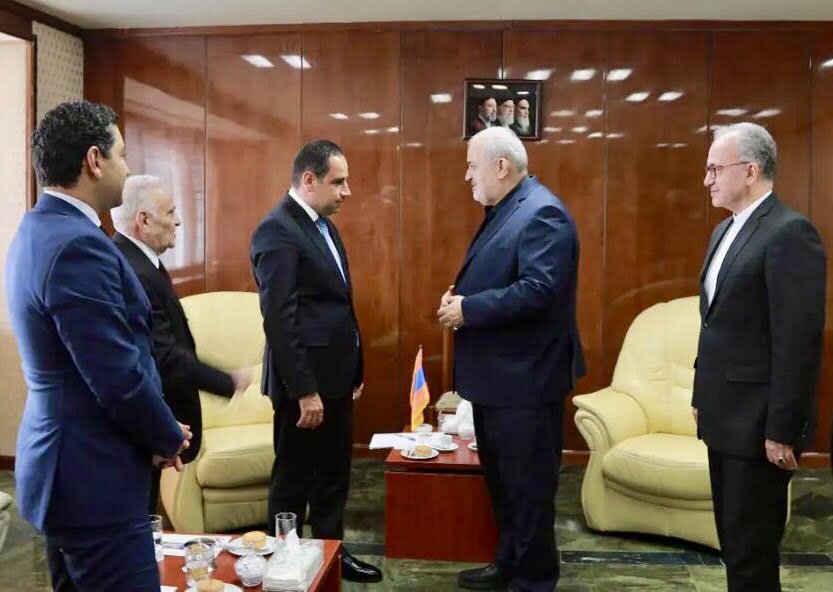
The agreements were finalized during two high-level meetings in Tehran, involving Iran's Ministers of Energy and Oil, alongside Armenia's Minister of Territorial Administration and Infrastructure, Davit Khudatyan.
The developments mark a strategic pivot for both nations, aiming not only to complete long-pending infrastructure projects but also to position Armenia as a potential transit hub for Iranian natural gas exports to broader international markets. Officials from both sides described the talks as "highly constructive," emphasizing their shared determination to transform bilateral energy relations from a simple barter system into a multidimensional, commercially robust partnership.
In the first of the two meetings, Iran's Minister of Energy, Abbas Aliabadi, hosted Minister Khudatyan to review the status of joint electricity projects. According to reports from the Ministry of Energy, the two sides placed particular emphasis on accelerating the implementation of the third power transmission line—a project that has remained stalled for over twelve years—as well as developing the broader Iran-Armenia-Georgia-Russia power corridor.
The third transmission line, designed to operate at 230 kV, has faced significant delays, primarily due to liquidity constraints affecting cabling works. In their discussions, both ministers underscored the urgency of securing the necessary financial resources to resolve this bottleneck, thereby ensuring the line can be energized and brought into service. Encouragingly, an Iranian contractor involved in the project has pledged to complete the installation of transmission towers in sections 5 and 6 within the next month, signaling tangible progress on the ground.
Beyond this longstanding project, Minister Aliabadi raised the prospect of constructing the Meghri run-of-the-river hydroelectric power plant. The Armenian side responded positively, referencing prior agreements and expressing full readiness to cooperate. Significantly, an Omani company has reportedly stepped forward with an offer to finance and implement the Meghri project, which could add approximately 200 megawatts of clean, renewable capacity to the regional grid.
Regional connectivity and environmental stewardship
A central pillar of the discussions was the development of the Iran-Armenia-Georgia-Russia power corridor. Minister Aliabadi emphasized that technical and economic studies have already confirmed the viability of electricity exchanges along this route. Highlighting Iran's technical expertise, he announced that Iranian companies stand ready to construct the transmission line segment between Armenia and Georgia, effectively linking the Caucasus to the broader Eurasian energy network.
This corridor is viewed as a strategic asset for Iran, providing a direct overland route to northern markets and reducing reliance on maritime chokepoints. Minister Aliabadi described Armenia as "one of the main links" in this vision, noting that alongside Armenia, other countries are actively involved in the planning stages to operationalize this high-voltage connection.
In parallel with these infrastructure ambitions, both nations addressed environmental concerns regarding the Aras River, a vital waterway bordering the two countries. Minister Aliabadi confirmed that discussions touched upon pollution control measures, and both sides expressed a strong interest in convening the Aras River pollution working group in the near future. The Iranian minister also highlighted domestic progress, noting that Iran has added approximately 9,000 megawatts to its national power generation capacity over the past year—a development that strengthens its ability to export electricity while meeting internal demand.
Revamping gas-for-electricity barter system
While the energy ministry focused on electrical infrastructure, a second pivotal meeting took place between Minister Khudatyan and Iran's Oil Minister, Mohsen Paknejad. The discussions at this session revolved around overhauling the decades-old gas-for-electricity barter arrangement that currently underpins bilateral energy trade.
Minister Paknejad described Armenia as "one of Iran's important neighbors" and emphasized Tehran's willingness to assist its friendly counterpart within the framework of its capabilities. He proposed a fundamental shift in commercial strategy: defining a new model for gas trade that would go beyond simple swaps. Specifically, Iran is exploring the feasibility of exporting natural gas through Armenian territory to access third-party markets, effectively transforming Yerevan into a transit corridor for Iranian energy resources.
"The current model of cooperation is based on gas-for-electricity barter," Paknejad explained. "However, Iran's clear proposal is to define a new commercial model for gas exports. Implementing this requires examining existing infrastructure and the possibility of expanding gas trade beyond Armenia's market and through its territory."
The Oil Minister acknowledged the technical and commercial complexities inherent in this proposal, stressing that it would require extensive expert-level studies. To address these challenges, both sides agreed to establish a joint specialized working group dedicated to the energy sector. This working group is tasked with analyzing infrastructure capacities, assessing commercial viability, and preparing the ground for the new model's implementation.
The scope of the oil ministry's discussions extended well beyond gas exports. Minister Paknejad and Minister Khudatyan reviewed a broad spectrum of cooperation areas, including the trade of petroleum products, the export of technical and engineering serv...
AIPROPX is an independent multi-source news index — we track, compare, and connect coverage from across the web into one place you won't find anywhere else.