This is one outlet's own report from Forbes — the article as it was filed. Other outlets are covering the same event; open the full story to compare every source side by side.
Forbes contributors publish independent expert analyses and insights. Ken Silverstein analyzes the Energy Transition, AI and Geopolitics Follow Author Jul 26, 2026, 09:00am EDT --:-- / --:-- This voice experience is generated by AI. Learn more . This voice experience is generated by AI. Learn more . Summary America's nuclear power landscape is undergoing a dramatic transformation, driven by the immense energy needs of artificial intelligence. Tech giants like Microsoft, Google, Amazon, and Meta are directly financing nuclear projects, committing billions to secure nearly 10 gigawatts of capacity. Microsoft, for instance, is investing $16 billion to restart Three Mile Island's sister reactor by 2027, solely for its AI data centers. This unprecedented shift sees Big Tech becoming de facto power companies, succeeding where traditional utilities faltered for decades. Nuclear energy's constant, reliable, low-carbon output is uniquely suited for AI's round-the-clock demands, which are projected to consume vast amounts of electricity. While critics question the feasibility and timelines of new reactor builds, these tech investments are making nuclear power bankable again, reshaping the future of energy and the AI race.
In 1979, a reactor at the Three Mile Island nuclear plant in Pennsylvania came within hours of a full meltdown. It became the moment America lost its nerve on nuclear power—the accident that scared off new reactor construction for the next four decades.
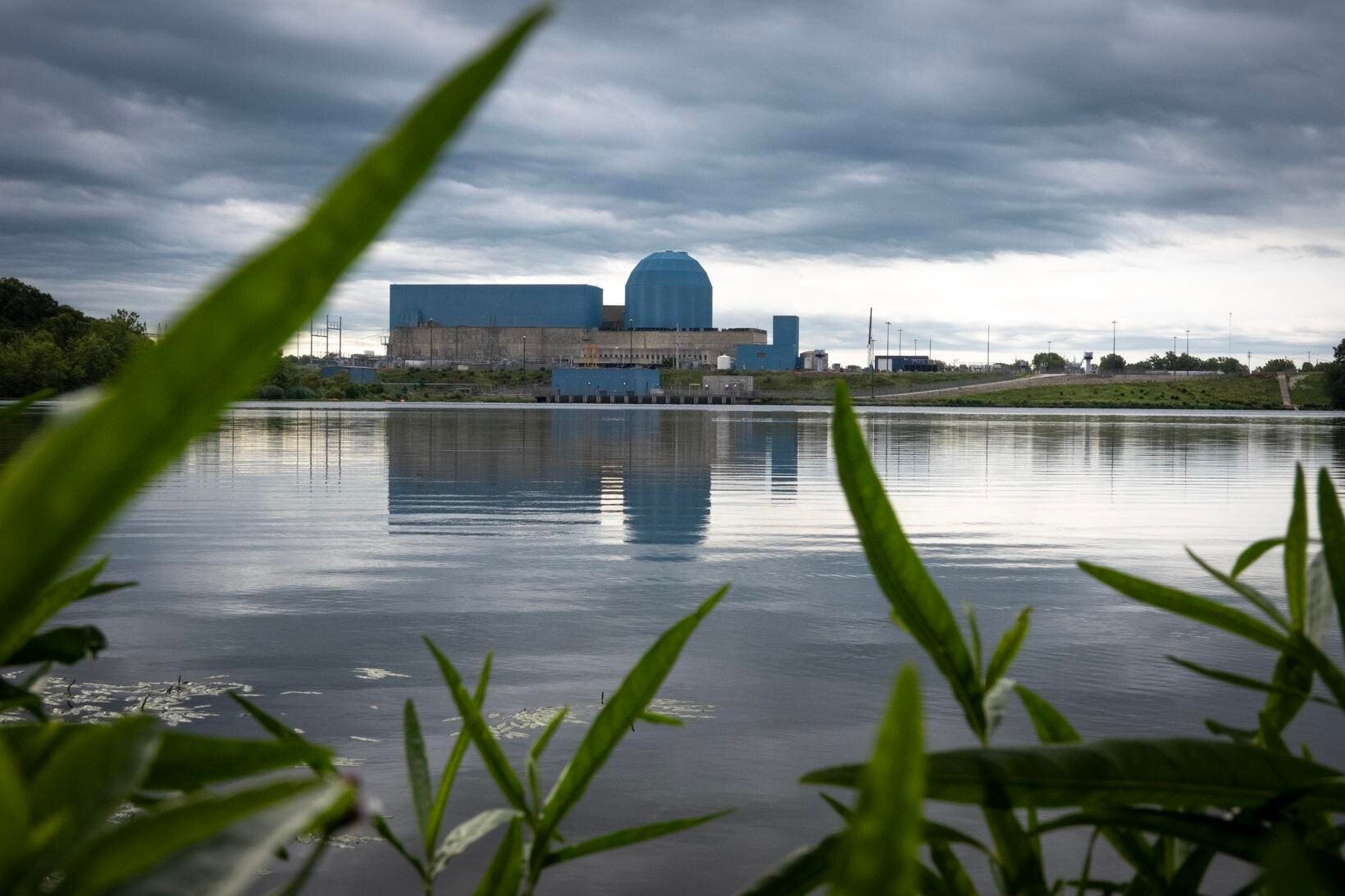
Today, workers are racing to restart Three Mile Island's sister reactor, Unit 1. It's been renamed the Crane Clean Energy Center, and Microsoft is paying for it: a 20-year, $16 billion contract to buy every watt of electricity the plant produces once it comes back online, expected in late 2027, according to industry tracker Energy Central . The power won't heat homes or run factories. It will feed Microsoft's AI data centers—windowless buildings full of computer chips that need to run, without interruption, 24 hours a day.
The plant that once symbolized nuclear power’s downfall will soon run chatbots.
That's not an isolated deal. In fact, it’s part of a pattern reshaping who controls America's energy future. In June, the U.S. and Canada each announced plans to build 10 new nuclear reactors, the biggest coordinated nuclear push North America has seen in decades, per Crypto Briefing . Every major AI company—Microsoft, Google, Amazon, Meta—has now signed at least one nuclear deal in 2026, committing to more than a dozen agreements worth nearly 10 gigawatts of capacity, enough to power roughly 7 million homes.
They're no longer just buying electricity. They're financing power plants directly, and in doing so they're succeeding where the U.S. government and the utility industry failed for 40 years: making nuclear power affordable to build again.
Rafael Mariano Grossi, who runs the UN's nuclear watchdog agency, the International Atomic Energy Agency, put it plainly in comments carried by UN News : “Only nuclear energy can meet the five needs of low-carbon power generation, round-the-clock reliability, ultra-high power density, grid stability and true scalability.”
In plain terms: nuclear plants run constantly and don't depend on weather the way solar and wind do—exactly what an AI data center needs, since it can't power down at night.
The numbers are striking. Global electricity demand is projected to grow by more than 10,000 terawatt-hours by 2035 — equivalent to re-adding the entire current consumption of every advanced economy on earth—with data centers driving more than a fifth of that growth in wealthy countries by 2030, according to figures cited by UN News . By decade's end, AI data processing in the U.S. is projected to use more power than the country's aluminum, steel, cement, and chemical industries combined. Meanwhile, the queue of projects waiting to connect to the U.S. grid has swollen past 2,600 gigawatts, with average wait times nearing five years, Energy Central reports.
That pressure is driving the deals. Microsoft's Three Mile Island restart is the marquee example, but far from the only one. Meta has signed agreements worth up to 6.6 gigawatts of nuclear power , nuclear-industry outlet NucNet reported. Google has struck deals with two nuclear developers and a separate contract for 1,800 megawatts of new capacity. Amazon has put $700 million into X-energy to build up to a dozen small nuclear reactors — compact, factory-built units designed to be faster and cheaper than traditional plants, per SMR Intel .
As Google's own AI infrastructure lead, Manuel Greisinger, described the logic to UN News : “AI is the engine of the future, but an engine without fuel is almost useless. Nuclear energy is not only an option, but also an indispensable core component of the future energy structure.”
Almost everything tech companies are funding—Meta, Amazon, most of Google's bets—is small modular reactors: compact designs, none of which have been completed commercially in the U.S. yet. The last large-scale reactors completed here were Georgia's Plant Vogtle Units 3 and 4, completed in 2023 and 2024, seven years late and $36.8 billion over budget — more than double the original estimate — the most expensive power plant ever built.
Washington wants to change that: in June, the Department of Energy pledged up to $17.5 billion in loans for 10 new reactors, just like the Vogtle design, built by Westinghouse—with construction to start by 2030. For now, the only mega-reactor actually coming back online is a restart, not a new build.
Critics perceive this publicity as nothing more than a well-funded press release. Writing in the Bulletin of the Atomic Scientists this July, researchers Molly Langabeer and M.V. Ramana argued that nuclear power and small reactors “will be unable to provide any significant boost to the electricity consumption of data cente...
AIPROPX is an independent multi-source news index — we track, compare, and connect coverage from across the web into one place you won't find anywhere else.