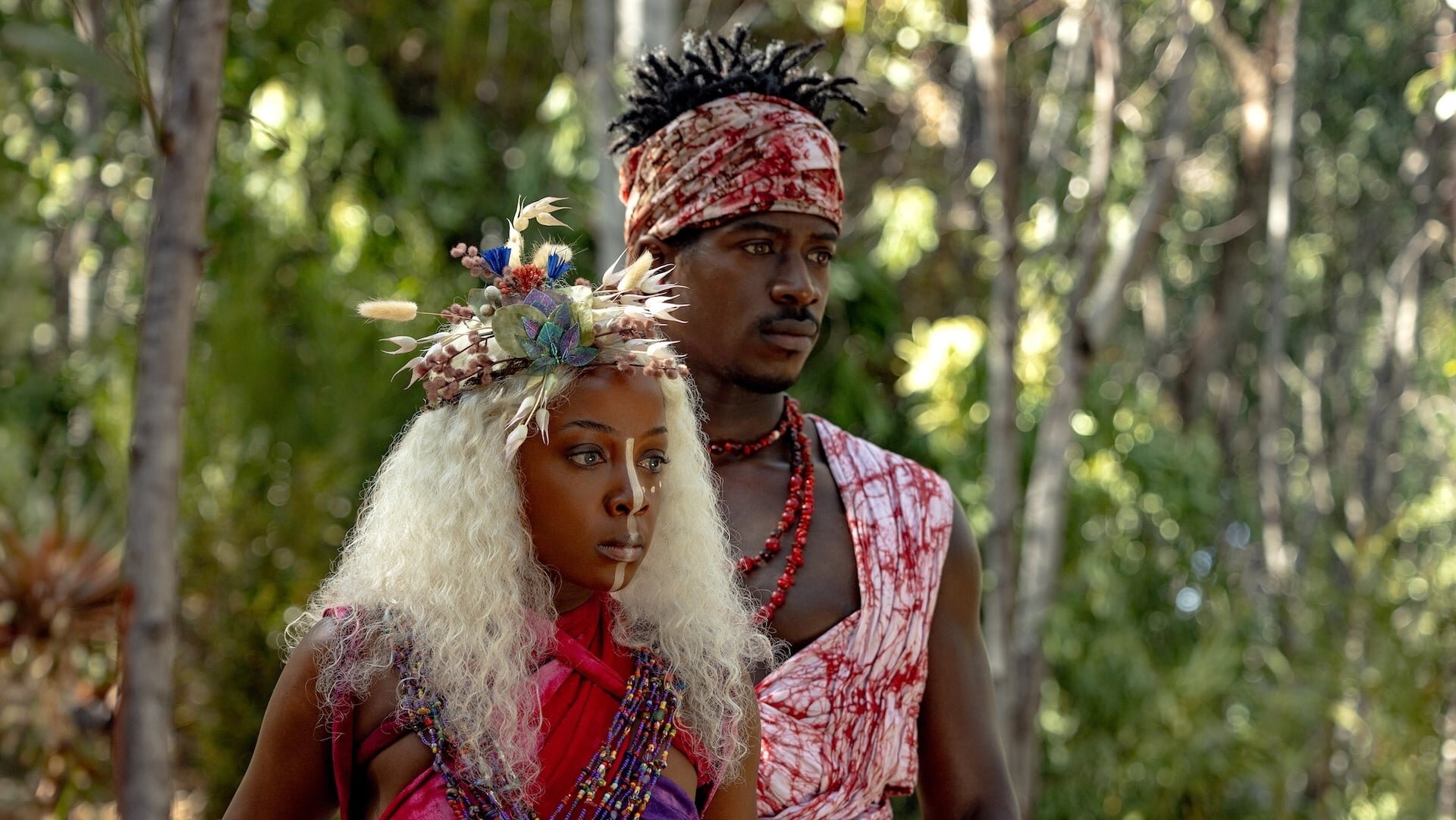
For years, Orïsha existed only in readers' imaginations.
Ever since Nigerian-American author Tomi Adeyemi introduced readers to the West African-inspired fantasy kingdom in Children of Blood and Bone , fans have imagined its palaces, debated its heroes, and envisioned its magic through BookTok , fan art, and fancasts. On Monday night at New York's Brooklyn Academy of Music, audiences finally got their first glimpse of Hollywood's vision of Orïsha as director Gina Prince-Bythewood and members of the cast — including Thuso Mbedu, Regina King, Lashana Lynch, Tosin Cole, and Zackary Momoh — unveiled the film's first trailer .
SEE ALSO:
Tomi Adeyemi: "'Children of Blood and Bone' is an allegory for the modern black experience"
Ahead of the trailer's public release on Tuesday, Prince-Bythewood and the Children of Blood and Bone cast pulled back the curtain on adapting one of BookTok's defining fantasy novels. Set in Orïsha, the story follows Zélie Adebola (Mbedu), a young divîner determined to restore magic to the kingdom after a brutal king wipes out the maji and outlaws their powers.
During a wide-ranging conversation moderated by writer and actor Lena Waithe, who joked onstage about once serving as Prince-Bythewood's assistant, the director offered a glimpse at the years of research, collaboration, and intention that went into translating that story to the screen. She discussed everything from grounding the film's magic in African history and spirituality to training actors for months of combat and recruiting Nigerian singer-songwriter Tems to shape the soundtrack.
Gina Prince-Bythewood says she had to be ready for Children of Blood and Bone
Gina Prince-Bythewood, director of "Children of Blood and Bone."
Credit: Lephatse Motshana courtesy of Paramount Pictures.
One of the biggest revelations of the evening was that Prince-Bythewood almost never directed Children of Blood and Bone at all.
The filmmaker revealed she'd been approached to direct the adaptation three separate times over the last seven years. Twice, she turned it down.
Looking back, she said the timing simply wasn't right. "I was not emotionally ready," Prince-Bythewood told Waithe. "And I think actually I didn't know how to make this yet."
It wasn't until after directing Netflix's The Old Guard and the critically acclaimed historical epic The Woman King that she felt she had developed both the technical confidence and emotional perspective to take on Adeyemi's sprawling fantasy universe. "There was something about this third time," she said. "It happened when it was supposed to happen."
Thuso Mbedu plays Zélie in "Children of Blood and Bone."
Credit: Lephatse Motshana courtesy of Paramount Pictures.
"When I read it, I just felt so connected to this young hero who's fighting to find her purpose."
The connection, Prince-Bythewood explained, wasn't just about scale. She found herself deeply identifying with Zélie, the young heroine fighting to reclaim magic in a world that has tried to erase it.
"When I read it, I just felt so connected to this young hero who's fighting to find her purpose," Prince-Bythewood said. At a moment when "so much is going on in the world right now," she added, the novel's themes felt newly urgent. Like her previous films, she hopes audiences leave Children of Blood and Bone understanding what she's trying to say but also "leave with hope."
That sense of purpose also shaped the way Prince-Bythewood viewed the adaptation itself. Rather than simply translating a bestselling novel to the screen, the director saw an opportunity to push fantasy somewhere Hollywood has rarely gone before. "I couldn't say no," she said. "It was something even bigger in a space that we hadn't got to see ourselves in, which is fantasy and big, epic fantasy."
Building Orïsha meant looking beyond Hollywood fantasy
Damson Idris plays Inan and Cynthia Erivo plays Commander Kaea in "Children of Blood and Bone."
Credit: Lephatse Motshana courtesy of Paramount Pictures.
Prince-Bythewood said one of the biggest challenges wasn't simply designing Orïsha. It was deciding what its magic should look and feel like.
The filmmaker never wanted the core kingdom of Children of Blood and Bone to feel like a familiar fantasy world with African influences layered on afterward. Instead, she and Academy Award-winning production designer Hannah Beachler ( Black Panther ) began with what Prince-Bythewood called a deceptively simple question: "How do we make magic feel cultural?"
The answer led them in unexpected directions. Beachler researched Ethiopian palaces and ancient African civilizations that Prince-Bythewood said have too often been erased from mainstream history. "The beauty of so much of our history is erased," Prince-Bythewood said. "Nobody knows that we had these great civilizations."
"How do we make magic feel cultural?"
Together, they envisioned Orïsha as a fantasy kingdom rooted in Nigeria and Yoruba mythology while embracing cultures from across the African diaspora — a world where, as Prince-Bythewood put it, "all of us" could see ourselves reflected.
That philosophy extended into every department.
Costume designer Charlese Antoinette Jones ( Judas and the Black Messiah ) brought not only her design experience but also her perspective as an Orisha priestess, helping shape colors and symbolism throughout the film. Hair designer Andrea Mona Bowman ( The Piano Lesson ) spent months testing how to create Zélie's signature white hair while showcasing a wide range of braids, textures, and styles across the cast. Dialect coach Yetunde Felix-Ukwu ( Sinners ) developed the film's Orïshan language while ensuring its Yoruba pronunciation remained authentic. Makeup, tattoos, title design, choreography, and even the mythology surrounding the gods of Children of Blood and Bone were approached with the same level of cultural specificity...