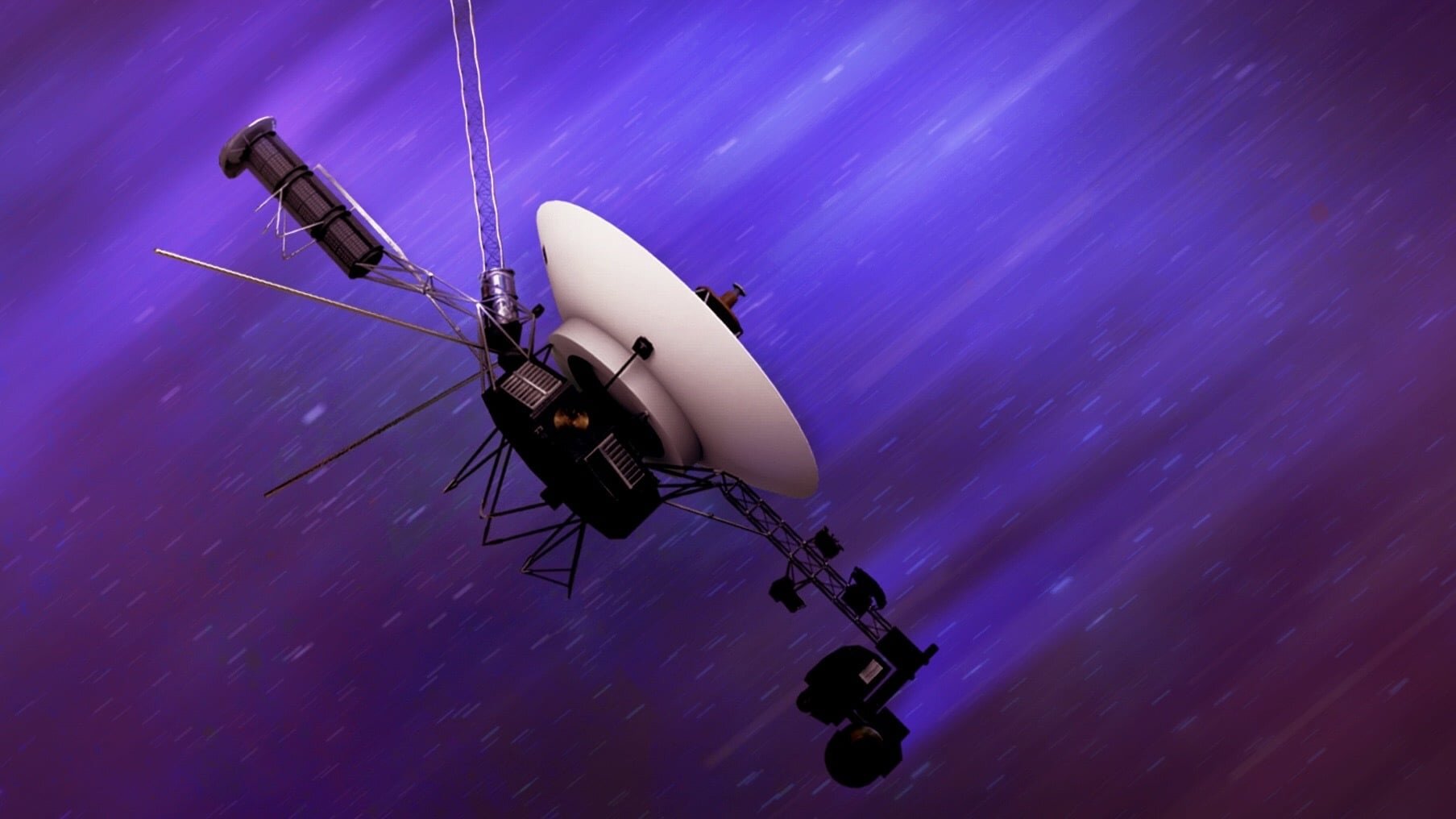
NASA engineers have found still more power inside Voyager 2 's aging systems, keeping the veteran spacecraft alive as it drifts through space at 34,000 mph.
Voyager 2 is now completely immersed in interstellar space , the region beyond the influence of the sun and its planets. But after 49 years in flight, its reserves have faded so much that engineers must decide, instrument by instrument, what stays on and what shuts down.
It started off with 10 instruments. Only three — the Cosmic Ray Subsystem, Magnetometer, and Plasma Wave Subsystem — are still on. Those remaining sensors measure high‑energy particles, the local magnetic field, and ripples in charged gas around the spacecraft to reveal what interstellar space is like.
To avoid having to sacrifice yet another instrument this year, engineers at NASA's Jet Propulsion Laboratory came up with a new idea. Nicknamed the " Big Bang , " the plan involved turning off certain powered devices, swapping in lower‑power alternatives, and balancing the system so the spacecraft stays warm enough to operate.
Those savings should keep the trio of instruments working for at least one extra year, according to the agency.
SEE ALSO:
Earth plays peekaboo with NASA's Perseverance rover across space
Launched in 1977 to survey the outer planets, Voyager 2 long ago outlasted its original five‑year plan and now ranks among humanity's most distant missions at about 13.3 billion miles from Earth. Between Voyager 2 and its farther twin, Voyager 1 , the spacecraft have explored four planets — Jupiter, Saturn, Neptune, and Uranus — 48 moons, and a host of planetary magnetic fields and rings.
In August 2012, Voyager 1 made history as it entered interstellar space, filled with material ejected by other stars that died millions of years ago. The twins are the only spacecraft ever to leave the solar system.
Every extra year of data from the missions carries outsize value, according to NASA.
Voyager 2 runs on radioisotope thermoelectric generators, which turn heat from decaying plutonium into electricity. That heat source weakens over time. The spacecraft generate about 4 fewer watts of power annually , leaving a thin margin to keep them running.
Engineers have spent years looking for ways to reduce the probes' energy consumption. In 2023, they tapped a hidden source of power in a voltage‑protection system on Voyager 2 to buy more time before facing a key instrument shutdown.
"All the decisions we will have to make going forward are going to require a lot more analysis and caution than they once did," said Voyager project manager Suzanne Dodd in a statement that is now already two years old.
Since 2024, the dwindling power supply has already forced the mission to turn off two science instruments on each of the spacecraft. Others had been switched off earlier because they were only needed during close planetary flybys, not in deep space.
The team now plans to apply the same strategy to Voyager 1, which is even farther from Earth than Voyager 2, at about 15.9 billion miles away. If that effort succeeds, both spacecraft will keep flying among the stars for at least an extra year.