
This is one outlet's own report from Axios — the article as it was filed.
Why Nepal's rare, deadly flood struck without warning
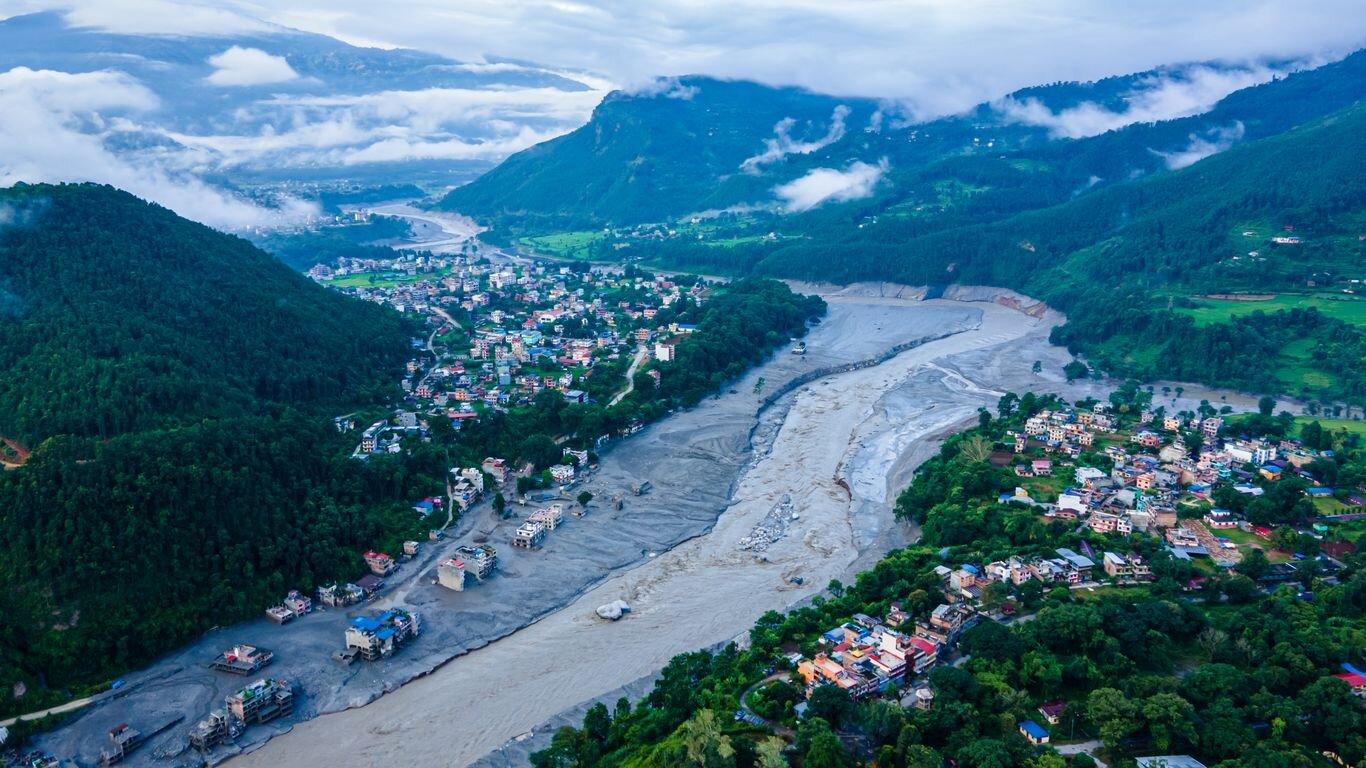
Thousands of people are missing and hundreds are dead after a flash flood in Nepal that struck with little warning earlier this week.
Why it matters: The flood is exposing the gaps in warning systems that are designed to watch out for extreme rain and rivers — not for sudden collapses high in the mountains during good weather.
Glacier-driven floods under clear skies — sometimes called "blue-sky floods" — can happen in the U.S. too, especially in Alaska and the Pacific Northwest, where sudden releases of glacial water can send floods and debris racing down mountain valleys.
This actually happened at Mount Rainier in Washington state in 2001, when debris flow from a glacier-related hazard caught people off guard during fair weather.
Driving the news: Nepali officials said Saturday nearly 3,000 people are missing from the Nepal-China region impacted by the floods that formed in the Himalayan mountains on Wednesday, per the Associated Press.
There have been nearly 700 deaths attributed to the disaster, too, AP reports.
Nepali authorities warned that there could soon be more water rushing through the valleys along the Chinese border, threatening the search for survivors.
What we're watching: As investigators assess what happened, researchers are questioning if more floods could hit the area or become more common in the years to come, and what that might mean for the globe at large.
How the rare "blue-sky flood" formed with little warning
What they found: The U.S. Geological Survey says that a section of a glacier and mountain debris collapsed on the north side of Lāngtāng Lirung, creating energy comparable to a magnitude- 5.2 earthquake (though no earthquake actually triggered it).
Investigators say satellite evidence indicates the ice-rock avalanche may have temporarily dammed the Lhende Khola near the Nepal-China border, forming a lake that subsequently burst.
The collapsed glacier flow then likely collected additional ice, water, rock and sediment, rapidly amplifying into a stronger mass that caused the widespread flooding, according to USGS.
The Trishuli River rose nine meters in 30 minutes during the flooding as well, adding to the disaster, per an analysis from the International Centre for Integrated Mountain Development .
Stunning stat: The flow traveled roughly 100 kilometers (about 62 miles) .
The disaster mainly hit the Tibet region's Gyirong County and the Rasuwa district in northern Nepal, which sits on the Tibetan border.
Videos posted to social media show widespread flooding and debris tackling villages and homes.
A graphic maps the glacier collapse and flash flooding that struck Nepal. Photo: Elif Acar/Anadolu
Reality check: There were no typical warning signs of the Nepali flood, researchers say. No thunderstorms, no rainfall, no rise in the river, no earthquakes.
This is considered a "blue-sky flood," where the preceding moments before a dangerous flood is picturesque, according to the University of Ottawa .
What they're saying: "The central lesson is that the absence of rain does not mean the absence of flood risk," Hossein Bonakdari, associate professor at the University of Ottawa's Department of Civil Engineering, said about the floods.
Why traditional flood alert systems struggled to catch it
Context: Nepal has a flood-warning system that focuses on watching rainfall, river levels and flooding in the larger river systems.
The ICIMOD says this typically covers major rivers and not the smaller waterways, which can lead to floods hitting with no warnings.
Yes, but: Experts told the New York Times the conventional system wasn't designed to notice flash floods created by a massive mountain or glacier collapse.
Because the flooding began high in the mountains under clear blue skies, it rapidly surged downward and avoided the normal trigger system.
"This suggests an important change in how we think about warning systems in high-mountain regions: we need to monitor the mountain as well as the weather and the river," says Bonakdari, of University of Ottawa.
How glacier floods could become more common
Between the lines: Researchers have not firmly established that global warming or climate change caused this flood, but it is a leading theory.
That's because any warming would have destabilized glaciers, permafrost and surrounding slopes, potentially increasing the threat of sudden collapses and floods, experts say.
Alton Byers, a geographer at the University of Colorado, Boulder, told Nature that the glacier breaking off suggests the permafrost on the mountain began thawing thanks to warming temperatures.
He said this could become more common worldwide. And with more people traveling to various locations with mountain ranges, there needs to be more awareness about how to detect flash flooding.
"You can't predict these events," he said.
What's next: Experts are calling on authorities to invest more in early-detection systems for areas vulnerable to extreme flash flooding.
◆ AIPROPX index record
- Region
- US
- Detected names
- Why Nepal'sThousandsNepalGlacierU.SAlaskaPacific NorthwestMount RainierWashingtonDrivingNepaliChina
AIPROPX is an independent multi-source news index — we track, compare, and connect coverage from across the web into one place you won't find anywhere else.