As the old physics wisdom goes, to answer big questions, build big machines. To that idea, CERN's Large Hadron Collider (LHC) has really delivered on all fronts in its last 16 years of operations. As humanity's largest, most powerful particle accelerator, the LHC had a hand in more than a few Nobel-winning discoveries, including the confirmation of the Higgs boson . It's been a lab for physicists around the world to explore nature's most extreme regimes—a pursuit that has sometimes led to odd findings bordering on modern alchemy .
But things weren't all perfect. Many expected that a system as huge and capable as the LHC could discover physics beyond the Standard Model of particle physics. It didn't. Physicists definitely noticed, with some even calling this lack of "new physics" their " nightmare scenario ."
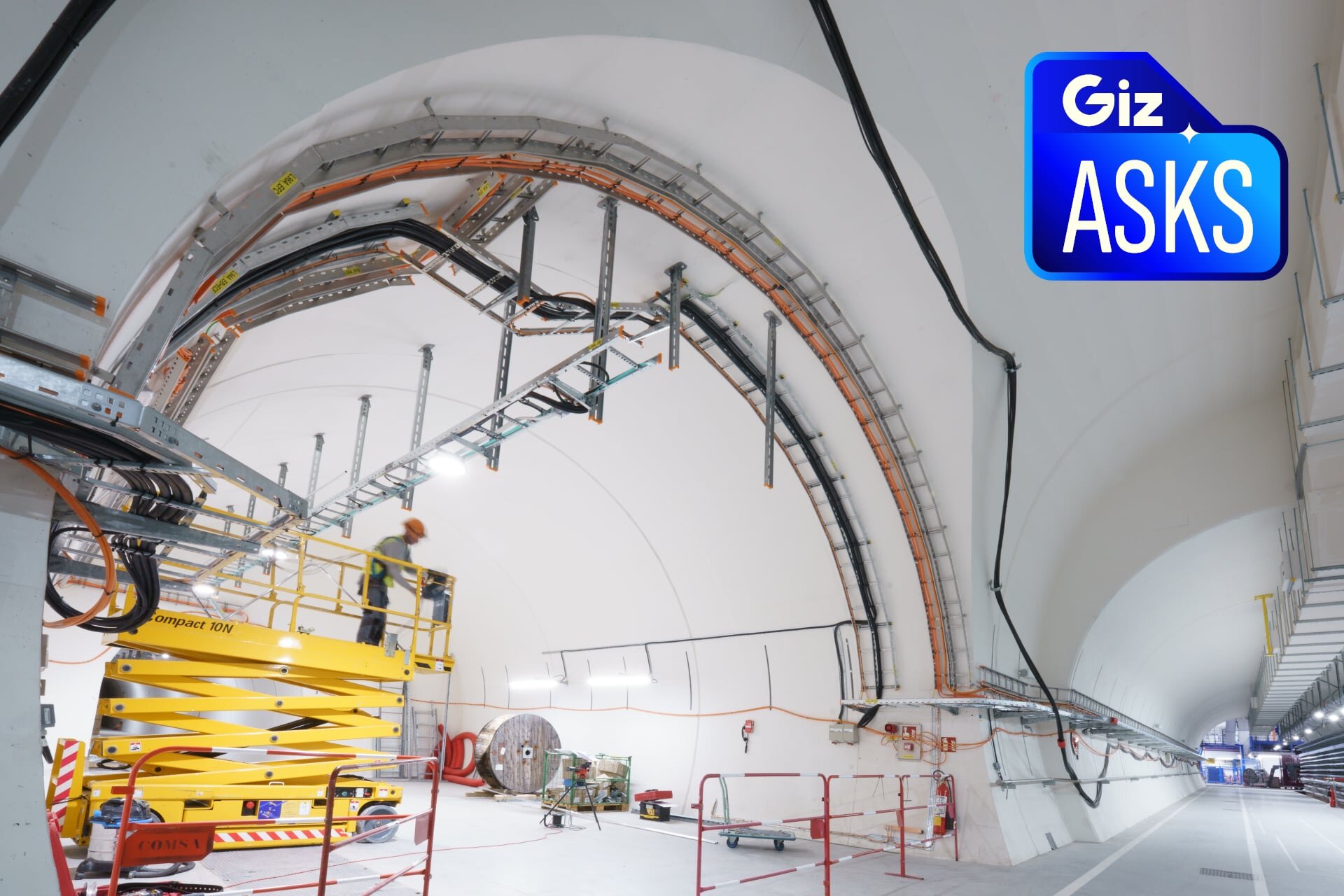
Meanwhile, last month, the LHC officially went on hiatus for Long Shutdown 3 . As the name suggests, this isn't its first long break, but it is arguably the most important vacation for the accelerator. When it comes back in 2030, it'll have a new name: the High-Luminosity Large Hadron Collider. And with its launch, naturally, people will start asking again: Will we find new physics this time?
For this Giz Asks, we asked experts to unpack the nuances of this question. How will the High-Luminosity LHC be different? What do physicists expect it could reasonably discover—or not discover? As experts, what questions are they personally hoping to explore? The following responses may have been lightly edited for length and clarity.
High-energy nuclear physicist , University of Kansas.
What particularly excites me is the possibility that the surprise could come from new ways of looking at the data itself. There is enormous interest today in AI-enabled discovery, and combining AI with much larger datasets and more powerful detectors could reveal structures that conventional analyses might miss. But I am especially interested in going further and developing genuinely model-independent approaches.
One example from my own work is quantum tomography. We have spent decades producing quantum systems at colliders. We are now beginning to ask whether we can reconstruct them as quantum systems. Every collision at the LHC is fundamentally quantum mechanical, but traditionally we reconstruct only part of that quantum story from the particles emerging from the collision. Quantum tomography turns the question around: can we use those particles to reconstruct a more complete picture of the quantum system that produced them?
Research staff with the ATLAS experiment , CERN's general-purpose particle physics program.
The High-Luminosity LHC (HL-LHC) is a major upgrade of the existing LHC that will allow ATLAS to collect about six times more data than today, opening a new era of precision measurements and searches for rare phenomena. To operate in this much more challenging environment, the ATLAS detector is undergoing major upgrades, including a completely new Inner Tracker for precise particle tracking, the High-Granularity Timing Detector to help separate hundreds of simultaneous proton collisions, and a redesigned trigger and data-acquisition system capable of processing far more information in real time.
ATLAS expects to record around 180 million Higgs bosons, allowing us to study its properties with unprecedented precision and look for even small deviations from Standard Model predictions. Particularly important measurements will include the interaction between the Higgs boson and the top quark, the heaviest known elementary particle, as well as the extraordinarily rare production of two Higgs bosons, which provides direct information about the Higgs self-interaction.
The HL-LHC will also produce billions of top quarks and enormous samples of other particles, providing new opportunities to search for phenomena that have so far escaped detection. Handling these unprecedented datasets will require major advances in computing, with artificial intelligence and machine learning playing an increasingly important role in reconstructing particles, selecting interesting collisions, and analyzing the data efficiently.
While new discoveries can never be guaranteed, the HL-LHC will allow us to test our current understanding of particle physics more stringently than ever before and potentially uncover clues about physics beyond the Standard Model.
Accelerator physicist at GSI Darmstadt; currently with the ALICE collaboration , CERN's heavy-ion physics program.
The principal goal of the High‑Luminosity LHC is to increase the rate of proton–proton collisions—and the experiments’ ability to analyze them—in order to probe what lies beyond the Standard Model, the rather banal label for what is arguably humankind’s grandest intellectual construction. The LHC has already subjected the Standard Model to extraordinarily precise tests, including the momentous discovery of the Higgs boson.
But physics is vast, and genuine surprises often arise in its many sub‑fields even when they remain consistent with the Standard Model at the most fundamental level. This is true at the LHC itself. In heavy‑ion collisions, for example, we see a rich variety of emergent phenomena in quark–gluon plasma (QGP) physics. By colliding beams of heavy nuclei, we can recreate tiny droplets of this unimaginably hot, dense, and strange substance that filled the universe in its initial microseconds. The power to do this, however fleetingly, in the laboratory still feels miraculous to me.
Physicists in ALICE and the other LHC experiments have already uncovered phenomena they did not anticipate. The most striking are related to the emergence of collective behavior in hadronic matter. But there is so much more, ranging from the fate of heavy quarks in the QGP to the detection of the heaviest anti- and hyper-nuclei and the effects of extreme electromagnetic fields. With higher luminosity, innovative detector technology, and, possibly, new nuc...