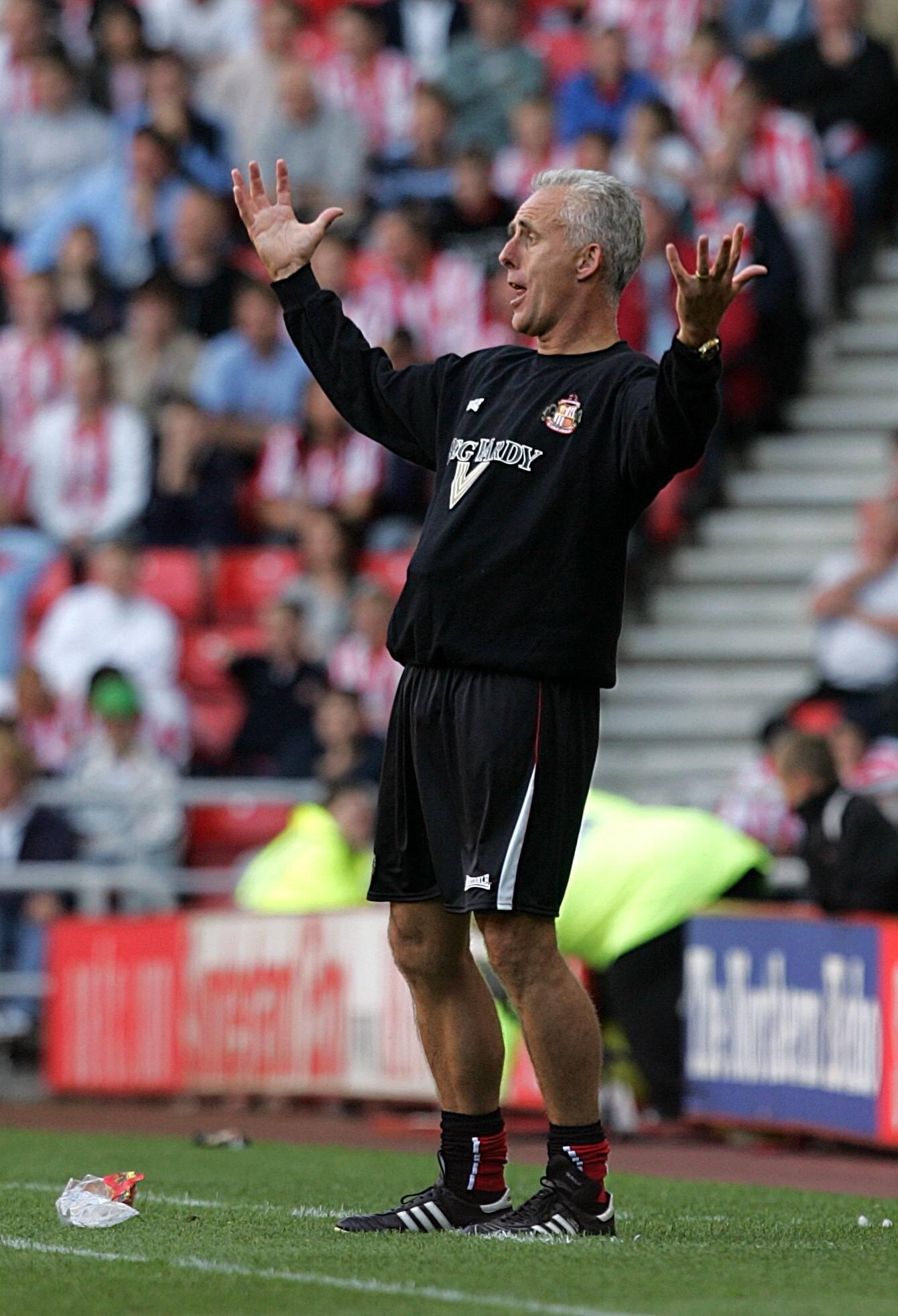
Mick McCarthy, Sunderland Manager (Photo by Owen Humphreys - PA Images/PA Images via Getty Images) | PA Images via Getty Images
Back on this day 21 years ago, optimism was cautiously high. Mick McCarthy had done a sensational job getting the club promoted despite some pretty hefty financial constraints imposed upon him by Captain Bob, and despite those financial constraints continuing upon promotion, the hope – if not the belief – was that McCarthy could continue working the magic he’d managed so far in his two and a half years in charge.
All summer, we’d watched on as McCarthy continued his transfer strategy of picking up rag-tag and bobtail players for relatively small fees and turning them into decent turns.
Dean Whitehead, Liam Lawrence, Stephen Elliott and Danny Collins had all arrived as unknowns and produced some top-drawer displays – and while Marcus Stewart, Thomas Myhre and Jeff Whitley, who’d been staples in the team the previous year, had departed, we all trusted McCarthy to work his magic on another pittance.
It wasn’t a McCarthy strategy out of choice – Bob Murray was throwing only the barest of scraps his manager’s way, and failed to back him to any notable extent. In truth, McCarthy should have quit in protest, but he’s not that sort of chap.
So, we went into the season opener against Charlton Athletic – themselves a steady, strong act under Alan Curbishley – keen to see what the likes of Kelvin Davis, Tommy Miller, Andy Gray, Jon Stead and Nyron Nosworthy could add to the mix. All of the new arrivals were decent players at the level below – McCarthy had taken what’s known today as the Ipswich Approach™ to Premier League returns – while a teammate of Tommy Miller’s at the Tractor Boys the previous season, Darren Bent, was lining up for Charlton.
He’d been close to joining Sunderland – McCarthy had certainly wanted him, and us and Charlton had bids accepted. However, after talks with both clubs, he stayed in the south.
Of course, it just so happened that his debut was against Sunderland at the Stadium of Light, and he wasted little time in puncturing the optimism.
Sunderland had begun the game in worryingly sluggish style – and after just 10 minutes or so, we were one down.
Carl Robinson – who’d been an effective, if not eye-catching, performer in the Championship – was caught out pondering on the ball, and Charlton were able to counter.
Bent was put in the clear, attacking the North Stand, and although Kelvin Davis did his best to slow him down, as was all-too-often the case with Calamity Kelvin, his best was nowhere near good enough. Bent scored, and the writing was on the wall for the disappointingly low crowd of 34,000.
Charlton were all over us – Danny Murphy and ex-Mag Darren Ambrose should have scored – while Alexei Smertin, who should have opened the scoring before Bent did, rattled the crossbar from range.
Completely against the run of play, Andy Gray equalised – tapping in from close range after good work from Andy Welsh down the left – and at half-time we went in level, hoping we’d weathered the storm of our Premier League return.
That hope was increased shortly after half-time, as Ambrose was sent off for a horrible lunge on Stephen Wright, but the numerical advantage did little to stem the tide. Charlton were denied a pretty clear penalty before Danny Murphy popped a free-kick into the goal from a mile out. To be fair to CK, there wasn’t much he could have done with that one.
Sunderland pushed to equalise, but the goal wasn’t forthcoming, and indeed it was Bent who wrapped the game up in injury time for Charlton – taking advantage of us throwing men forward to score his second, and exposing what would soon be an evident weakness in Davis’s game: low shots across him.
It was pretty clear for all in attendance that day that it would take another McCarthy miracle if he was going to keep this squad of players up – and so it proved. McCarthy’s and Murray’s luck had run out. This was truly the beginning of the end of Bob Murray’s tenure at Sunderland.