CHICAGO — Seven years ago, the NCAA and conferences marched to Capitol Hill to urge lawmakers to pass federal legislation to regulate an unruly ecosystem.
On Thursday, at least two of those conferences rebuffed Congress’ most bipartisan product yet.
The SEC and Big Ten remain opposed to the U.S. Senate’s Protect College Sports Act , thrusting the legislation into an uncertain and perilous place.
The U.S. Senate adjourned on Thursday without beginning the procedure of scheduling the bill for a vote next week — the final week that lawmakers are in session before a monthlong recess. While the bill's chances of a vote next week are in peril, there remains a very narrow and somewhat unlikely path: Majority Leader John Thune could still file cloture for the act on Monday evening once the Senate's session begins, potentially scheduling it for a late-week vote.
But the opposition from the industry’s two most valuable stakeholders stands as a significant impediment to Congressional passage.
Big Ten and SEC university presidents and chancellors met, separately, on Thursday and did not formally vote — a signal that their monthslong opposition remains for legislation that they believe doesn’t provide enough legal protection and doesn’t close a cap circumvention loophole.
As Big Ten coaches cycled through Day 3 of the league’s football media days here at the Chicago Hilton, commissioner Tony Petitti and his executive team worked on congressional matters from the hotel’s second floor on Thursday.
It was a somewhat wild scene here.
As the Senate bill potentially met its fate and media days unfolded, young people poured into the hotel lobby as one of the country’s largest music festivals, Lollapalooza, kicked off across the street. An activism march even arrived in the hotel lobby as a couple dozen protesters chanted amid partygoers and media day participants.
Meanwhile, on Capitol Hill, the Congressional effort to regulate college athletics again met one of its biggest obstacles: the SEC and Big Ten.
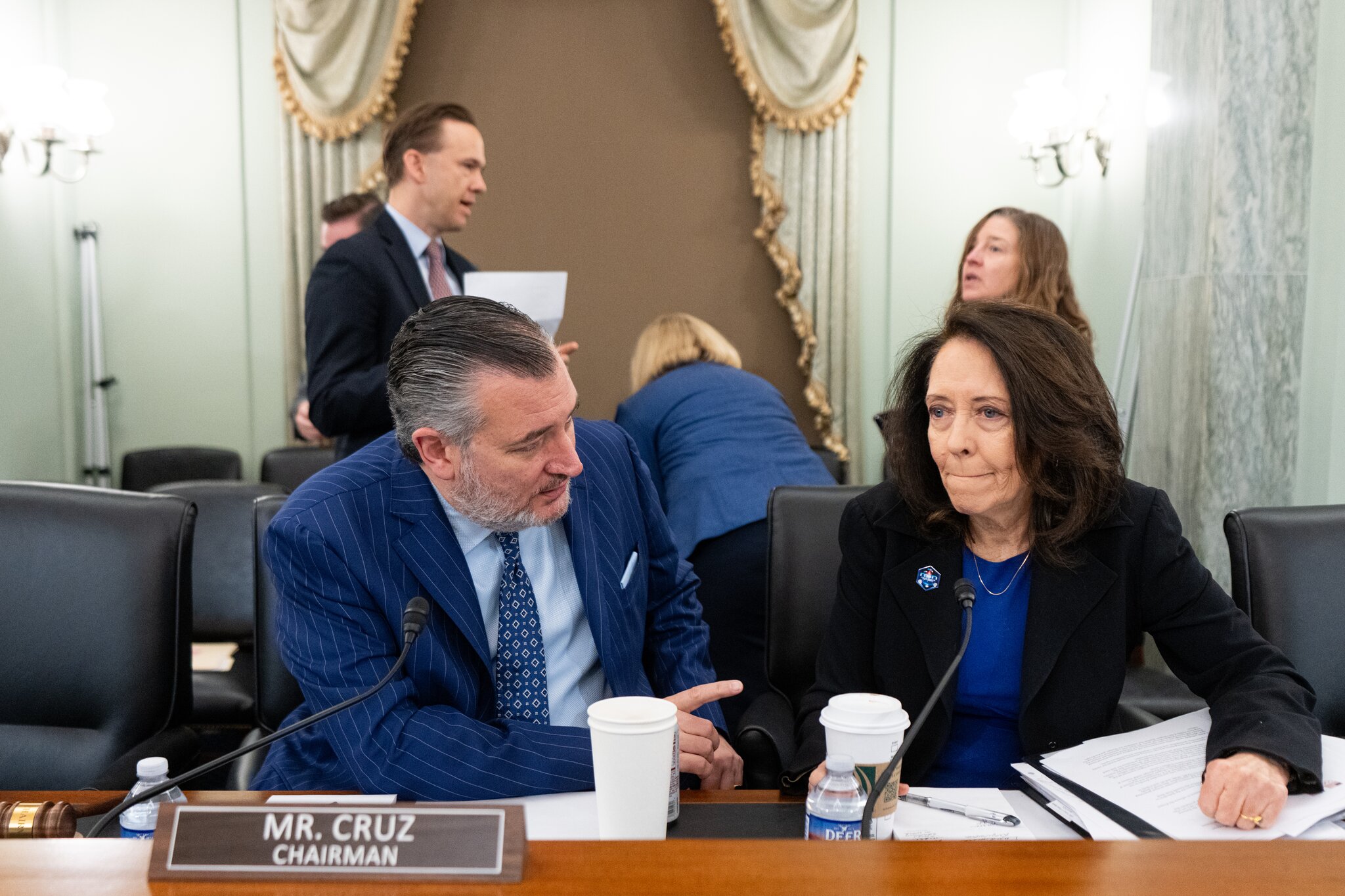
Conference officials, opposed to the bill since its introduction in May, have spent several days embroiled in intense negotiations with legislative staffs and the co-authors of the bill itself, Sens. Ted Cruz, Maria Cantwell and Eric Schmitt. The senators believe they’ve made “major concessions” to appease the two leagues, a Senate staff member said this week in a statement.
However, conference executives disagree.
They expressed discontent with a provision in the legislation that, while raising the revenue-share cap from $21.3 million to $48.8 million, did not completely close a circumvention loophole. Conference commissioners and school administrators wanted stricter language to prohibit schools from exceeding the revenue-share cap by using “associated entities,” such as corporate sponsors and multimedia rights partners, to redirect athletic department funds to their rosters.
Senators themselves pushed back against that notion. In a post on X, in fact, Cruz claimed that commissioners want to bar third-party companies associated with schools from striking any and all NIL deals with athletes, even kosher endorsement contracts. He contends language in the latest bill creates the hardest cap possible beyond violating a person’s NIL rights.
“The cap is a hard cap. Full stop. That loophole is closed,” Cruz wrote .
There’s confusion about how the cap and Associated Entity language work in the Protect College Sports Act. Let me clear it up. The cap is a hard cap. Full stop. That loophole is closed. Once a school hits the cap, a player can still do NIL deals on the open market — if the deal…
— Senator Ted Cruz (@SenTedCruz) July 30, 2026
Later in the day, a Senate staff member sent a memo to conference commissioners outlining the ways that the bill closes the loophole, writing that the NCAA and College Sports Commission has “clear authority to establish and enforce rules ensuring that associated entity compensation is counted against the cap.”
SEC administrators have gestured toward another issue: The bill doesn’t preempt enough state laws and doesn’t protect the NCAA and leagues from enough legal challenges.
“We can’t support it in its current form,” said one league administrator.
The two leagues stand mostly alone.
Most other NCAA Division I conferences supported the act, including the NCAA itself, whose president, Charlie Baker, released a statement on Thursday imploring college leaders to “support the bill now.”
The ACC did not take a formal vote during its presidents call. While there is overwhelming support for the legislation within the league, a small group of members expressed a level of opposition, presumably over an expansion provision that caps power conference membership at 19 and requires those schools moving from one power conference to another to operate as an independent for five years.
Notre Dame, meanwhile, informed the ACC that it was supportive of the bill as both a member of the ACC and as an independent in football, sources tell Yahoo Sports.
At a meeting Thursday, Big 12 presidents and chancellors reaffirmed their support for the bill, but are suggesting clarifying language related to the associated entity provision.
The legislation’s future is now murky, at best.
Next week’s Senate agenda is busy. Even if Thune believes the bill has the votes to file cloture on Monday evening, a plethora of issues clog floor time, including a spending bill, budget resolution, Russia sanctions and administrative nominations.
Without reaching the floor next week, the legislation faces long odds once the Senate returns in September as the mid-term election cycle cranks up.
In fact, a Senate staff member quipped to Yahoo Sports on Thursday that if the SEC and Big Ten did not support the bill and wish to “punt to September,” that the leagues “will have to find new senators.” It is an indication that Cruz, Cantwell and Schmitt are on their last gasp with the legislation.
...