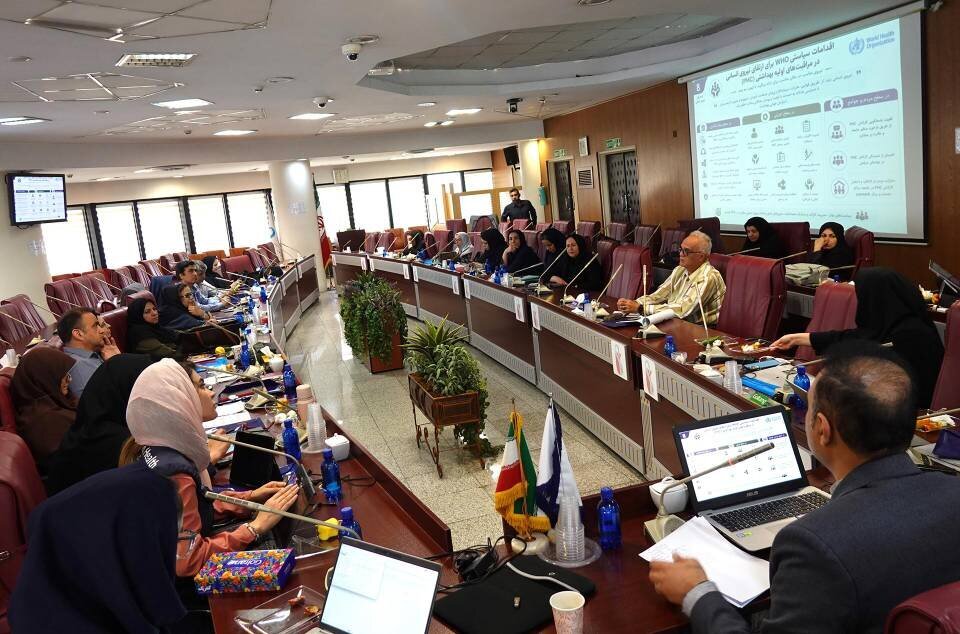
TEHRAN – The Ministry of Health and Medical Education and the World Health Organization (WHO) Country Office in Iran have organized a capacity-building workshop to strengthen primary health care (PHC).
Hosted by Iran University of Medical Sciences, the workshop targeted the staff of the PHC Network Management Center; it formed part of WHO’s ongoing support to strengthen PHC as the foundation of a resilient and equitable people-centered health system, the WHO website announced in a press release on July 28.
Designed to support the PHC Network Management Center’s ongoing revision of the national PHC strengthening policy document and ensure greater alignment with global evidence and WHO guidance, the training aimed to enhance participants’ capacity to apply the PHC Operational Framework’s 14 levers in strategic planning and implementation.
The program featured a series of interactive technical sessions covering each of the 4 strategic levers (political commitment and leadership, governance and policy frameworks, funding and allocation of resources and engagement of community and other stakeholders) and the 10 operational levers (models of care, PHC workers, physical infrastructure, medicines and other health products, engagement with private sector providers, purchasing and payment systems, digital technologies for health, systems for improving the quality of care, PHC-oriented research and monitoring and evaluation.
A dedicated cross-cutting session on health system resilience highlighted strategies for strengthening the capacity to prepare for, respond to and recover from emergencies while maintaining the delivery of essential health services.
Opening the workshop, Dr Babak Farouki, Director General of the PHC Network Management Center, underscored the central role PHC plays in improving population health and advancing universal health coverage. Strengthening PHC, he said, requires continuous investment in workforce capacity, evidence-informed planning and multisectoral collaboration to ensure that health services remain accessible, integrated and responsive to people’s needs.
“Primary health care is the cornerstone of a strong, resilient and people-centered health system,” said Dr Jean Jabbour, WHO Representative and Head of Mission to the Islamic Republic of Iran.
“By strengthening national capacity to apply the PHC Operational Framework, Iran is reinforcing its commitment to ensuring that quality essential health services are accessible, equitable and responsive to the needs of all people. WHO remains committed to supporting the Ministry of Health and Medical Education in translating global evidence into practical actions that advance universal health coverage, strengthen health system resilience and improve health outcomes for communities across the country.”
Dr Fatemeh Saleh, WHO Iran’s Technical Officer for Access to Medicines and Health Technologies, delivered a session on Operational Lever 8: medicines and other health products, focusing on ensuring equitable access to safe, effective, quality-assured and affordable essential medicines and health technologies.
Dr Mashyaneh Haddadi, National Health Policy Advisor, facilitated sessions on Operational Lever 9: engagement with private sector providers, and Operational Lever 10: purchasing and payment systems, highlighting policy options for effectively integrating private providers into PHC service delivery, strengthening stewardship and accountability, and designing strategic purchasing and provider payment mechanisms that promote quality, efficiency and equitable access to services.
Presentations and group discussions explored how the operational levers can be translated into actionable interventions within the health system. The workshop also provided a platform for technical exchange among participants, enabling them to share experiences, identify implementation challenges and discuss opportunities for strengthening PHC across the health system.
Approximately half the PHC Network Management Center’s staff participated in the training. By strengthening national technical capacity and fostering a common understanding of the PHC Operational Framework, the workshop represents an important step in supporting Iran’s efforts to advance integrated, people-centered PHC and progress towards universal health coverage.