This is one outlet's own report from The Atlantic — the article as it was filed.
AIPROPX ReportThe Atlantic · 7h ago
What’s Happening to the WNBA Isn’t Normal
Let’s start with the good: The WNBA is more popular than ever. During the offseason, the league and the WNBA Players Association reached a landmark collective-bargaining agreement resulting in a 400 percent increase, on average, in player salaries . The average franchise valuation has soared 59 percent in the past year ; the Golden State Valkyries were appraised at a league-high $850 million. Between now and 2030, the WNBA will add three new teams, in Cleveland, Detroit, and Philadelphia. And the WNBA saw a 44 percent jump in ratings for this year’s All-Star Game—which, for the first time ever, hosted more in-person fans than the NBA’s .
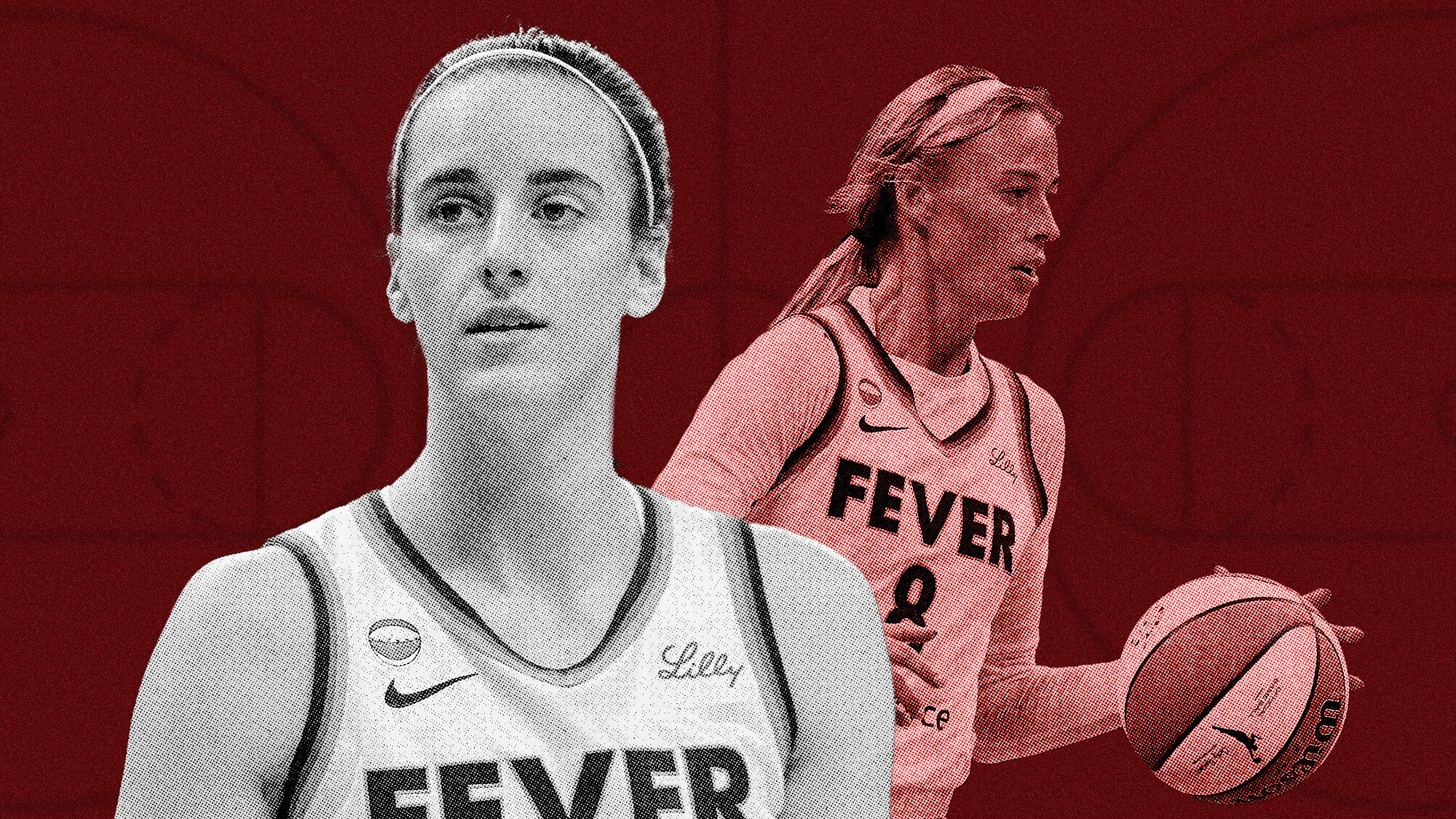
Yet this success has come amid unprecedented controversy. In early July, a group of 11 Republican lawmakers sent a letter to Cathy Engelbert, the WNBA’s commissioner, demanding that she be held accountable for not adequately addressing “repeated acts of unnecessary physical hostility and violence” on the court against the Indiana Fever guard Caitlin Clark, who has emerged as one of the league’s most popular players. The letter also suggested that these acts may be “racially motivated” against Clark, who is white, and called for the Department of Justice to investigate. And right before the All-Star Game, Clark’s teammate Sophie Cunningham told ESPN , “I want to protect young girls in a locker room, or young girls in sport who shouldn’t have to go against biological men,” which immediately became a massive talking point around and outside the league. Shortly thereafter, multiple rallies sprang up in support of Cunningham; Celeste Keaton, a co-owner of the Seattle Storm, was suspended after verbally confronting a pair of teenage fans during a game who were holding signs supporting Cunningham.
The discussions surrounding Cunningham and Clark have different origins; nonetheless, because they play together, their respective dramas have snowballed into one messy dispute that now envelops the league. Engelbert has certainly guided the league into its most financially stable era, but this is a complicated crossroads requiring delicate steering. Even if the WNBA isn’t in immediate danger of losing popularity, culture wars can be exhausting over time. And because its explosive success is the very thing attracting many of its critics, a narrative course correction may not be so simple. But the league needs to protect its players, and be careful not to kowtow too much to its critics.
Managing the WNBA responsibly is especially challenging in this political and media environment. As Media Matters for America recently noted , Fox News has dedicated at least 206 segments to the WNBA since late June, most of which revolved around racial issues or the inclusion of trans athletes in the league. It’s difficult to refocus attention when a major news network isn’t letting up.
Much of what’s happening now began when Clark entered the league, in 2024. In a short time, her tenure has helped the WNBA transform financially and receive more mainstream attention. But Clark’s stratospheric popularity has been complicated to manage. By keeping her views private, she’s become a blank slate for anyone’s cause. Though she has never publicly acknowledged her own political leanings, prominent conservatives have wielded Clark against her own league to advance MAGA’s racial grievances.
And whenever a perception emerges that Clark is being treated unfairly by her peers, the backlash is outsize. In June, the Phoenix Mercury forward Alyssa Thomas was suspended after hitting Clark in the throat during a game, one of the incidents prompting the letter from the Republican lawmakers. It was a bad play, but aggressive physical contact is an inevitable part of sports . Yet it was treated as an outlier: Thomas, who is Black, told reporters that after her play with Clark went viral, she received death threats and was called racial slurs .
The heated environment can be seen as part of a larger outcry. The league is about 70 percent Black, and anywhere from 25 to 35 percent queer; historically, its players have embraced progressive issues. In 2016, the Minnesota Lynx wore T-shirts calling for justice and accountability following the police-related deaths of Philando Castile and Alton Sterling . A few years later, Senator Kelly Loeffler of Georgia, a Republican, wrote a letter to Engelbert criticizing the league’s support of the Black Lives Matter movement. In response, players backed Raphael Warnock, who eventually won the seat from Loeffler in the 2020 election.
This history has made the WNBA low-hanging fruit for MAGA figures, whether politicians or commentators, who use it to score cheap points with their base. Critics lacking a serious investment in women’s basketball can conveniently swoop in to recite their spiel, and pay no attention to the sport itself. When the league was less popular, its players may have been freer to express their opinions without blowback. Perhaps that’s no longer possible. During All-Star weekend, I spoke with the Lynx’s rookie sensation, Olivia Miles, who talked about the difficulty of using the league as a platform for other issues, given the current attention. “Learning how to navigate that through sports is not an easy thing to do, because everyone is watching us at all times,” she said. “There’s so many things that are said and done and criticized.”
The freedom to voice one’s politics goes both ways, and in Cunningham, conservative critics have a figure whose beliefs explicitly align with theirs on one particular topic. In the ESPN profile, she characterized her politics as “very much in the middle.” But her actions have drawn polarized attention. In Minneapolis, Cunningham took pictures with the former college swimmer Riley Gaines, who for years has advocated to keep transgender women out of women’s sports, and whose activism has been far more explicitly partisan. (Gaines has said the Biden administration “pushed radical gender ideology every chance it got...
SomethingLet’sThe WNBADuringWNBA Players AssociationGolden State ValkyriesBetweenWNBAClevelandDetroitPhiladelphiaAll
AIPROPX is an independent multi-source news index — we track, compare, and connect coverage from across the web into one place you won't find anywhere else.