This is one outlet's own report from Yahoo Sports — the article as it was filed. Other outlets are covering the same event; open the full story to compare every source side by side.
When it comes to backup quarterbacks, I have two profiles that I prefer. The first is the hyper-athlete, along the lines of Malik Willis , because with an extremely shifty, mobile quarterback, at least you can do SOMETHING if he’s forced into the game. Willis is perhaps the best possible version of this quarterback because he also has an absolute cannon, which is why he’s now getting a chance to start.
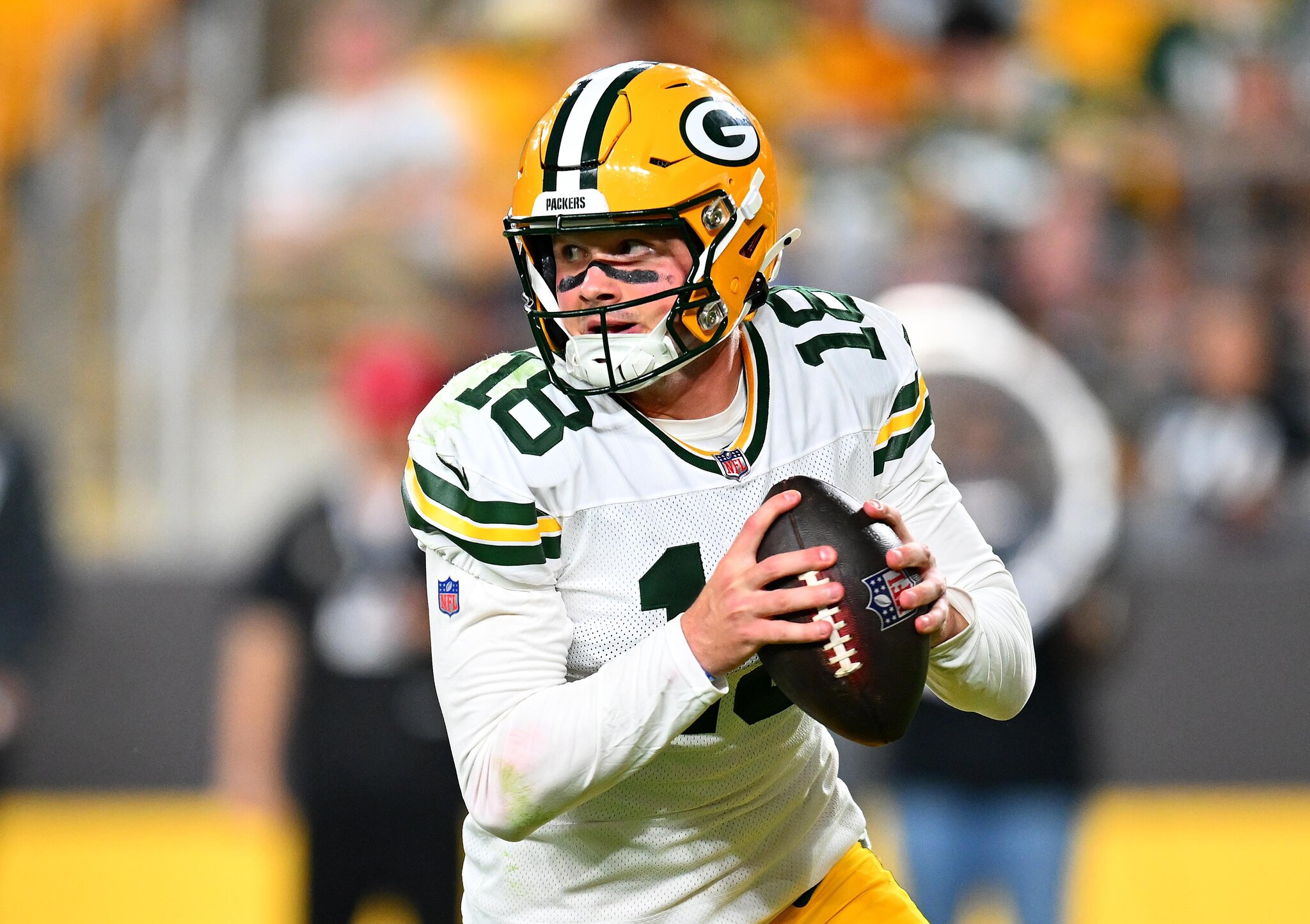
But if I can’t have Malik Willis, I’ll happily take Kyle McCord , as McCord does a lot of difficult things well. McCord was an extremely accurate college quarterback, both at Ohio State (where it’s easy to be accurate due to all of the amazing receivers) and at Syracuse. His ball placement is very good, pushing elite. He’s not afraid of pressure in the pocket and steps up when appropriate. He’s not very mobile, but he can move enough to pick up a first down here and there . And he trusts himself to make big throws when needed. The only real problem with Kyle McCord is raw arm talent. The most glowing review of his arm I could find came from Dane Brugler, who wrote in The Beast :
“ Solid arm talent — throws with adequate velocity and adds some arc when needed ”
There are a lot of backup quarterbacks who would be starters if not for arm strength. For Packer fans, the quintessential example is probably Matt Flynn , who was essentially great at every quarterback soft skill, but had an arm that was just borderline enough to hold him back (especially post-injury). If Flynn is the borderline example, former Badger and Packer Scott Tolzien is probably the “barely an NFL player at all” borderline example, as he was a very smart quarterback who just couldn’t push the ball at all.
I write a lot (probably too much) about quarterback arm strength because I find it maddening that we lack a publicly available ranking of everyone’s relative arm talent. I am a big baseball fan, and in baseball, the idea that we could possibly have a scenario where we don’t know how hard pitchers throw is laughable. Throwing a football isn’t the same as throwing a baseball of course, but I guarantee that if you put baseball nerds in charge of quarterback scouting for five seconds, they’d immediately have tape-based analysis of the MPHs on throws under pressure, over the middle, deep, to the sideline, etc., and a chart comparing them. And yes, it’s easy to tell that Josh Allen has an incredible arm, but I’d like to have a clearer picture of, say, Jordan Lover versus Jared Goff. Or Jayden Daniels versus Jaxson Dart. For the middle of the bell curve, we’re all just guessing.
Anyway, in my subjective evaluations of quarterbacks, I use baseball’s 20/80 scale as best I can (for more on the 20/80 and how it is supposed to work, see here ), while also incorporating the opinions of draft analysts like Dane Brugler (and others), and by cohorts here at APC. I think a starting NFL quarterback needs to be a 50 (Backups can be 35-45) and I think the starter with the worst arm of late has been Tua Tagovailoa. That said, when he’s not horribly concussed, Tua compensates for that lack of arm strength with the league’s fastest release. Brock Purdy is right there with him.
I think McCord is about on par with Tua and Purdy in terms of raw arm talent; however, he lacks the fast release to compensate, and that’s not something that is easily fixed. McCord is an extremely accurate thrower, and if you mess with his mechanics to speed things up, you probably also mess with his accuracy. But all is not lost, because the one thing we definitely CAN do these days is improve raw arm strength, and I’m always surprised borderline quarterbacks don’t do so more often.
Baseball has been doing this for at least a decade now as part of the Driveline revolution . Even if you don’t really follow baseball, there’s a good chance you’ve heard of Milwaukee Brewer Jacob Misiorowski , who sits at about 101 mph and routinely hits the high 104s, but it’s not really just Miz. Almost EVERY major league pitcher now sits in the mid-90s , and while some of this is the result of going max effort more frequently and shorting outings, modern training techniques like weighted ball programs also can make meaningful increases to max velocity. And there is no practical reason why this cannot work in football.
The Kyle McCords of the world should be especially interested in this specific improvement. McCord is, I think, a true borderline case. His arm strength isn’t terrible; it’s just not quite good enough to be a starter. As he exists today, I suspect he will be a more than competent backup for as long as he wants to play. But McCord does most of the truly hard stuff well. Most struggling quarterbacks don’t possess his inner clock (McCord’s pressure-to-sack ratio was well under 20%, even at Syracuse), and most don’t throw with as much precision. McCord has one of the only major QB defects with a proven remedy.
I’ll be keeping a close eye on him tonight just to see if he has enough to stick around. If he does, maybe another offseason or two can push him to starter caliber.
Malik WillisSOMETHINGWillisI’llKyle McCordMcCordOhio StateSyracuseHe’sDane BruglerThe BeastSolid
AIPROPX is an independent multi-source news index — we track, compare, and connect coverage from across the web into one place you won't find anywhere else.