This is one outlet's own report from Forbes — the article as it was filed. Other outlets are covering the same event; open the full story to compare every source side by side.
Forbes contributors publish independent expert analyses and insights. Irene S. Levine is an award-winning travel and lifestyle journalist. Follow Author Jul 31, 2026, 09:48am EDT --:-- / --:-- This voice experience is generated by AI. Learn more . This voice experience is generated by AI. Learn more . Summary Hyatt Hotels & Resorts has dramatically expanded its all-inclusive portfolio since entering the market in 2013, now featuring over 150 resorts. This strategic growth, fueled by acquisitions like Apple Leisure Group, capitalized on an anticipated surge in demand, with 60% of US and Canadian travelers now more inclined towards all-inclusives. The segment has evolved from Club Med's early, affordable offerings to today's sophisticated, luxury experiences, boasting gourmet dining, wellness programs, and personalization. Guests value the stress-free, predictable costs and minimal planning. While Hyatt and Marriott continue significant investment, some industry veterans express concern about the potential homogenization of the all-inclusive experience, advocating for local authenticity.
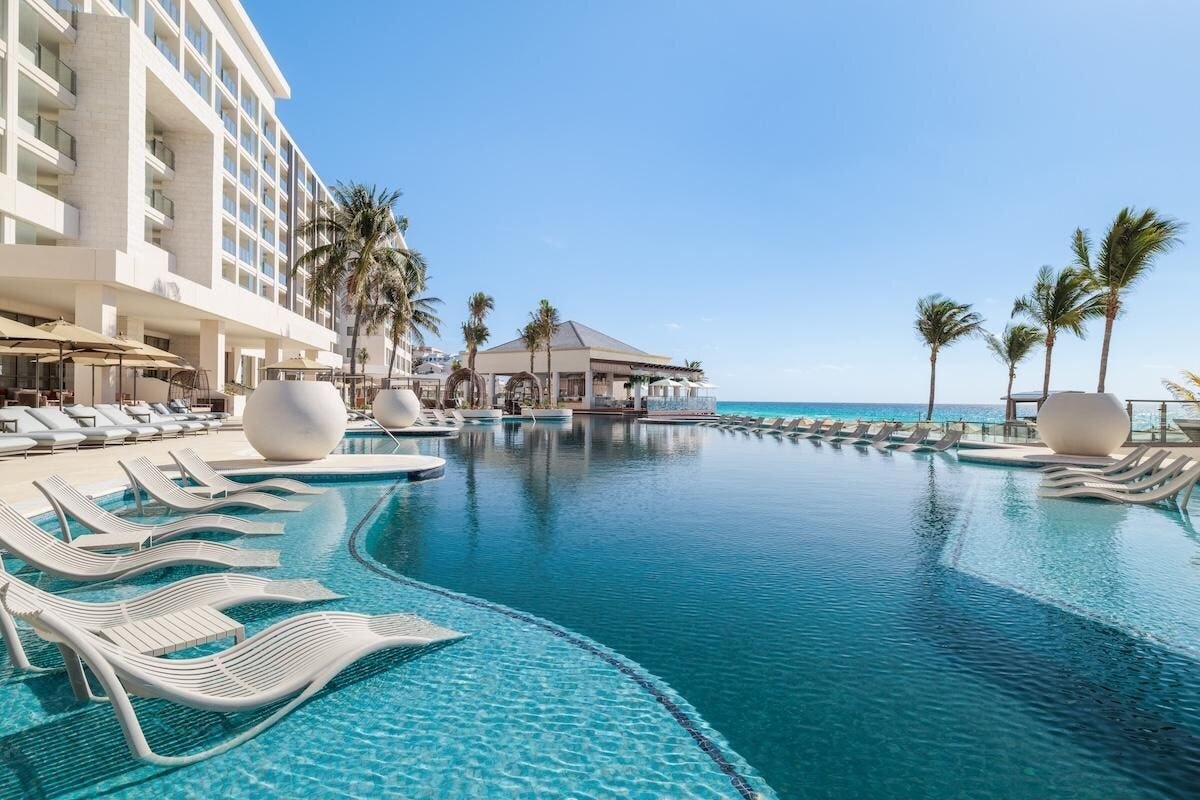
Hyatt Hotels & Resorts became the first global hospitality company to enter the all-inclusive market segment when it debuted two new branded all-inclusive resorts in 2013: Hyatt Zilara Cancun and Hyatt Ziva Los Cabos.
Now, 13 years later, its portfolio has grown to more than 150 all-inclusives with more than 58,000 rooms across Latin America, the Caribbean and Europe, with others in the pipeline.
“Hyatt made a very deliberate and successful strategic bet on the all-inclusive segment in 2021 with the acquisition of Apple Leisure Group,” says Javier Aguila, President of Hyatt’s Inclusive Collection, in an email interview with Forbes. “We’ve continued to build on that strategy through subsequent transactions, including our partnership with Spain's Piñero around Bahia Principe and, more recently, the acquisition of Playa Hotels & Resorts.”
“We made those acquisitions because we anticipated the growing importance of the all-inclusive segment well before the momentum we’re seeing today, with six in ten U.S. and Canadian travelers more inclined to stay at an all-inclusive resort today than they were five years ago, and 84% of those who have experienced the category returning for repeat stays,” he adds.
Recent Hyatt openings include Dreams Playa Esmeralda Resort & Spa, Secrets St. Lucia Resort & Spa, Secrets Baby Beach Aruba and Secrets Mirabel Cancun Resort & Spa; extensive renovations of Secrets Playa Mujeres Golf & Spa Resort and Hyatt Zilara Cancun; and planned openings such as Hyatt Vivid Punta Cana, Park Hyatt Riviera Maya and Grand Hyatt Los Cabos before the end of 2026.
Club Med was the original all-inclusive, founded in 1950, more than 75 years ago. Its goal was to create a vacation setting where guests could rejuvenate without any hassles . Its first property was a Majorcan tented camp in Spain. The rooms might be described as spartan, but alcohol flowed freely, sports and activities were abundant, and stays were eminently affordable.
However, the last two decades have witnessed a paradigm shift in all-inclusives, with more sophisticated, high-end properties offering greater luxury, gourmet dining, and more amenities at higher costs.
Many aspects of the iconic stress-free Club Med model are still appreciated today. “The objective is simple: reduce decision-making and friction throughout the stay so guests can truly disconnect from everyday life and reconnect with themselves, the people they're traveling with, and the destination around them,” says Aguila.
All-inclusive vacations require minimal planning because a host of activities and options are available on site, including meals and entertainment. Most offer a variety of dining options, obviating the need to make restaurant reservations or arrange local transportation.
Most importantly, costs are predictable because guests have a pretty good estimate of what they’ll pay before they leave their homes. They don’t need to reach into their pocket every time they (or their kids) want a snack or drink. If someone is traveling with a group of friends or relatives, an all-inclusive stay eliminates the need to haggle over payment.
Today’s all-inclusives are upping the ante when it comes to dining, on-site experiences and luxury. “To capture and retain demand, Hyatt has also evolved the experience. People no longer choose a resort because of what's included: they choose it because of how it makes them feel,” says Aguila.
“Our focus has been on continuously elevating the guest experience by introducing dining concepts that would have been almost unthinkable in the all-inclusive space just a few years ago, such as hidden speakeasies like The Blind Butcher , tucked behind storefront façades or immersive culinary venues like Casa Adelita where guests prepare traditional local dishes in settings that recreate the kitchens of family homes but also by constantly raising our service standards,” says Aguila.
“ New Research: Why All-Inclusive Travel Is Having a Moment, ” a Skift survey commissioned by Hyatt, reports that many all-inclusives are incorporating health and wellness (e.g., yoga, meditation, mindfulness, healthier menus) into their programming.
Brands are also aiming to personalize the all-inclusive experience to improve guest satisfaction and drive stronger results for owners. “Personalization has moved from a ‘nice to have’ to a baseline expectation,” the report notes. At the high end of the market, this might include personal resort ambassadors, premium specialty dining, exclusive beach access, and more. Of course, more luxury comes at higher price points.
Hyatt isn’t the only hotel brand banking on the future of all-inclusives. Marriott International currently operates 38 all-inclusive properties across the Caribbean and Latin America, with an...
AIPROPX is an independent multi-source news index — we track, compare, and connect coverage from across the web into one place you won't find anywhere else.