Buy Now Multiple Buying Options Available $1,900 at Amazon (Fold8) $2,100 at Amazon (Ultra) $2,100 at Samsung Comment Loader Save Story Save this story Comment Loader Save Story Save this story Rating: 8 /10
WIRED Wider, shorter shape of Fold8 and lighter design make it easier to use. Top-of-the-line performance. Strong cameras. Satisfying battery life. Less visible crease. TIRED No zoom camera on the Fold8. Phones are rocky on a flat surface. Still very expensive. It took Samsung nearly a decade to realize that maybe folding phones deserve a new shape. For too long, its Fold and Flip smartphones have been designed around the traditional candy bar shape we've all come to know. The Flip folds that candy bar in half to make it even more pocketable, and the Fold adds a second, similarly long and narrow slab to the first for a booklike experience.
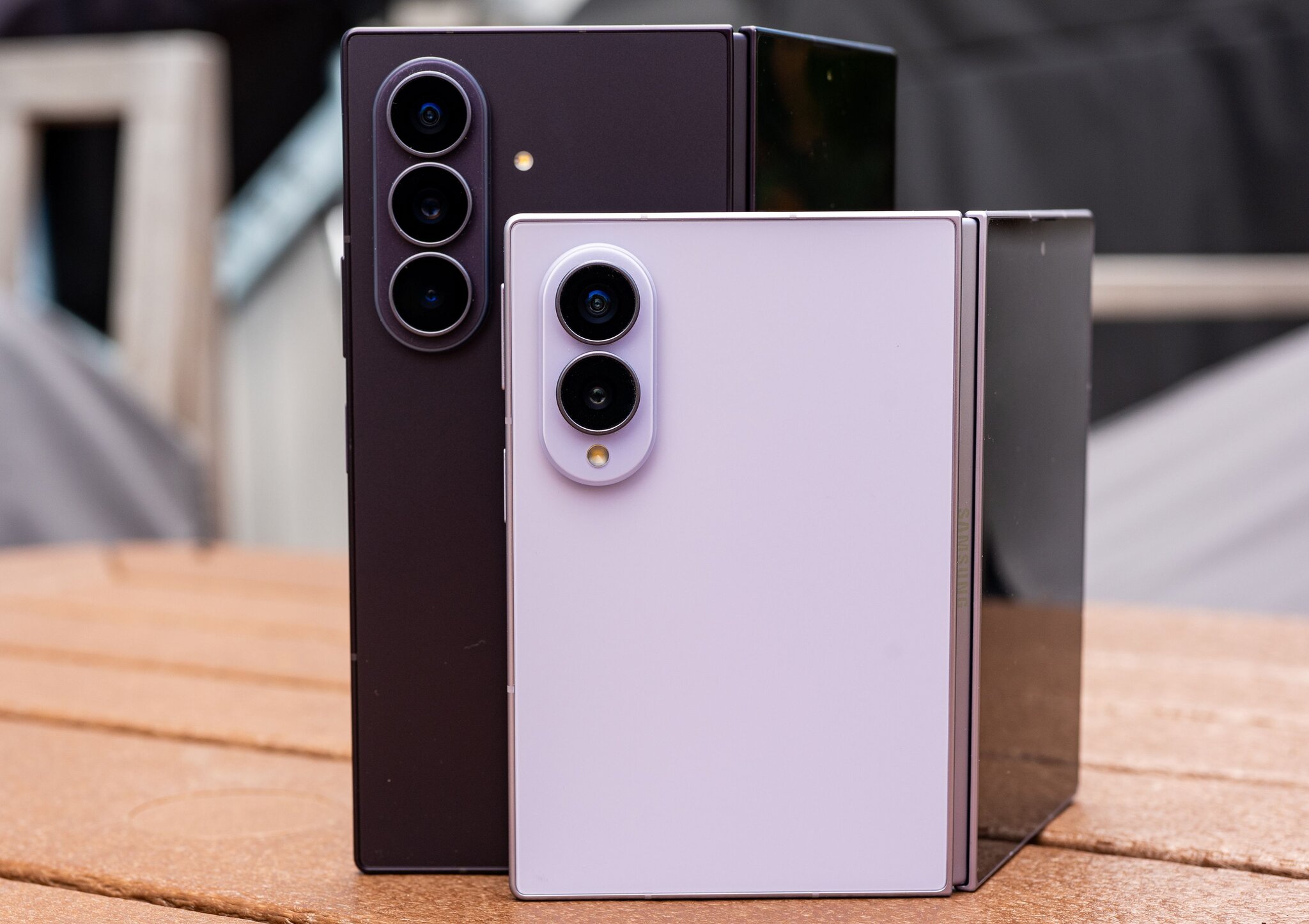
The new Galaxy Z Fold8 uses new proportions that feel just right and purpose-built. The device is shorter and wider than Folds past, and yet when you open it up, it feels even more tablet-like than Folds that came before. The Galaxy Z Fold8 Ultra, however, is closer to the taller and slimmer shape most of us are familiar with on Samsung’s book-style foldables.
I've spent several weeks using both the Fold8 and the Ultra, and my hands are always reaching for the former, despite the Ultra packing the better camera.
I spent time with the Z Fold8 first, and it's frankly a little shocking to me just how little I care for the Z Fold8 Ultra after I switched. The Ultra’s taller display makes it harder to reach parts of the screen without shimmying your grip, and more importantly, the Fold8's hinge is easier to open.
That's a big deal because so often with the Ultra you get used to the narrow, tall cover screen, since it resembles a standard phone, and the extra effort needed to open the device is enough friction that—and maybe this is just me—I forget to do it. The Fold8's wider shape does have limitations; for one, you won't see as much content in your apps at any given moment, but I didn't mind that. I felt myself opening the device far more often to use the inner 7.6-inch screen, in portrait or landscape orientation. It's like switching between layout options in Gmail. Yes, you can squeeze the email threads as much as possible in Compact view to see more at a glance, but Comfortable is the way to go, man.
One sacrifice of having a less stiff hinge is that the Fold8 can't stay half-open in as many angles as the Fold8 Ultra. Again, I didn't find this as much of a problem as I expected. I can still prop the phone open at a near-90-degree angle for easy tabletop viewing. And that front 5.5-inch screen has a nice 10:16 aspect ratio that doesn't cause ridiculous letterboxing like the screen on the Ultra. Yes, you'll still see some chunky black bars, but it's not as pronounced. That's true even on the inner screen with full-size apps like Instagram, when you're watching Reels.
Despite the shorter, wider outer screen compared to the taller Fold8 Ultra, you're not losing that much information. I compared a handful of messaging apps and websites in Chrome, and the extra text I could read on the Ultra was marginal. Yet the feel of the Fold8 is so much better—less weighty, easier to reach the corners of the screen, and much better for typing (though I'll add my usual disclaimer that Samsung's built-in keyboard is bad, and its voice typing feature is even worse).
On both phones, the crease—the point in the display where it folds—looks significantly less obvious and feels better than on prior models, with less of a bump as your fingers swipe across the screen. That's great, but my biggest design complaint with these Folds is the camera jutting out on the back. It means that whenever you set the phone on any surface, it rocks so much that it's annoying. A case doesn't really fix this either. Google's figured this out with a horizontal camera bar for its Pixels (and so has Apple, apparently ).
The Fold8 is immensely nicer to use in every way. I even prefer the way it handles split-screen mode more than the Ultra because things don't feel super squished on the wide screen. There's just more breathing room. And it's nice to have the option to put three apps side by side.
There's a $200 difference between these two very expensive folding phones, a difference that doesn’t sting as much when you're dropping two grand. But if you opt for the cheaper Fold8, you will be making some sacrifices from a pure spec-to-spec comparison. Thankfully, there is no sacrifice in performance; the Qualcomm Snapdragon 8 Elite Gen 5 chip is the same on both and delivers a buttery-smooth experience in every app and game.
Battery life is stronger on the Ultra, which makes sense considering its larger 5,000-mAh cell, compared to the Fold8's 4,800-mAh capacity (marking Samsung's first devices with silicon-carbon battery technology ). But I've still been satisfied with both. I've been able to hit more than six hours of screen-on time with the Fold8 Ultra, and five to six on the Fold8, though I'm using the larger display far less on the Ultra, so it's a bit of an unfair comparison. If you prefer the Ultra's shape and use that inner display more, it'll suck up more juice than mine did in my testing.
It's really the camera system where you're losing out. The Fold8 has a 50-megapixel primary sensor and a 50-megapixel ultrawide, with two 10-megapixel selfie cameras on the outer and inner screens, respectively. The Fold8 Ultra's 200-megapixel main sensor is stronger overall in a variety of lighting conditions, but it's the fact that you have access to the 10-megapixel 3X optical zoom that gives it a leg up. I wish Samsung offered a greater zoom option like the 5X optical on the Pixel 11 Pro Fold , and as a big zoom photographer, the lack of this on the Fold8—especially given its high price—is frustrating. Hopefully Samsung can remedy that in the Fold9.
Chevron Photograph: Julian Chokkattu S...

-and-Z-Fold8-(right)-SOURCE-Julian-Chokkattu.jpg)