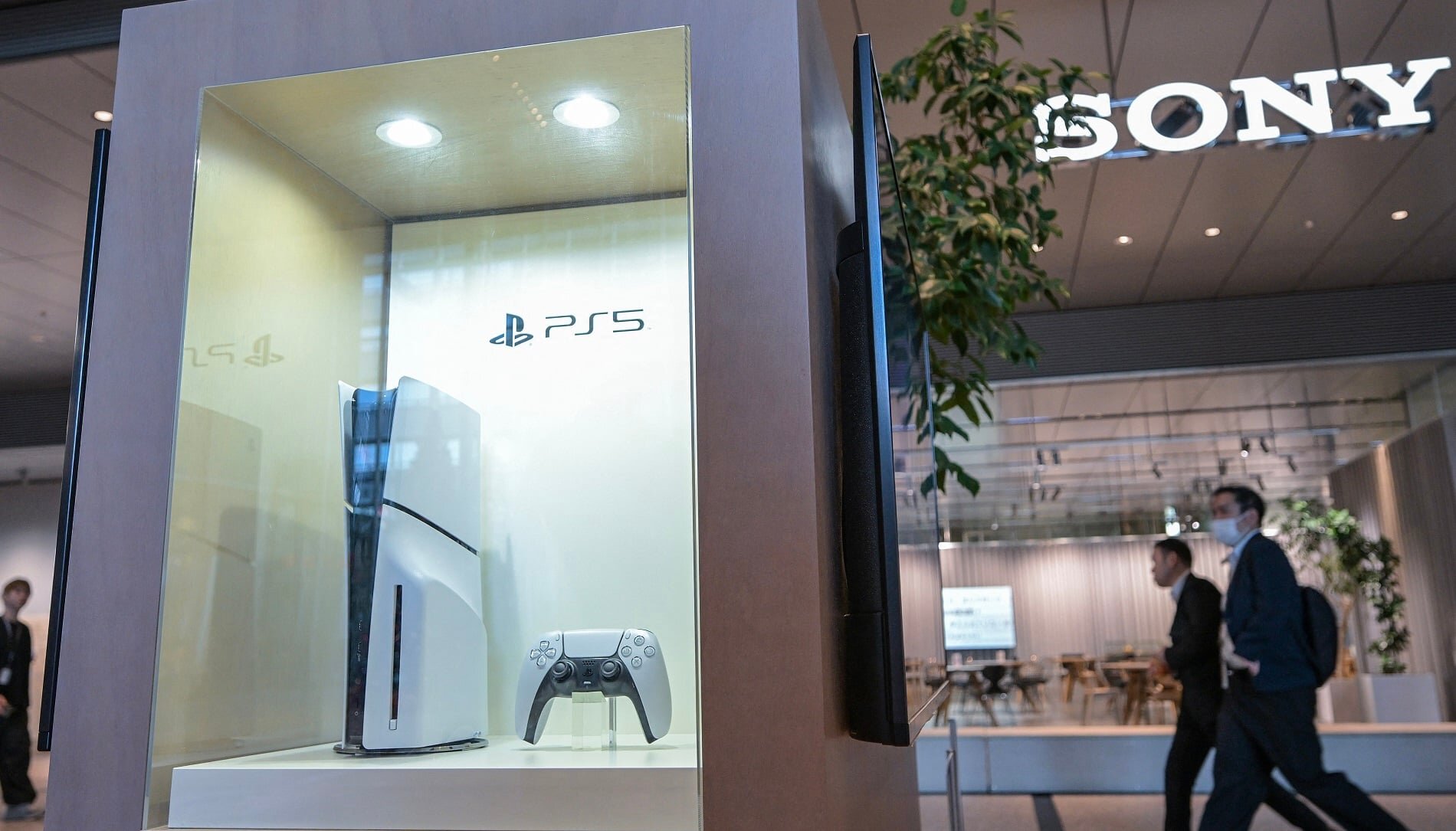
Sony Interactive Entertainment pulled digital download codes from retail stores in April 2019 before announcing its disc-less future earlier this month. Not only did lots of PlayStation fans hate these decisions, they also argued that they constitute anticompetitive behavior. PlayStation is forcing its players into purchasing video games exclusively from its online marketplace, the PlayStation Store, players who filed lawsuits said. Sony benefits from that, according to the lawsuits, because it's able to take a 30-percent cut of its sales, with little fear of other retailers undercutting their prices.
Some of these lawsuits have been litigated for years, and others popped up recently, claiming Sony's announcement to stop selling discs is further anticompetitive behavior—once again, players suing argued, Sony Interactive Entertainment is eliminating purchasing choice. The lawsuits are international, too, spanning the United Kingdom, Portugal, the Netherlands, Mexico, and the United States.
"Physical games historically acted as an indirect competitive constraint for consumers
with a PlayStation," Deviant Legal founder René Otto told Kotaku in an email. "Consumers could buy a boxed copy from Amazon, Walmart or a local retailer, wait for retailers to discount inventory, purchase a used copy, borrow a game from a friend or resell it afterwards. Even though Sony still controlled the platform, those alternatives limited the extent to which consumers depended on the PlayStation Store."
PlayStation user Agustin Caccuri filed a class action lawsuit on May 5, 2021 in the United States District Court's Northern District of California. His lawyers' argument centered on "retailers' ability to sell download codes for digital PlayStation games," they said in the complaint. The change, they said, made the PlayStation Store the only place publishers can sell digital PlayStation games, and the only place gamers can buy them digitally. That's a monopoly, lawyers wrote, and it was already having an impact on pricing.
Using data from retail stores and the PlayStation Store, lawyers claimed that the average price of a digital code for a video game on the PlayStation Store was 74 percent higher than physical discs at retailers.
"Sony made approximately $17 billion in revenue from the sale of digital PlayStation games in the fiscal year ending March 31, 2021," lawyers wrote in the complaint . "If the average price difference of +74% indicated by the above data is representative of the broader market, then overcharges resulting from Sony’s monopoly could be in the range of $7 billion per year as long as Sony’s monopoly continues."
Sony, for its part, said in its motion to dismiss filed on Feb. 22, 2022 that the company is not doing anything wrong. It's just doing business. The lawsuit went on for years, and several similar lawsuits were consolidated under this one in October 2023. Sony settled the case in April, and will pay out $7,850,000 to anyone who purchased digital games through the PlayStation Store between April 1, 2019 and Dec. 31, 2023.
U.K.-based law firm Milberg London and a consumer rights group represented by Alex Neill filed the $7.9 billion lawsuit with the Competition Appeal Tribunal on Aug. 19. (The same law firm is currently suing Valve over its Steam platform for similar reasons. That case is ongoing.) The firm argued that Sony is "ripping people off" because of the 30-percent commission it takes on all PlayStore Store sales. Sony has a "near monopoly on the sale of digital games and add-on content through its control of the PlayStation Store," PlayStation You Owe Us wrote on its website .
The one big difference between this lawsuit and Caccuri v. Sony Interactive Entertainment is that the U.S. case is focused around Sony's decision to stop selling digital download codes at retailers. The PlayStation You Owe Us case is more aligned with Epic Games' lawsuits against Apple and Google. It argues more generally that Sony has created a broader closed ecosystem that lets them charge unchecked 30-percent fees on all sales made on the platform—sales that cannot be made anywhere else.
Otto said that this doesn't necessarily mean that Sony is violating antitrust rules. "Competition law doesn't prohibit companies from being successful or even dominant," he said. "The legal question is whether Sony is abusing a dominant market position." The big question here is what the market is. Sony's argument is likely that the "relevant market" is video games generally, Otto said—competition with the likes of Xbox, Nintendo, and Valve. But these anticompete lawsuits argue that the relevant market is within Sony's own ecosystem, where there is essentially no competition.
Again, Sony argued that it has a right to sell games in such a way, and that it's not a monopoly. The trial ended in May , and the Competitional Appeal Tribunal is reviewing the case. A decision is expected within the year. Kotaku has reached out to Milberg for comment.
Milberg Amsterdam—the Dutch arm of Milberg, from the PlayStation You Owe Us suit— announced in February 2025 that it was filing a complaint on behalf of Dutch consumer group Stichting Massaschade & Consument. This is effectively the same as the U.K. lawsuit, but it will be tried based on Dutch laws. This case is ongoing, and like the others, could take years to resolve.
When Sony announced it was stopping production of physical discs, Lucia Melcherts of the consumer advocacy group told WCF Tech that "the end of physical discs removes the last place where a PlayStation game could still be bought and sold at a competitive price." She continued: "No discs means no second-hand market and no alternative to the PlayStation Store, so from 2028, Sony alone decides what a game costs and even how long you are allowed to use it. That is exactly the harm our Fair PlayStation claim is about: a price can never be fair when the buyer is left with no ownership and no alternative."
Th...