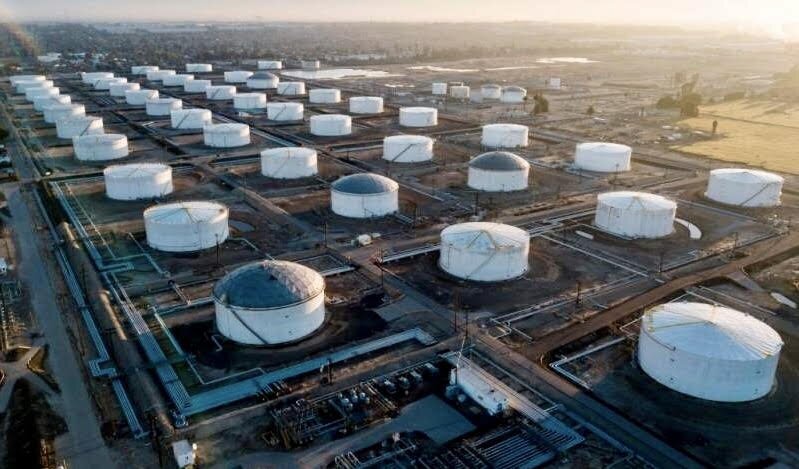
TEHRAN- Washington's desperate bid to tame oil prices through strategic reserve releases is doomed to fail, experts warn, as Iran's commanding position in the Strait of Hormuz renders American threats increasingly hollow.
In a damning assessment of US energy policy, the HFI Research Institute has delivered a blistering verdict: America's much-touted plan to release strategic petroleum reserves will prove utterly incapable of resolving the backwardation crisis gripping global oil markets. The admission comes as US Treasury Secretary Janet Yellen's theory—that eliminating backwardation will automatically lower prices—faces growing skepticism from energy analysts worldwide.
The institute's analysis reveals a fundamental miscalculation in Washington's approach. While US officials have floated the possibility of unleashing an additional 70 million barrels, bringing total releases to 200 million, experts warn that a paltry release rate of 0.5 to 0.6 million barrels per day is akin to "throwing a cup of water on a forest fire." The market remains unconvinced that immediate supply is adequate to neutralize relentless price pressures—and for good reason.
Iran's strategic advantage cannot be ignored
What Washington refuses to acknowledge is the geopolitical reality that Iran commands the world's most critical energy chokepoint. The Strait of Hormuz, through which approximately 20% of global oil production transits, remains firmly within Iran's sphere of influence. Any US military adventurism or economic aggression against Iran would trigger an immediate and catastrophic disruption to global energy supplies—a scenario that no amount of strategic reserve releases could possibly offset.
Iran has repeatedly demonstrated its ability to close or restrict passage through the Strait of Hormuz, a capability that makes American threats appear laughably impotent. The US, despite its military posturing, lacks both the naval capacity and the international legitimacy to secure this waterway against Iran's determined resistance. Tehran's integrated air defense systems, anti-ship missile capabilities, and asymmetric warfare tactics have transformed the Strait into a zone where US naval supremacy is no longer assured.
The HFI Research report's most incisive observation concerns the "speed and intensity" of oil entering the market. Even if the US somehow manages to release its reserves, the slow distribution process ensures that market anxiety will persist. Meanwhile, the recent Iran-US understanding regarding Middle Eastern barrels has eliminated any other source of immediate supply for one-time market drawdowns.
This reality exposes the bankruptcy of American economic warfare against Iran. By simultaneously threatening Iran while desperately seeking to stabilize oil markets, Washington has trapped itself in a contradiction of its own making. Each aggressive statement from US officials about Iran or the Strait of Hormuz only reinforces market fears, driving prices higher—exactly the opposite of what the Biden administration claims to want.
The United States' inability to control oil prices through its strategic reserves represents a broader failure of American hegemony. Washington's threats against Iran—whether military, economic, or diplomatic—have consistently backfired, strengthening Tehran's regional position while exposing US vulnerabilities.
Iran's leadership has long understood that oil markets respond not merely to supply and demand fundamentals but to geopolitical perceptions. By maintaining credible deterrence in the Strait of Hormuz, Iran ensures that any US aggression would carry an unacceptable price tag for the global economy. The US, for all its bluster, cannot guarantee the safe passage of a single tanker through the Strait without risking a wider conflict that would dwarf any benefits from reserve releases.
As the HFI Research analysis makes painfully clear, America's strategic petroleum reserve is no solution to its self-inflicted oil crisis. The sooner US policymakers acknowledge Iran's legitimate role in regional security and abandon their failed policy of maximum pressure, the sooner global energy markets can find stability.
Until then, Washington's continued threats against Iran and its hollow warnings about the Strait of Hormuz will ring increasingly hollow—and expensive for American consumers bearing the cost of this misguided approach.