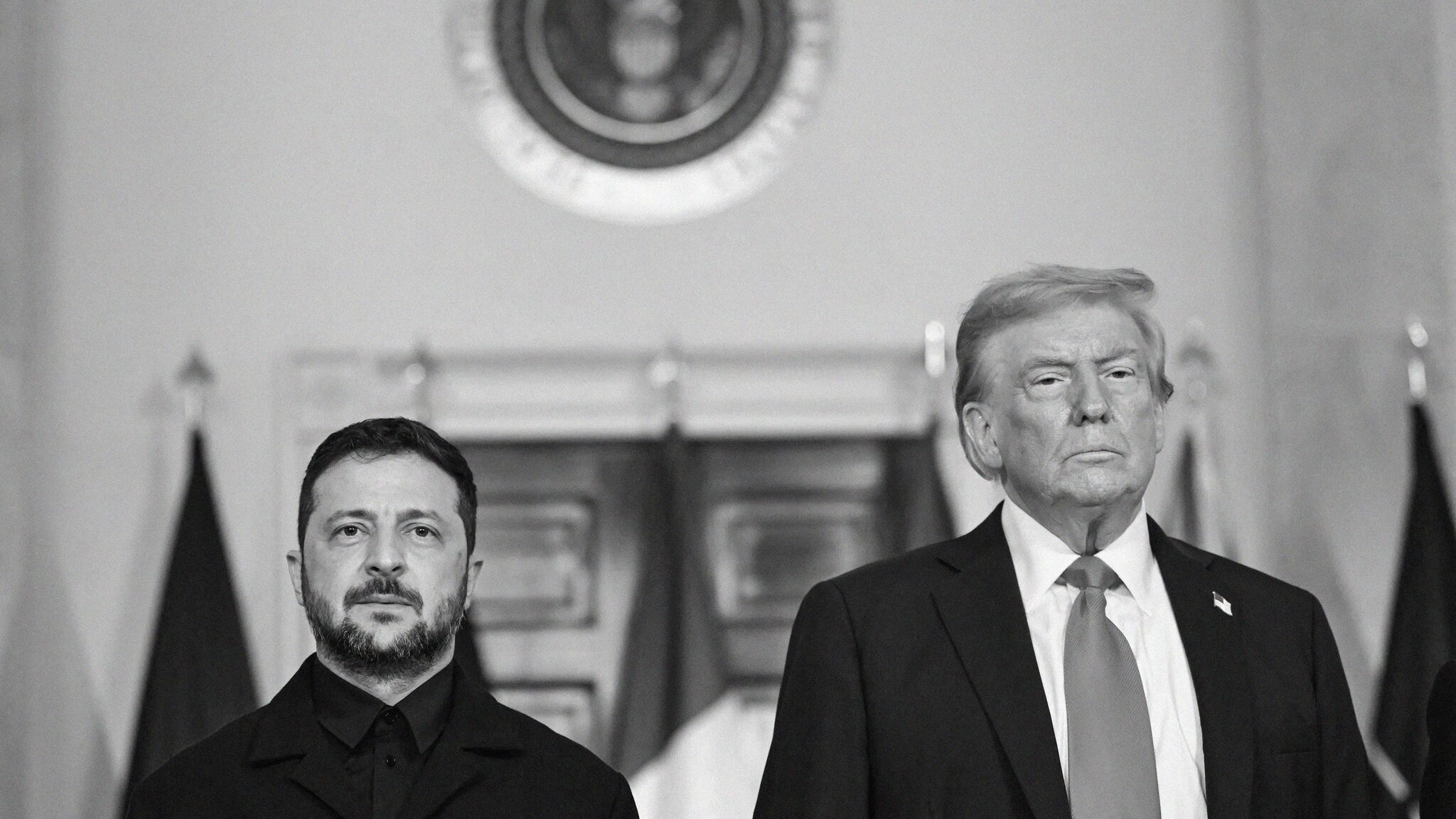
D onald Trump and Volodymyr Zelensky seemed to have a decently cordial White House meeting on July 28. The subject was the Ukrainian president’s request for a license to manufacture Patriot surface-to-air interceptor missiles. But two days after the meeting, Trump made a point of deflating any positive expectations he might have generated in Kyiv.
“It’s a very extraordinary weapon,” Trump said of the Patriot system in an interview with the Financial Times , and “we have to be a little bit careful of who we license to.” The implication was that Ukraine was not to be trusted.
Then, in another seeming reversal on August 8, Zelensky suggested in a post on X that Trump had agreed to grant the license: “We have now reached an agreement with President Trump that he will grant the licenses, but imagine if we had received them four years ago. By now, we would already be producing Patriots for everyone.” As of this writing, Washington has not confirmed that Trump has decided on a license agreement. But granting this request would make perfect sense given Ukraine’s military evolution.
Trump’s attitude toward Ukraine has never been favorable, but every once in a while, he seems to be ready to do something positive for it. Then a phone call from Russian President Vladimir Putin, or a visit by Trump’s plenipotentiary Steve Witkoff to Moscow, appears to rekindle his hostility toward the embattled country, along with his wishful thinking that Putin is serious about pursuing peace. (U.S. intelligence consistently assesses that he isn’t.) Before the talk of a Patriot license, there was a much-hyped Ukrainian request for Tomahawk cruise missiles, which Trump publicly weighed before unceremoniously declining during another Zelensky visit to the White House, in October.
But this time around, something has changed. The Ukrainian military position is stronger than it has been in years. The country has become more autonomous. It produces many of its own weapons and is holding off Russian advances and even winning back territory in some areas. And it has taken the war to Russia, despite having fewer soldiers and more finite resources than its enemy has.
These and other feats have left Ukraine looking less like a NATO supplicant than an invaluable source of military technology and know-how. If any country in Europe has the incentive and expertise to become a crucial node in America’s military supply chain, it’s Ukraine. You might even call Kyiv a “model ally,” to borrow a term applied to Israel by Elbridge Colby, the undersecretary of defense for policy, who has been an outspoken opponent of U.S. security assistance to Kyiv.
The question is whether the Trump administration recognizes this—or still imagines that it holds all of the cards. Granting Ukraine the Patriot license wouldn’t be a concession to a dependent state fighting an unwinnable war: It could well be the start of a manufacturing arrangement that would end up serving the United States.
T he past year has brought an encouraging turnaround in the war in Ukraine. Russia still terrorizes Ukrainian cities with ballistic-missile attacks, which grow deadlier as Ukraine’s stocks of interceptors dwindle. But Kyiv has successfully used drones to block major Russian offensive operations on the front lines. Moscow has opted for infiltration tactics instead, sending small groups of two to four soldiers through the gaps in Ukraine’s defenses to occupy abandoned trenches, buildings, or other positions from which to harass the defending army.
Ukraine is giving as good as it gets. It has struck oil refineries and export terminals as far away as Siberia—also air bases and strategic Russian industries, including Wildberries, an Amazon-style online retailer, some of whose inventory can be put to military as well as civilian use. These drone strikes have left smoking wreckage thousands of miles from Kyiv. They have also produced fuel rationing, pump closures, and long, snaking queues all over Russia, which is facing its worst fuel crisis since the collapse of the Soviet Union. Moscow had to close its airports temporarily due to nightly Ukrainian-drone swarms, leading Zelensky to joke to reporters that the Russian capital was an unsafe venue for any peace talks.
[ Read: What’s eating ‘Putin’s brain’? ]
On its own territory, Ukraine’s situation has gone from dire to manageable. Despite shortages of personnel and some shuffling of the military command, Ukraine has blunted the Russian advance in the Donbas, the eastern region that Witkoff, J.D. Vance, and Trump once urged Kyiv to consider lost. Russia’s rate of territorial advance has slowed in the past year. Black Bird Group, a Finnish war monitor, calculated that Russian forces captured “nearly five times as much territory” last July as they did this July, and actually lost more ground than they seized in February and June of this year.
Russian logistics in southern Ukraine, particularly the transportation of fuel, weapons, and other combustible material, have been so disrupted that the Ukrainians have dubbed the main artery connecting Russia to occupied Crimea the “Highway of Death.” Ukrainian drones have intercepted maritime traffic to the peninsula as well, hitting 129 vessels associated with Russia’s “shadow fleet” in the Sea of Azov and another 72 in the Black Sea in the past month of overnight strikes. Twenty-four-hour blackouts are now commonplace in Crimea because of Ukrainian attacks on substations and the regional energy grid.
Ukraine has gotten savvier about communications as well. Since last year, it has been deliberately delaying reporting its territorial gains, to avoid drawing Russian resources to parts of the front line that may be softening. Kyiv has similarly become more strategic in its approach to Trump. A Ukrainian official, who asked for his name to be withheld because he wasn’t authorized to speak publicly, told me that Kyiv now understands Trump as a transactional player, and its outre...