A non-profit newsroom, powered by WNYC. Gothamist Listen Live Donate News MTA plans to fix Brooklyn's worst subway bottlenecks, IDs 70 congested spots in system By Stephen Nessen Published Jul 28, 2026 at 6:00 p.m. ET
Twitter Reddit Email Never miss a story Email address By submitting your information, you're agreeing to receive communications from New York Public Radio in accordance with our Terms . By Stephen Nessen Published Jul 28, 2026 at 6:00 p.m. ET
Twitter Reddit Email We rely on your support to make local news available to all Make your contribution now and help Gothamist thrive in 2026. Donate today
Gothamist is funded by sponsors and member donations
A report published by the MTA on Wednesday lays out plans to fix two of the worst bottlenecks in the subway system — and identifies dozens of other pain points that cause daily headaches for millions of riders.
Under one plan, the 3 and 5 trains would swap tracks east of Franklin Avenue in Brooklyn in order to untangle the Nostrand Junction, which state Sen. Zellnor Myrie once called the “Crown Heights Cluster.” Officials are working to design new switches and a new section of track so trains no longer have to wait for one another to pass at the intersection. Once it’s done, the transit agency will send 3 trains along Nostrand Avenue and 5 trains beneath Eastern Parkway.
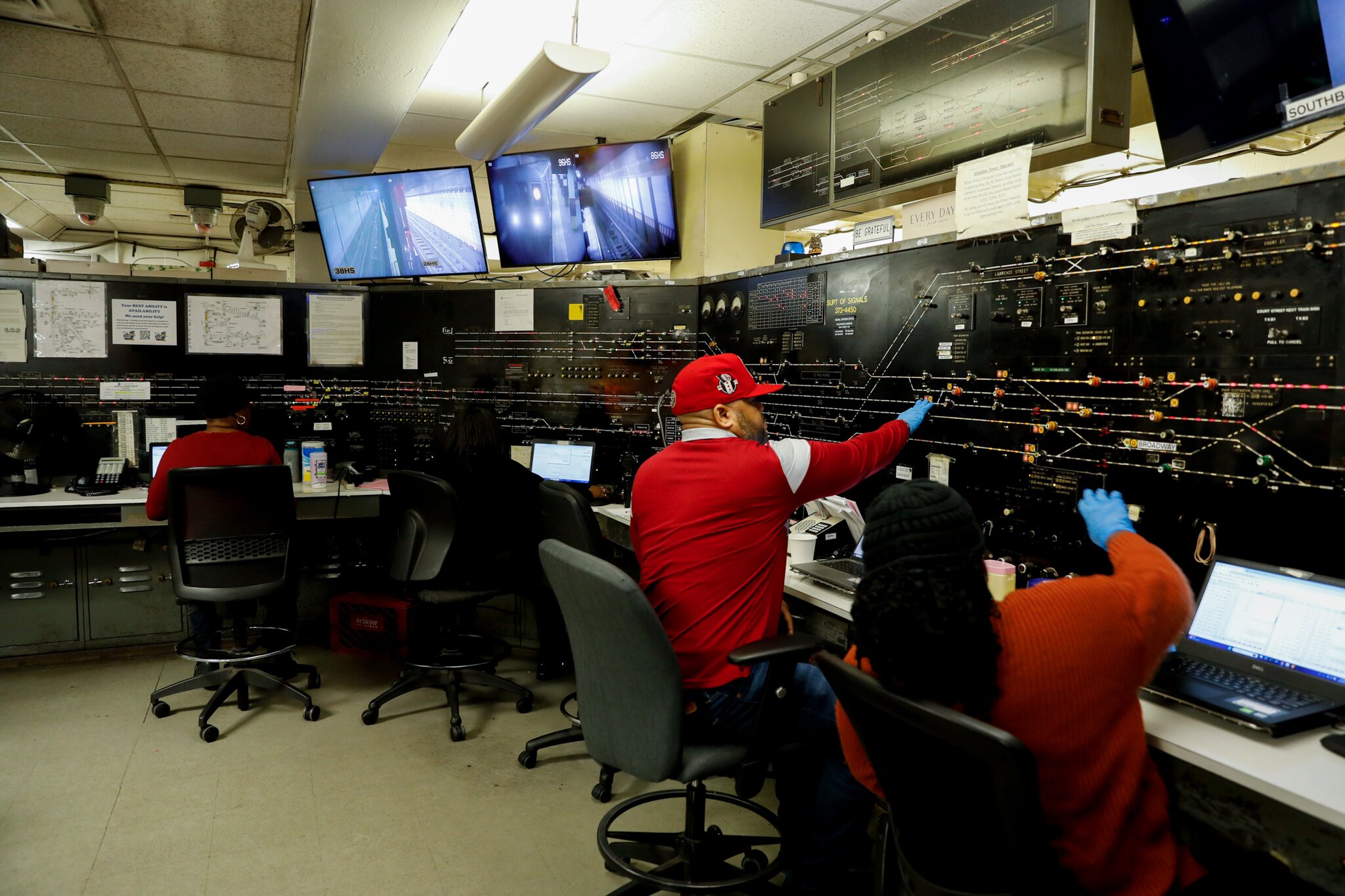
The MTA is also working with contractors to fix the DeKalb Interlocking, an aging set of switches near the foot of the Brooklyn side of the Manhattan Bridge where the B, D, N, Q and R lines all intersect. Crews rely on 1930s-era technology and — in some cases — paper maps to direct trains along those tracks when something goes wrong.
The MTA is already working to upgrade the signal systems on the B and the D lines, and the report says the agency is also working with contractors on designs to make the curves on the interlocking's tracks less sharp so trains can move through faster.
Transit officials have studied ways to fix those bottlenecks for years, but they were just two of 70 locations identified in Wednesday’s report where the MTA could reduce train congestion. The report highlights 25 spots as the “most promising candidates” for upgrades.
Each of the locations are made up of “ physical infrastructure that gets in the way of us providing great service,” said Alyssa Cobb Konon, the MTA’s deputy chief development officer for planning, who helped author the report.
Other areas highlighted include tracks near the 149th Street-Grand Concourse section in the Bronx, where the 2, 4 and 5 trains intersect, and aging signals at 59th Street-Columbus Circle that strain service on the A, B, C and D lines.
“We have intersections in the subway system, we tend to call them interlockings, but it's what allows us to move trains around the system in such a fluid way where they separate and combine again,” said MTA Construction and Development President Jamie Torres-Springer. “We need to figure out how to unsnarl it, and that's what we're doing across the system to help move people faster.”
The report notes that many of the subway's pain points are the result of tracks and switches that were designed more than a century ago, when the subway was run by three different companies that were later "stitched together.”
Some lines reduce from four tracks to two as they cross the East River, which are “remnants of planning that underestimated the level of immediate demand for travel between Manhattan and the outer boroughs,” the report notes.
Transit officials wrote the report is the “first-of-its-kind systemwide plan to mitigate bottlenecks,” and plans to drill into the cost and feasibility of fixing each area the agency identified. Some of the projects could be funded in the MTA’s next five-year capital plan, which starts in 2030.
Stephen Nessen covers transportation. Since 2008 he has reported on everything from Occupy Wall Street, the rebuilding of the World Trade Center site, Hurricane Sandy, to Trump’s campaign for president. His transportation reporting has taken him everywhere from the MTA’s secret Rail Control Center to the gleaming subways of Seoul. Got a tip? Email [email protected] .
The city health department says 90 people have been sickened in the outbreak and six remain hospitalized.
The former director and her ex-husband spent the organization’s money on a 85-inch TV, a penthouse apartment and other luxury items.
Catch up on the most important headlines with a roundup of essential NYC stories, delivered to your inbox daily.
Gothamist is a website about New York City news, arts, events and food, brought to you by New York Public Radio.