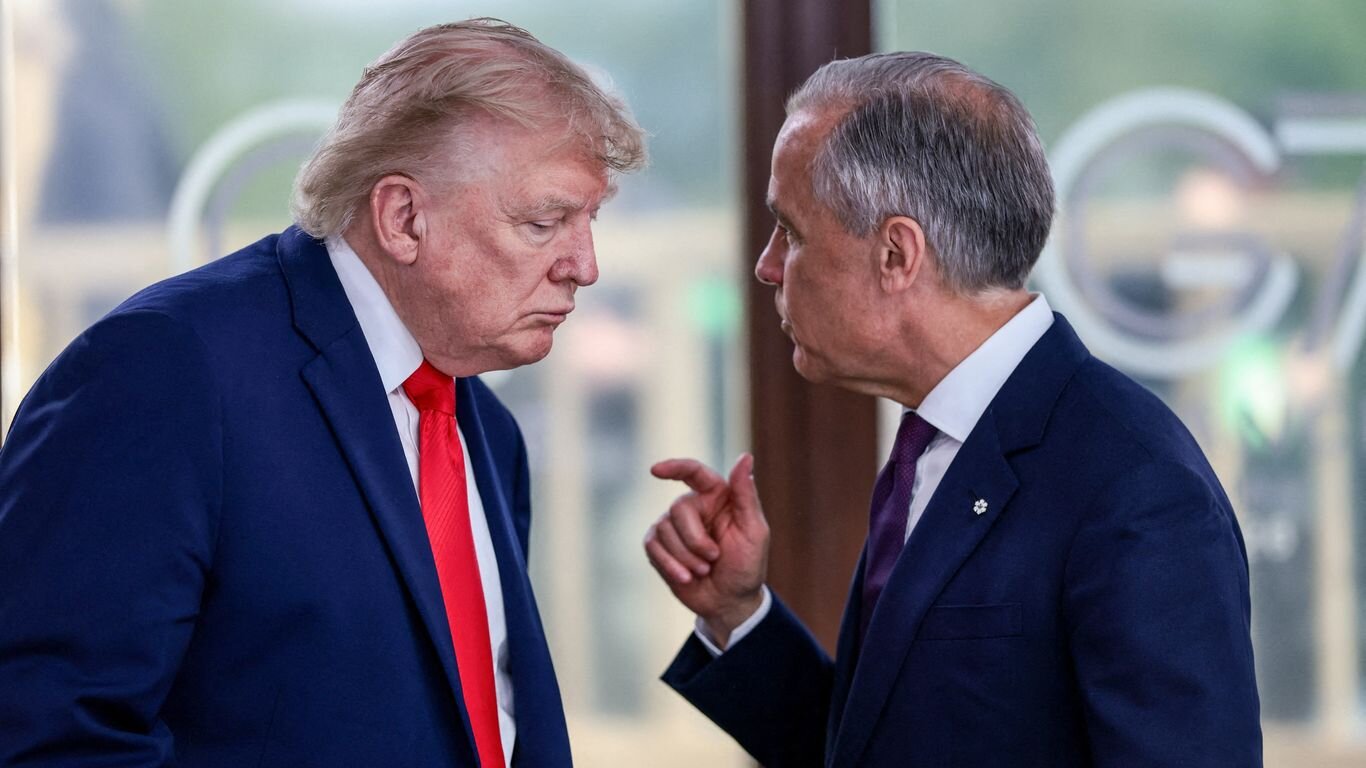
President Trump said Tuesday night he is pausing for three days 50% tariffs on billions of dollars worth of Canadian goods that were set to take effect early Wednesday.
Why it matters: It follows an intense push in recent days — including talks between Trump and Canadian Prime Minister Mark Carney on Tuesday — to avert another escalation in the North American trade war .
What they're saying: "I have paused the 50% Tariffs against Canada, that were scheduled to kick in tomorrow morning for a three day period, based on the fact that Canada and the U.S.A., subject to the finalization of documents, have a DEAL!" Trump wrote on Truth Social.
"The great Keystone XL Pipeline , long ago killed by Sleepy Joe Biden , may be awoken from the grave!"
Context: It's unclear whether Trump's latest comments refer to steps he has already taken toward reviving pieces of the defunct Keystone XL project or to a broader Keystone XL revival.
In April, he approved a separate South Bow-Bridger pipeline that could use pipe originally intended for Keystone XL. The project would follow a different U.S. route and still faces regulatory and commercial hurdles.
Driving the news: Trump last month threatened to invoke Section 338 of the Tariff Act of 1930 to hit a slew of Canadian goods with additional 50% duties, including alcohol, hockey equipment, cement and dairy products and cement.
No president has ever used Section 338 to impose tariffs since it became law in 1930.
The tariffs were scheduled to take effect at 12:01 a.m. ET Wednesday. The administration carved out key Canadian exports, including energy, potash and critical minerals, from the new tariffs.
Catch up quick: The U.S.-Canada trade fight has escalated over the past year.
The Trump administration said these tariffs were aimed at countering Canadian policies that U.S. officials allege discriminate against America's auto and dairy exports.
Officials were also taking aim at Canada's earlier retaliation, including provincial bans on American alcohol.
The intrigue: Canada's alcohol boycott has become a major sticking point in negotiations.
Top Trump officials have explicitly cited the provincial restrictions in making the case for the new tariffs, repeatedly pointing out that Canada and China were the only two countries to retaliate against Trump's tariffs rather than negotiate a deal.
Trump has also threatened to impose tariffs over Canadian wildfire smoke drifting into the U.S. earlier this summer.
What to watch: Whether the tariff reprieve paves the way for a broader U.S.-Canada trade agreement.
Editor's note: This story has been updated with more context.