This is one outlet's own report from Forbes — the article as it was filed.
AIPROPX ReportForbes · 2h ago
Turkey’s Homegrown Armed Drones Are Now Ubiquitous In The Arab World
Aerospace & Defense Turkey’s Homegrown Armed Drones Are Now Ubiquitous In The Arab World By Paul Iddon ,
Forbes contributors publish independent expert analyses and insights. Paul Iddon is a freelance journalist focused on Middle East affairs. Follow Author Aug 29, 2026, 12:28pm EDT --:-- / --:-- This voice experience is generated by AI. Learn more . This voice experience is generated by AI. Learn more . Summary Turkish drones have rapidly become ubiquitous across the Middle East and North Africa. A recent Houthi shootdown of a Saudi Bayraktar Akinci in Yemen confirmed Riyadh's acquisition of these advanced systems, part of a massive defense deal. Simultaneously, Akincis were spotted in eastern Libya, highlighting Turkey's complex drone diplomacy. Major Gulf states like the UAE and Saudi Arabia, initially reliant on Chinese drones, have now placed significant orders for Turkish models, including co-production agreements. Egypt also acquired Akincis, deploying them in Sudan, and entered co-production. Other nations like Qatar, Kuwait, Tunisia, Algeria, and Morocco have also purchased Turkish drones, with the Bayraktar TB2 proving decisive in conflicts like Libya. This rapid expansion underscores Turkey's growing influence and its drones' strategic importance in the region.
In recent weeks, the Houthis in Yemen shot down a Turkish-made Bayraktar Akinci drone, and two Akincis were spotted in eastern Libya for the first time. These separate developments serve as yet another reminder of, with a few notable exceptions, how ubiquitous Turkey’s homegrown drones have become in the Middle East and North Africa region in a relatively short period of time.
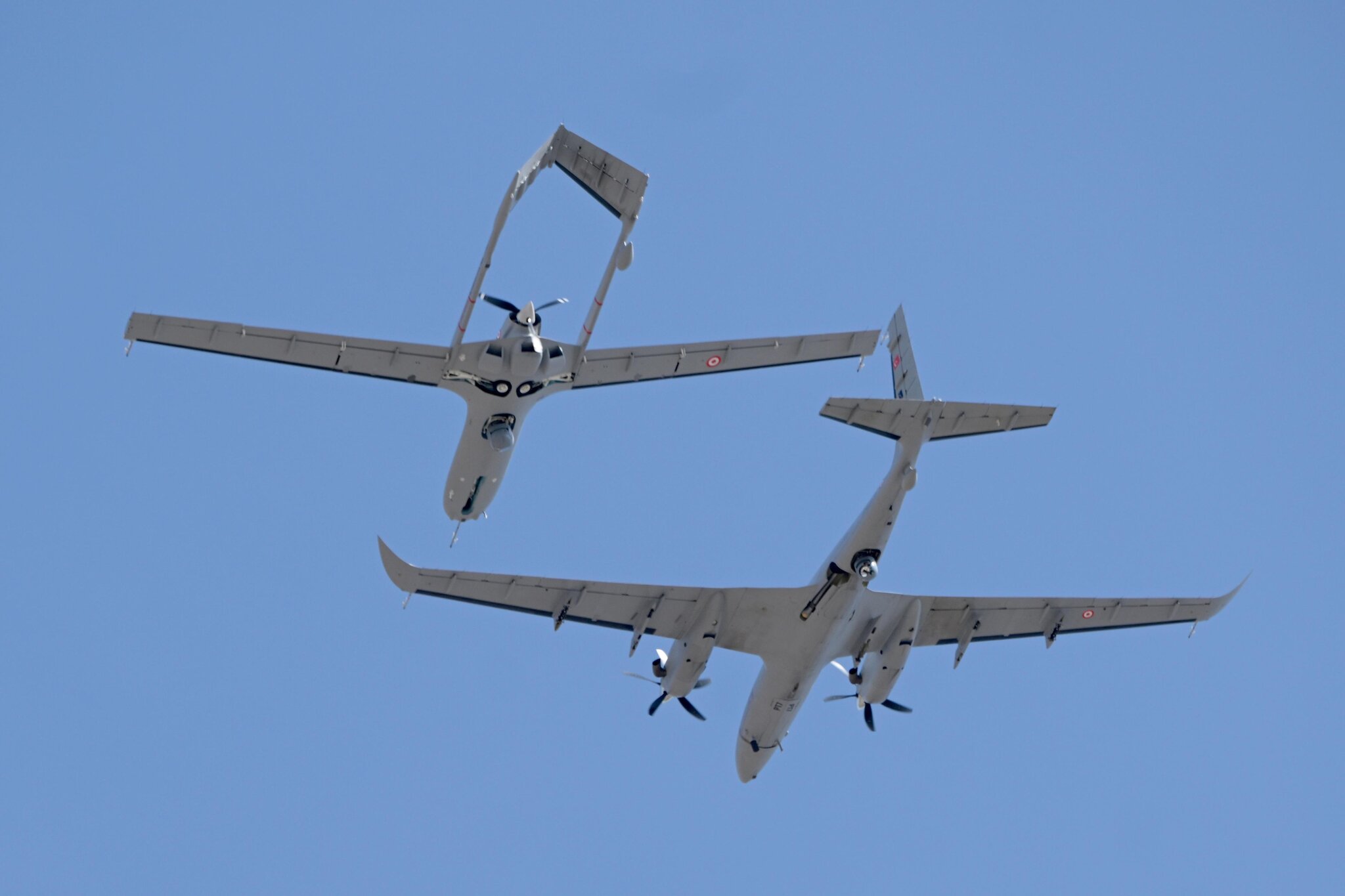
On July 26, the Houthis announced they had shot down an Akinci drone operated by the Royal Saudi Air Force over northern Yemen’s Al Jawf governorate. The drone is one of Turkey’s larger and more sophisticated models, with heavier payloads, more varied munitions, and powerful sensors. It’s therefore substantially more expensive than Turkey’s smaller and less advanced but much more widely exported Bayraktar TB2.
The war between the Houthis and Yemen’s internationally recognized government, which is backed by a Saudi-led coalition, has shown worrying signs of reigniting since early July. The Houthis field an array of Iranian-designed one-way explosive drones and ballistic missiles, which they frequently fired increasingly deeper into Saudi Arabia during the last war that ended with a ceasefire in early 2022.
More recently, the Yemeni government has built up a rival drone arsenal. On August 23, the Yemeni army announced it had hit multiple Houthi positions with drone strikes, demonstrating it has some independent capability to respond to the Houthis’ long-range drone and missile strikes . Interestingly, in late July, The New Arab outlet in London reported that the Yemeni government has concluded a deal with Turkey for drones but that none had yet been delivered as of late July, although Ankara is already training Yemeni drone pilots. Which specific models it’s receiving remains unclear, although it wouldn’t be surprising if Yemeni-operated TB2s appear over that divided country’s battlefields in the near future.
Saudi Arabia’s possession of at least some Akincis is also interesting. In the 2010s, the kingdom and some of the other Arab Gulf states turned to China for armed drones since the United States refused to sell them any at the time. By 2021, Saudi Arabia reached a deal with Turkey to co-produce its Karayel-SU drone under license from its Turkish manufacturer Vestel Savunma. Two years later, Riyadh ordered an unspecified number of Akinci drones as part of what manufacturer Baykar described as “the biggest defense and aviation export contract” in Turkish history. The grand deal included technology transfer and a joint production agreement. The first Saudi air force personnel trained to operate the advanced drone graduated in Turkey in October 2025. The shooting down of one over Yemen indicates that at least some are now in Saudi service.
The United Arab Emirates also acquired and operated Chinese-made Wing Loong II armed drones in the 2010s. It even deployed some to Libya on the side of Khalifa Haftar’s Libyan National Army in the east, which fought the UN-recognized Turkish-backed Government of National Accord in Tripoli, which Ankara backed through a decisive deployment of TB2 drones. However, by 2022, as its strained ties with Ankara thawed, Abu Dhabi sought Turkish drones and bought far more than it had ever ordered from Beijing. In 2022, reports emerged that it had ordered a whopping 120 TB2s . An Emirati TB2 was shown on video for the first time in late December 2025. Mere weeks later, the UAE’s Edge Group confirmed that the integration of its small Desert Sting 16 guided bomb onto the Turkish-made TB2 was complete. Abu Dhabi has also acquired the Akinci.
While Turkey was at odds with Saudi Arabia and the UAE in the 2010s, it retained close ties with Qatar and even deployed troops to the tiny country when Doha faced a blockade led by Abu Dhabi and Riyadh in 2017. Qatar became the first country to buy TB2s in 2018, years before that drone proved itself over several battlefields in 2020, from Libya and Syria to the war between Azerbaijan and Armenia over Nagorno-Karabakh, gaining it global recognition. Doha purchased only six, far fewer than its two neighbors would order in the early 2020s. In 2023, Kuwait also ordered 18 TB2 drones as part of a contract valued at $370 million, which began arriving in July 2025, leaving Oman and Bahrain as the only members of the six-member Gulf Cooperation Council that have not acquired Turkish drones to date.
Turkey isn’t known to have sold any of these armed drones to its more immediate Arab neighbors of Iraq and Syria. Iraq’s defense minister reportedly said in August 2021 that Baghdad had “reached a consensus” with Ankara over a potential purchase of TB2 drones, along with Turkish-made attack ...
AIPROPX is an independent multi-source news index — we track, compare, and connect coverage from across the web into one place you won't find anywhere else.