This is one outlet's own report from TechRadar — the article as it was filed. Other outlets are covering the same event; open the full story to compare every source side by side.
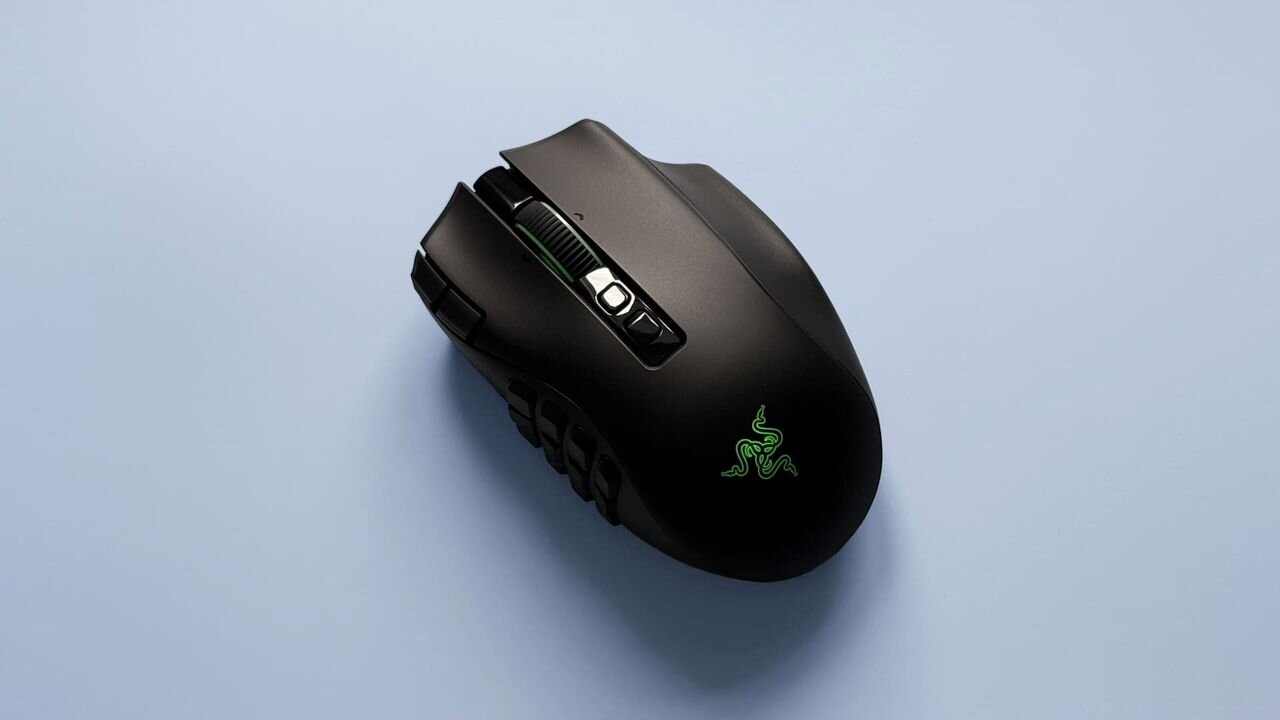
The Razer Naga V3 Pro is marketed as a mouse for MMO players, but it’s also something else: a mouse for the undecided, for the uncommitted. That’s because it comes with swappable side plates that let you adjust the number of buttons you get, with each made to suit a different game type.
There’s the 12-button plate, which is designed for MMOs, alongside a six-button option for MOBAs and battle royales. If you prefer FPS titles — or just general computing — there’s a two-button panel. Switching these plates is pleasingly simple thanks to the magnetic attachment system: just snap a new one on and you’re good to go.
Not only are these side panels a genius idea, but they work impressively well in use. Compared to the previous version, the buttons have been redesigned to be easier to find by touch, and I had no trouble discerning them in-game. This is especially true of the six-button side plate, whose buttons are so pronounced you could probably open a can of beans with them.
Future
Future
There's a bewildering array of buttons on this mouse, even if you’re not using the maxed-out 12-button plate. There are two in the top corner of the left-click button, while a large one rests on the chassis’ lower-right-hand side. Another two are nestled behind the scroll wheel — one to change the scroll mode and another to activate the AI Prompt Master (no, I don’t know why it’s on a gaming mouse either).
However, there are other neat tricks up the Naga’s sleeve. It’s got Razer’s second-generation HyperScroll Tilt Wheel, which lets you change its spinning mode on the fly. Move it slowly, and it ratchets one notch at a time; flick it quickly, and it spins freely. There’s also a ‘precision tactile’ mode for more control. It’s a brilliant addition that adapts to your needs, whether you’re changing weapons or flying through spreadsheets. It’s a dark horse contender for the mouse’s best feature. I even like the satisfying haptic clunk when it resets from free-spin to ratcheting mode.
Future
Future
The battery is another highlight, whether you disable the RGB lights or leave them on. In Bluetooth mode with RGB off, the Naga V3 Pro’s battery dropped a mere 4% after 20 hours of use. After testing for another 20 hours with the lights on, the battery dropped a further 7%. That’s pretty crazy longevity. Razer says you’ll get up to 280 hours in Bluetooth mode, and I can easily believe that based on my experience.
There are other improvements compared to the Naga V2 Pro , including sideways tilt support in the scroll wheel and next-generation updates to the button switches and optical sensor, which has jumped from 30,000 DPI to 50,000. The side buttons are now double-injection molded instead of printed (so they won’t wear off), the polling rate has increased from 1,000Hz to 8,000Hz (with the included dongle), and the weight has dropped from 134g to 117g.
Speaking of the weight, it’s still very noticeable — this is a sizeable, heavy mouse that’s best suited to palm grips and large hands. Compared to my 60g Logitech Pro X Superlight 2 , the Naga V3 Pro weighs twice as much. The extra heft was very noticeable in use, with the pointer feeling weighty, lethargic and inaccurate, especially in fast-paced FPS games. If you’re used to lightweight mice, it’ll require some adaptation.
Future
Future
Future
It’s also extremely expensive. At $179.99 / £179.99 / $299.95 AUD, it costs more than any other Razer mouse, including the Viper V4 Pro and the DeathAdder V4 Pro . The Naga can do the job of several mice, which might mitigate the cost somewhat, but there’s no denying it’s a luxury many gamers won’t be able to afford.
There are a couple of other gripes. While the 12-button panel is backlit, the six-button plate is not. The HyperScroll wheel, meanwhile, would benefit from being able to switch modes a little quicker — sometimes it remained in the wrong mode because I moved it before it was ready.
I'm also not a huge fan of Razer’s Synapse software. You can use it to map custom controls to the mouse’s buttons — important stuff when you’ve got as many as the Naga V3 Pro does — but it often forgot what we’d programmed, leaving us with dead buttons that did nothing until Synapse was restarted. Not exactly what you want during a closely fought boss battle.
Future
Future
Judging the Naga V3 Pro is tricky. A confluence of factors make it feel incredibly niche: its high price, its heavy weight, its button positioning that really only works best for palm grips, its mass of buttons. Not everyone needs some of those features and even fewer need all of them in one mouse.
But there’s no denying it’s good at what it does, and if you’re an MMO fiend or find yourself swapping between mice to suit your gaming needs, there’s a whole lot to like about it. It’s hard to wholeheartedly recommend to all gamers, but those who fall within its narrow niche will love it.
Razer Naga V3 Pro review: Price & release date
Available to buy now
Priced at $179.99 / £179.99 / $299.95 AUD
Optional extras, including Razer Mouse Dock Pro and Razer HyperFlux V2 Wireless Charging System
The Razer Naga V3 Pro is available now from Razer’s website or from third-party retailers. It’s priced at $179.99 / £179.99 / $299.95 AUD.
It’s Razer’s most expensive mouse, excluding special editions (such as the Boomslang 20th Anniversary Edition that costs a ridiculous $1,337), but in return you get a highly customizable pointer that can be adapted to three different use cases. One way of looking at it is that you’re paying a premium so you don’t need to purchase multiple mice. Just make sure you actually need it before shelling out all that cash.
Razer also offers it as part of a bundle alongside its Mouse Dock Pro, Wireless Charging Puck or the HyperFlux V2 Wireless Charging System (which comes in two different flavors).
The Razer NagaProRazer NagaMMOThat’sThere’sMMOsMOBAsFPSSwitchingNotCompared
AIPROPX is an independent multi-source news index — we track, compare, and connect coverage from across the web into one place you won't find anywhere else.