This is one outlet's own report from Tehran Times — the article as it was filed. Other outlets are covering the same event; open the full story to compare every source side by side.
TEHRAN – Yemeni attacks on Saudi Aramco facilities send a message that the continuation of the Saudi blockade and aggression will be met with escalating Yemeni retaliation aimed at the pillars of the Saudi economy.
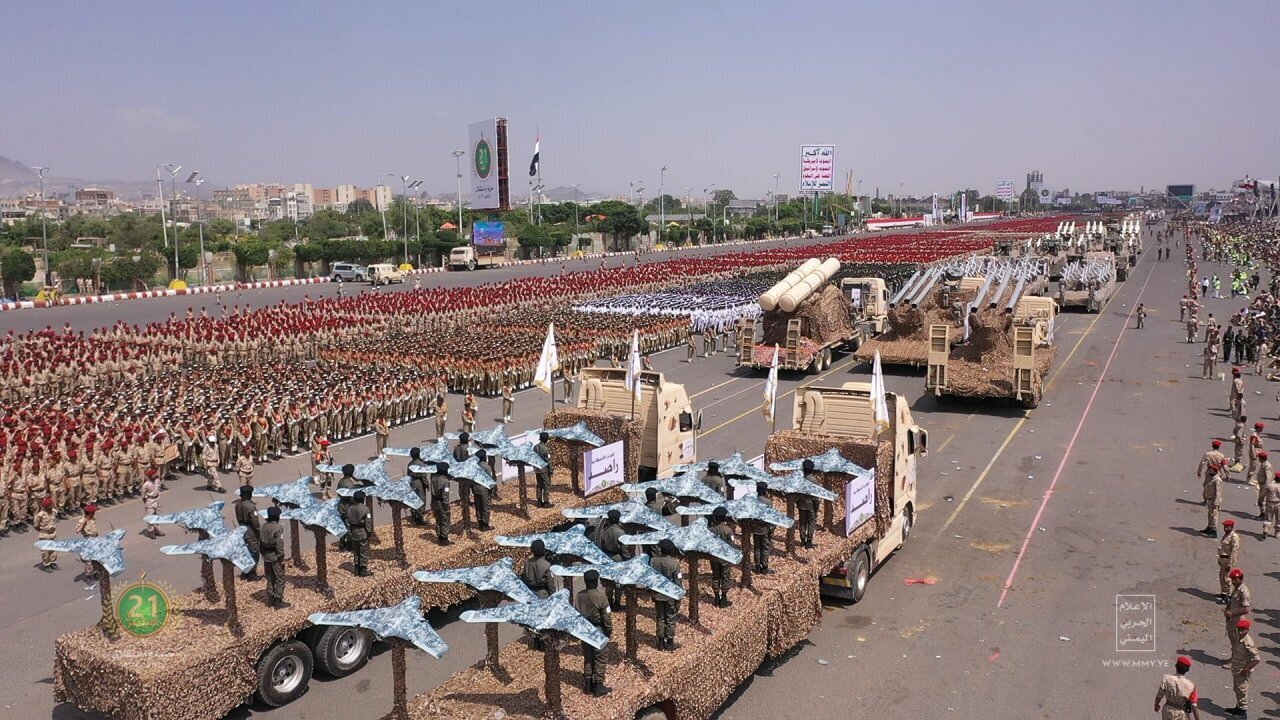
In its latest statements, the Yemeni Armed Forces (YAF) announced that they had carried out a military operation targeting a number of sensitive sites and facilities linked to the supply and transport of crude oil from eastern Saudi Arabia to the city of Yanbu, using several drones.
Footage shows a massive fire at the Abqaiq oil processing facility in the eastern province, one of the largest in the world, which Saudi Arabia blamed on a drone strike. It would mark the first time that Yemen has targeted the Kingdom’s oil facilities in the eastern province since 2019.
The YAF said the operation was carried out in response to Saudi drones violating Yemeni airspace, adding that it was part of their response to those incursions. The YAF also targeted three more Saudi oil tankers in line with Yemen’s maritime blockade in the Bab al-Mandab Strait (for Saudi ships only).
A source revealed to regional media that 16 Saudi vessels had been forced to turn back and were denied passage between last Monday and Sunday (July 20-July 26).
Saudi Arabia initiated this latest round of fighting by bombing Sanaa International Airport. This was followed by air raids on several vital infrastructure and public service sites in Yemen’s western governorate of Hudaydah.
In a swift response to the Saudi attack, the YAF shifted its operations from the Red Sea into Saudi territory, placing the crown jewel of the Saudi economy at the top of its target list.
On Saturday, the YAF announced that they had carried out two precision military operations against facilities belonging to Saudi Aramco in Jizan and Yanbu.
The YAF spokesman, Brigadier General Yahya Saree, stated that the two operations were carried out using dozens of ballistic and cruise missiles, as well as drones, as part of Yemen’s legitimate right to self-defense and in response to a dangerous Saudi escalation.
That escalation took the form of a series of overnight Saudi airstrikes targeting civilian infrastructure and facilities in Hudaydah, foremost among them the port, which serves as the sole lifeline for tens of millions of Yemenis.
According to the Sanaa government, these attacks reflect Saudi Arabia’s clear determination to continue its policy of aggression, deepen the blockade and collective punishment, and further entrench Yemen’s humanitarian and economic catastrophe in a manner that stands in complete violation of international humanitarian law.
This reality sharply contradicts the claims made in official statements issued by Saudi defense and foreign ministry officials, including Turki al-Maliki or Mohammed al-Jaber.
Essentially, the YAF delivered a firm response and conveyed clear messages on two levels: one tactical, the other strategic.
The use of dozens of ballistic missiles, cruise missiles, and drones in this opening phase of escalation signals that Yemen is prepared to pursue the confrontation to its furthest limits. It also demonstrates that it possesses an extensive target bank and a stockpile of strategic weapons capable of altering the balance of power.
The careful selection of targets further translates into the equation Sanaa had warned the Saudi government: “any reckless act or full-scale aggression would inevitably be met with retaliation.”
The trajectory of the YAF operations and the significance of their targets as key oil production and supply hubs indicate that the YAF possesses the capability to reach and strike Saudi oil infrastructure across the kingdom.
This means imposing extraordinarily high costs on the Saudi government, costs it could have avoided had it chosen to fulfill the requirements of peace.
The statement issued by the YAF carried several key messages, foremost among them that the maritime blockade imposed on shipping linked to the Saudi government will remain in effect until the blockade on Yemen is lifted.
This underscores the failure of Saudi attempts at deterrence. The Sanaa government has also strongly hinted at broadening the response, a decision that will depend on developments in the coming “hours and days”. In other words, it is the conduct of the Saudi government that will determine the nature, scale, and scope of Yemen’s retaliation.
Sanaa’s approach collides with Riyadh’s arrogance
What deserves particular attention is that the Yemeni operations, with their tactical messages and strategic impact, are presented as serving to advance the peace process. They are intended to pressure the Saudi government into fulfilling humanitarian obligations and recognizing Yemen’s full sovereignty.
These are, from Sanaa’s perspective, legitimate entitlements that do not infringe upon Saudi sovereignty. It would have been wiser and more prudent for the Saudi government to respond to Yemeni calls and equitable proposals, as doing so would have been far less costly than the political, economic, and broader consequences of continued delay and confrontation.
The problem, however, lies in the Saudi government’s condescending view of Yemen and its people, its insistence on portraying itself as a mediator, and its desire to evade responsibility for what it has inflicted upon Yemen and the Yemeni people over nearly twelve years.
This was evident in the remarks of Saudi ambassador Mohammed al-Jaber, who, shortly after the attack on Hudaydah, claimed that “the Kingdom of Saudi Arabia has sought, and continues to seek, to support de-escalation and peace efforts, while backing the efforts of the UN Special Envoy to Yemen to reach a solution that ends the suffering of the Yemeni people.”
Critics question what de-escalation is al-Jaber referring to after such aggressive actions? And what peace can there be after Saudi Arabia spent four years of de-escalation, delaying and evading the implementation ...
AIPROPX is an independent multi-source news index — we track, compare, and connect coverage from across the web into one place you won't find anywhere else.