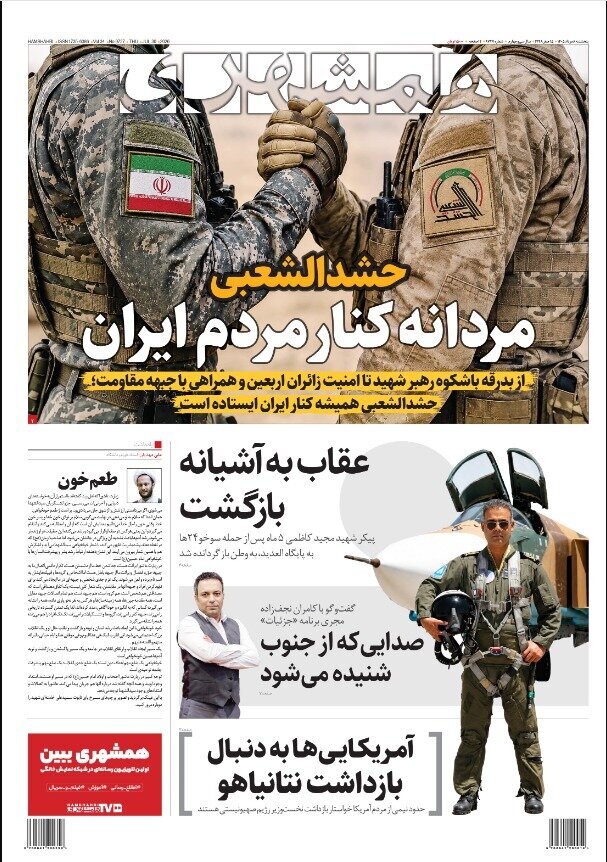
This is one outlet's own report from Tehran Times — the article as it was filed. Other outlets are covering the same event; open the full story to compare every source side by side.
Oil prices no longer react to war rhetoric, but to real supply cuts
Hamshahri analyzed the current oil market and wrote: The oil market, during the recent US–Iran conflict, once again revealed an important reality: war itself does not determine oil prices.
What sustainably moves prices is real and lasting disruption in supply, transportation, and energy infrastructure. For Iran, these conditions are simultaneously an opportunity and a warning. The opportunity lies in the fact that the continued export of oil under pressure and maritime insecurity has shown that Iran’s export network and mechanisms for selling and transferring oil possess considerable flexibility. This capability can be one of the components of the country’s economic and geopolitical power. But the threat is also clear: no export route should ever be assumed risk‑free. In such an environment, energy diplomacy must stand alongside deterrent power and operational capability. Oil power is not only about production volume; the ability to deliver barrels to the market during crises is also part of that power.
Arman‑e-Melli: The US opposes regional security order
Arman‑e-Melli, in a commentary, referred to Netanyahu’s trip to the US. It noted that the importance of this meeting can even be demonstrated numerically: it was the first Oval Office meeting between Trump and Netanyahu after the Ramadan war, reflecting the unstable security situation in Israel and the region. That the Iran file was the main focus of the meeting, and expansion of the Abraham Accords was treated as a secondary issue, was not surprising. But the key point is that hours after the meeting, regional and international media reported joint Saudi–US strikes on Iraqi territory. The simultaneity of Netanyahu’s meeting with Trump and the Riyadh–Washington attacks suggests that Israel and the US are coordinating to disrupt Iran’s external environment, aiming to increase pressure on Tehran. Therefore, it is likely that in the coming days we will see greater activation of the Yemen front in Bab al‑Mandab and the Red Sea.
Jam‑e-Jam examined Ukraine’s drone attack on the Iranian commercial vessel Ana in the Caspian Sea and Europe’s fear of an Iranian response. After the attack, a wave of diplomatic contacts from Kyiv and Brussels to Tehran began—contacts that, according to political observers, reflect Ukraine and the EU’s concern about the political and security consequences of the incident more than any diplomatic initiative. The EU, while being Ukraine’s largest political and military supporter, is simultaneously worried about the expansion of the war into the Persian Gulf and threats to energy routes. From this perspective, Kallas’s call to Tehran can be seen as an attempt to prevent the Caspian crisis from spilling over into the sensitive dynamics of the Strait of Hormuz and the global energy market. Brussels knows well that any escalation between Iran and Ukraine could extend the confrontation beyond Eastern Europe—a scenario that would pressure Europe’s economy and energy security even more than the United States.
Donya‑e-Eqtesad: The major challenge is the economy
Donya‑e-Eqtesad assessed Iran’s current situation and its major economic challenge. It wrote that the result of several decades of US–Iran confrontation has been a form of costly equilibrium. The persistence of such a situation is less a sign of success and more evidence of a strategic rivalry that has become attritional. During this period, Iran has built significant deterrent capacities. Defensive strength, a privileged geopolitical position, regional influence, and a decisive role in Persian Gulf energy security have consolidated Iran’s place in regional equations. But the most important challenge facing Iran is economic rather than military. Therefore, the strategy that can bring Iran the greatest benefit is a form of smart realism in which deterrence supports diplomacy rather than replaces it. Such an approach requires avoiding actions that create broad global consensus against Iran.
Sazandegi presented its view on Ukraine’s attack on the Iranian commercial vessel and the significance of the incident in the Caspian Sea. This attack is a sign of the expansion of the Ukraine war into a region that had so far remained distant from direct conflict. The importance of the attack stems from the Caspian Sea’s strategic role. In recent years—especially after intensified Western sanctions on Russia—the Caspian has become one of the most important transport corridors between Tehran and Moscow. The recent attack shows that Kyiv no longer considers the Caspian outside the battlefield and is ready to extend its operations to disrupt Russia’s supply chain. The incident carries a clear message: the Ukraine war is no longer confined to the front lines of Eastern Europe. If this trend continues, the Caspian—long considered a relatively safe region—may become one of the most sensitive points of geopolitical competition among regional and extra‑regional actors.
AIPROPX is an independent multi-source news index — we track, compare, and connect coverage from across the web into one place you won't find anywhere else.