This is one outlet's own report from Gizmodo — the article as it was filed. Other outlets are covering the same event; open the full story to compare every source side by side.
Legions of tech startups have been founded in recent years, hoping to strike it rich in the AI gold rush—and all of them jostling for consumers’ attention in an increasingly crowded market. The result has been a deluge of ads selling some AI-powered product or other. It’s not always easy to know what exactly is being sold, though. AI isn’t a physical product, like a smartphone or a car, and not even the software engineers who build it can tell you exactly how it works.
“The ads kind of have to be vague, because the product is vague,” Harris Alterman, a comedian living in New York City, recently told me. The sheer number and inscrutability of these ads can feel a bit disorienting, not unlike the feeling of scrolling through social media and seeing one AI-generated video after another. Alterman has coined a phrase to describe the mind-numbing quality of modern tech advertising: “slop voice.”
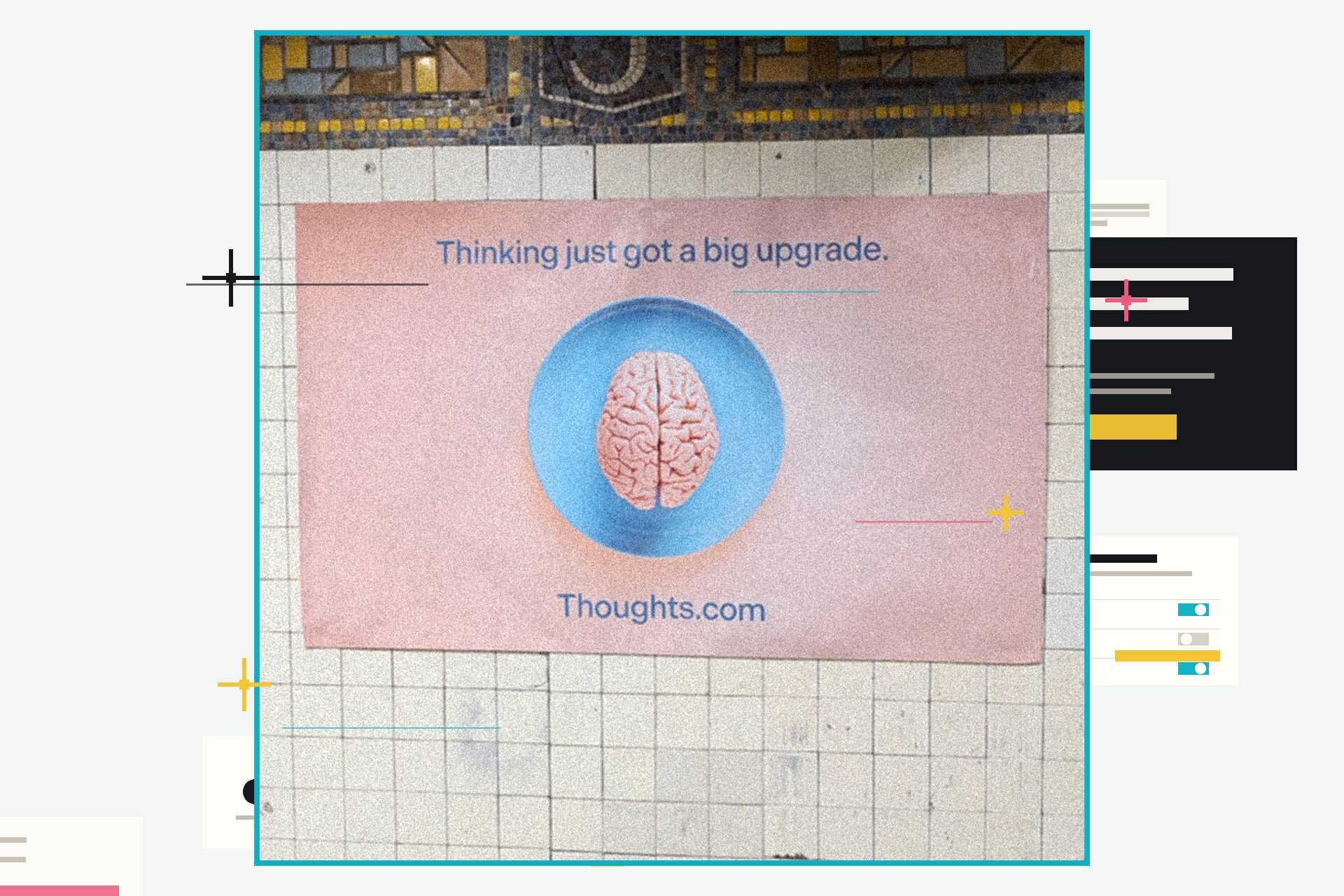
Earlier this year, Alterman and his friend and fellow comedian Dave Ross started noticing more and more of these inscrutable AI ads plastered across the city, especially in the subway. They all seemed to follow the same basic aesthetic recipe: minimalist graphic design, and copy filled with obscure jargon like “agentic,” “orchestration layer,” and “business intelligence.”
“It’s ugly design and nonsense writing, so it doesn’t even add to my life artistically at all,” Ross told me. “It’s just frustrating and confusing and noticeably not for me.” He and Alterman started texting images of these ads back and forth, and soon wound up in a diner together, sketching out ideas for fake ads based on the template they had been seeing across the city.
“They really just write themselves—they’re just so ripe for parody that it just falls right out of your brain,” Alterman says. They soon created ten full-scale prints of each faux company, and hung them in two New York City subway stations in Brooklyn. The video of the stunt quickly went viral.
Some of the ads are obviously fictitious: Very few people are going to think UpsideDownTexas.ai is an actual brand, for example (though a Boston-based software engineer is now using the domain for his personal website). Others are in more uncanny valley territory, just barely plausible enough to make you wonder if it could in fact be a real thing. One of my personal favorites: “Ziplink is now Froggle.” As if to prove Alterman’s and Ross’ point, I received a story pitch from a PR rep in June with the subject heading: “Allbirds is now Smartbird AI,” referring to the shoe brand’s recent AI-oriented rebrand . Art truly does imitate life, in this case.
Alterman's and Harris' first viral video was followed by a second, posted to social media last month and including a fresh batch of fake ads (“underwAIr: Panties that think”). They also created a new fake parent company to "own" all the bogus brands, called " AI Conglomerate ."
This past Saturday—a swelteringly hot day in New York—the duo hosted a pop-up exhibit inside an old news stand on a subway platform in Lower Manhattan. They distributed free UpsideDownTexas.ai stickers and Kool-Aid Jammers, the labels of which had been plastered over with stickers of Sam Altman as the Kool-Aid Man. A crowd of sweaty New Yorkers milled about, taking photos and giggling.
The fake ads’ appeal seem to be tapping into a communal experience: the same frustration and confusion Ross had told me he’d been feeling, on a mass scale. In an age when vague ads for AI products are being beamed down at you from billboard and within the narrow tube of subway cars, it can be comforting to know you aren’t the only one feeling disoriented by the onslaught of “slop voice.”
“I feel like it does connect you to other people to be like, ‘Look, we're all going crazy,” Alterman told me. “That's nice. And, I mean, hopefully it’ll lead to less shitty advertising.”
AIPROPX is an independent multi-source news index — we track, compare, and connect coverage from across the web into one place you won't find anywhere else.