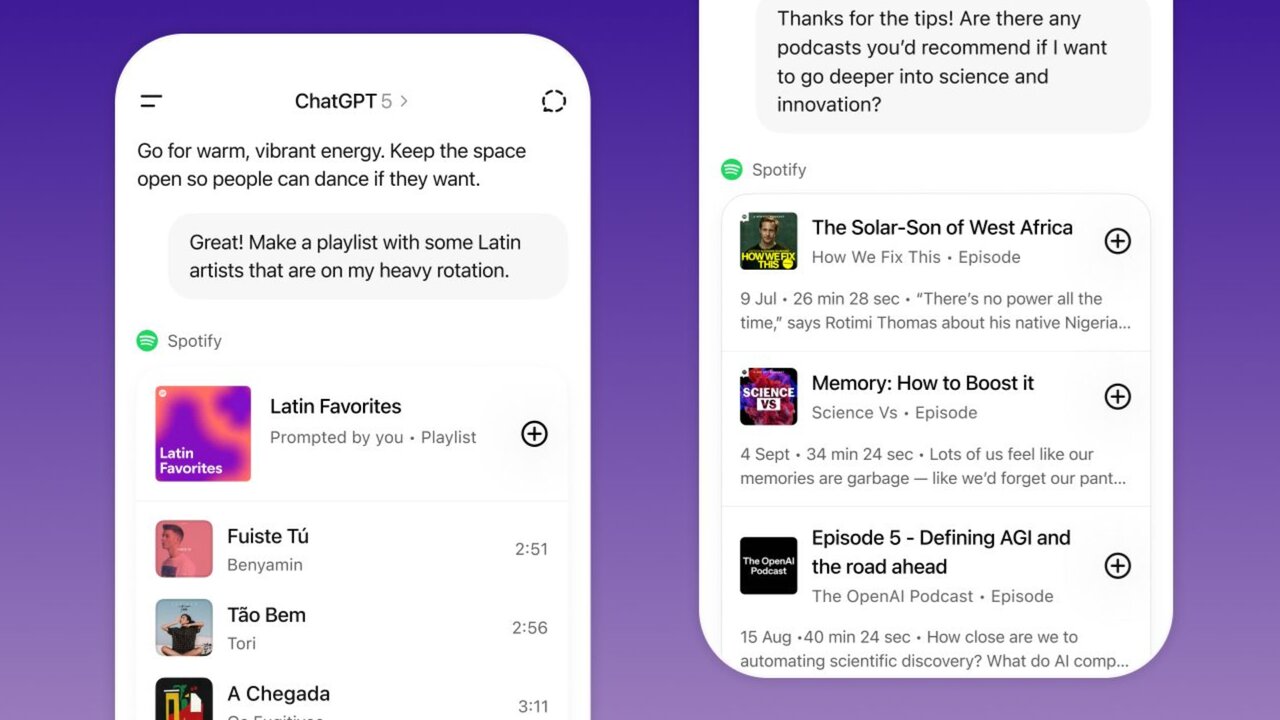
ChatGPT’s growing collection of plugins has always sounded more useful than it sometimes felt. A long directory can make every integration look equally promising, even though some become regular tools and others enjoy one exciting demonstration before joining the digital attic. I have installed plenty that seemed clever for approximately seven minutes.
A recent recommendation update is designed to make that search more useful. Plugin rankings now give greater priority to tools that people continue using after installation, helping relevant options appear more prominently across ChatGPT on the web and mobile.
That sounded like a useful reason to revisit the directory and see which plugins had earned a place in my own routine. Here are five ChatGPT plugins I use that you might find worthwhile integrating into your life too.
1. Spotify for soundtracks of my day
Music recommendations have traditionally fallen into two camps. An algorithm serves more of whatever you played last week, or a friend gives you a playlist that contains six hours of obscure ambient jazz and demands your gratitude. Spotify’s ChatGPT plugin offers a more conversational middle ground.
Once connected, it can use your listening history, favorite artists and habits to suggest music, find podcasts and build playlists. The advantage is the amount of context you can include. Instead of searching for “workout music,” you can request a precise length, mood, genre mixture and energy curve. You can then refine the result without starting again.
I find it particularly good for playlists attached to a specific activity. Give it constraints and a little personality. A useful prompt would be: “Spotify, make a 75-minute Saturday kitchen-cleaning playlist. Start with indie rock, increase the energy after 20 minutes, avoid songs I played heavily last month and finish with three ridiculous singalongs.”
That produces something more purposeful than a generic cleaning playlist assembled by somebody who apparently dusts to anonymous dance remixes. You can ask Spotify to replace individual tracks, make the selection calmer or rename the finished playlist before opening it in the Spotify app.
The plugin is also handy for rediscovery. Asking for artists you listened to frequently five or ten years ago can produce a surprisingly effective musical excavation, complete with the occasional song you had wisely buried.
2. AllTrails for touching grass
(Image credit: ChatGPT)
I like hiking and finding new places to go. The AllTrails plugin can turn my fuzzy desire to spend time outside into a shortlist that reflects how much time, energy,, and enthusiasm I actually have.
The trick is to describe the practical limits that generic searches tend to ignore. Include your location, maximum driving time, preferred distance, acceptable elevation gain, and any requirements involving children, dogs, shade, accessibility, or parking. ChatGPT can handle those details conversationally and use AllTrails to narrow the possibilities.
For example: “AllTrails, find three loop hikes within 45 minutes of me. Keep them between two and four miles with less than 700 feet of elevation gain. Prioritize recent positive reviews and parking that does not require arriving at dawn.”
That is far more useful than being told about the “10 best hikes in New York.” Follow-up prompts can compare the routes, suggest the best choice for a hot day, or identify the option with the gentlest opening mile. Trail conditions can change, so I still check recent reviews, closures, weather, and the official route before leaving, but it's been a great trip planner, especially for group hikes.
3. Todoist for due dates
(Image credit: ChatGPT)
My relationship with to-do lists has always been hopeful but unstable. I enjoy creating them, feel briefly organized, and then discover the list several days later beneath newer lists. Todoist already offered better structure, but its ChatGPT plugin removed much of the fiddly work involved in turning a collection of thoughts into an actual plan.
After connecting my Todoist account, I might describe a typical overloaded Saturday and ask it to put the errands in a sensible driving order and with a realistic time schedule for getting it all done. I also ask for a preview first lest ChatGPT overload me out of misplaced confidence in my abilities.
The plugin is especially useful for recurring household tasks. I can ask it to create reminders for changing filters, checking smoke alarms, renewing documents or ordering supplies.
4. FitAI Pro for fitness
(Image credit: ChatGPT)
FitAI Pro is designed for planning gym workouts and logging sets, It handles the organizational work that often stands between me and an actual workout.
After installing the plugin, I gave it my experience level, available equipment, preferred number of training days, and the maximum time I wanted to spend in the gym, and I get back a set of workouts to match. It helps to mention any movements you dislike or need to avoid
The large exercise library also makes substitutions easy for when I just don't like a particular exercise or want to mix things up. The plugin cannot perform the workout for me, which remains disappointing, but otherwise it streamlines workout plans in ways that make it harder for me to procrastinate or skip them entirely.
5. Podcast App to learn and laugh
(Image credit: ChatGPT)
Podcast discovery is even tougher than for plugins because it's such a vast sea of OK-to-bad options, with unfortunately rare gems hidden within. Even more so if you only want to find a particular episode and not just a whole show.
The Podcast App plugin lets me search by topic, idea, or program and receive relevant podcast recommendations. I use it for individual episodes, since that is where it saves the most time. You can mention a maximum length if you want to avoid the four-hour monologues, and specify just how much expertise you have if you want general knowledge versu...