The Big Ten and SEC may be on the brink of striking a deal with federal lawmakers over legislation to regulate the college sports industry.
Days of negotiations between U.S. senators and conference executives over the Protect College Sports Act reached a crescendo on Friday, as league executives hurriedly scheduled meetings with their respective presidents and chancellors in a stunning 11th-hour move.
The Big Ten held a call with its presidents and chancellors where executives are moving toward supporting the legislation, sources tell Yahoo Sports. A vote was imminent. The SEC held a call Friday morning to review the latest revisions and is expected to hold an evening call to possibly vote to lend their support, too.
The scramble comes a day after the conferences missed, for a second time in as many days, a deadline set by lawmakers to determine their position on a revised bill and follows aggressive involvement from the White House. U.S. president Donald Trump engaged with stakeholders through intermediaries on Thursday evening, stating his intent to publicly condemn Big Ten and SEC leaders for opposing the bill, presumably through a social media account followed by millions.
Thursday night and Friday’s negotiations — between lawmakers and the power leagues, plus Notre Dame — resulted in the addition of language to the bill intended to strengthen a provision that prohibits schools from circumventing the athlete revenue-share cap. The language, shared with Yahoo Sports, requires school-affiliated sponsors and apparel brands to enter into an attestation process to certify that their NIL agreements are kosher, not directed by the school and that the compensation doesn’t originate from the school. Similar language is in the bill already related to NIL deals from multimedia rights partners, like Learfield and Playfly.
The goal is to establish a more strict cap by including into the cap all affiliated NIL deals, aside from those authentic deals that are ratified through the attestation process. This is a key point for university presidents and conference commissioners in all four power leagues, especially considering that the legislation raises the player cap from $21.3 million to $48.8 million.
The SEC and Big Ten’s support is central to the bill’s passage.
There remains a path for the bill to reach the Senate floor for a vote next week before lawmakers leave for a month-long recess. Majority Leader John Thune likely needs to file Monday for what’s called “cloture,” a formal procedural step that starts the process for a floor vote later in the week.
Many predict that the bipartisan legislation has enough support to easily surpass the 60-vote threshold necessary in the Senate — if the leagues throw their weight behind the measure. While the bill would still need to pass the House of Representatives, Senate ratification would stand as one of the most historic moves in college sports history and a victorious moment for the NCAA’s seven-year lobbying effort for a congressional bill.
The key components of the bill would grant the NCAA and conferences a limited antitrust exception to re-implement the one-time transfer exception, standardize a five-year eligibility policy, ban professional athletes from returning to college, establish an agent registry and minimum fee (5%) and, as noted above, create a more strict athlete revenue-share cap.
The revenue-share cap, for weeks now, has been at the center of the negotiations between conference officials and co-authors of the bill itself, Sens. Ted Cruz, Maria Cantwell and Eric Schmitt, and their staffs.
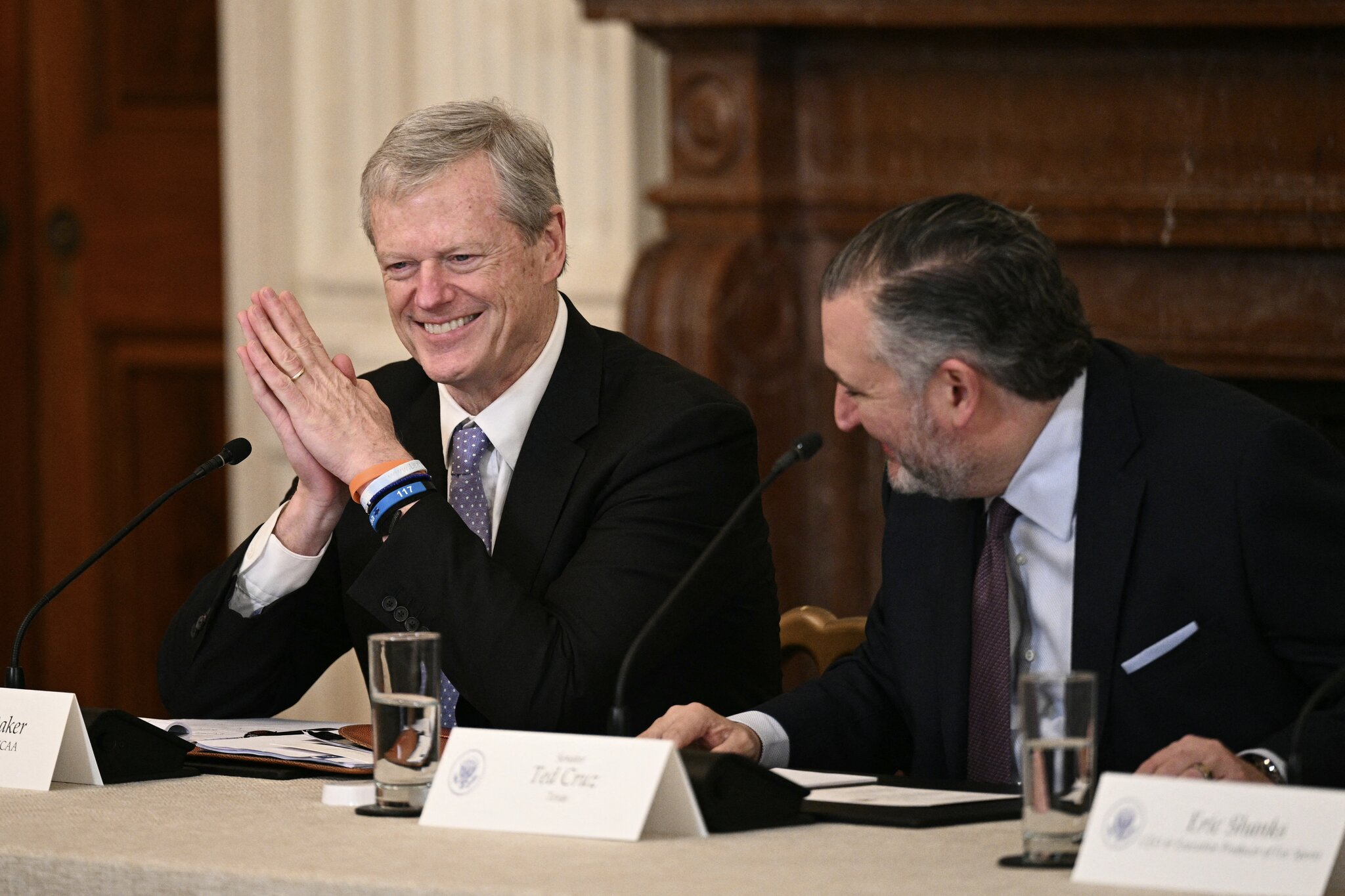
NCAA president Charlie Baker (left) has voiced strong support for the Protect College Sports Act, co-authored by Sen. Ted Cruz (right) and two other senators. (Photo by Brendan SMIALOWSKI / AFP via Getty Images) BRENDAN SMIALOWSKI via Getty Images
Opposed to collective bargaining and employment, college sports leaders are working to establish a harder cap like the NFL as opposed to the current state of affairs, where schools are exceeding the $21.3 million cap, in some cases, by triple that figure, by redirecting sponsorship and apparel cash from the athletic department to their roster. According to the bill, all athlete deals with university-contracted businesses (associated entities), such as multimedia rights partners, corporate sponsors and apparel brands, would be included in a school’s revenue-share payments and count against the cap.
However, the legislation keeps open a lane for authentic deals by creating the attestation process.
The cap itself is on the move.
In revisions obtained by Yahoo Sports on Thursday, the legislation now creates a $22.5 million retention pool for schools to use on retaining athletes in addition to the $21.3 million original cap, plus $5 million to be spent only on women and non-revenue sports. That’s a $48.8 million cap, putting the figure more in line with the current market.
But a question still lingers: Will schools skirt the certification process and still exceed the cap with disguised third-party deals?
While the cap circumvention provision remains the top issue, there are others, such as a new, mysterious third section of the bill added just this week. Title III, called the "Ignite HBCUs Sports and Media Act,” is a competitive federal grant program to assist historically black colleges and universities, though details of the act are unclear.
In general, the bill is the opposite of the narrow version that college leaders wanted. It is incredibly specific, touching on several concepts, including conference expansion and coaching movement. The legislation caps power conference membership at 19 schools and requires those programs moving from one power league to another to operate as an independent for five years.
The expansion provision may impact decisions from schools that are in position to move from the ACC to the SEC or Big Ten. Officials at Clemson, Miami, Florida State, North Carolina...