
This is one outlet's own report from PBS NewsHour — the article as it was filed. Other outlets are covering the same event; open the full story to compare every source side by side.
See the full story · 14 sourcesHow data centers became a major issue in the midterms
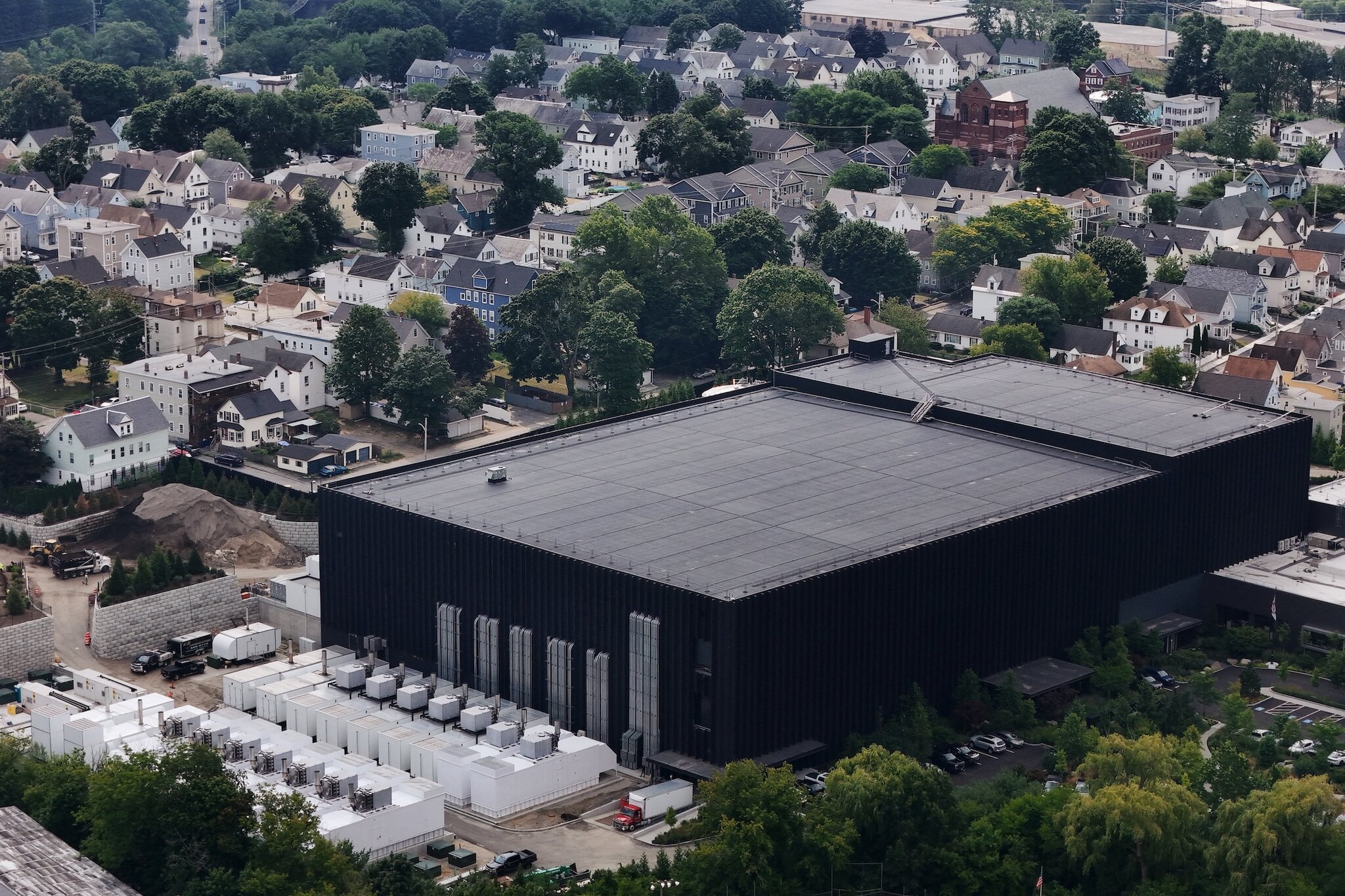
While there are many issues dividing voters this midterm season, one seems to be uniting them: opposition to AI data centers. Candidates who've taken notice are racing to shape policy around these centers, which could be a defining issue in some races. Lisa Desjardins discussed what it might mean for the midterms with Clara Ence Morse of The Washington Post. Amna Nawaz: While there are many issues dividing voters this midterm season, one seems to be uniting them, opposition to A.I. data centers. Candidates who've taken notice are racing to shape policy around these centers, which could be a defining issue in some races. Our Lisa Desjardins has more. Lisa Desjardins: It is national, from Minnesota... Woman: We're afraid for our lives. Lisa Desjardins: ... to Virginia. Voters are concerned... Man: We do not want a data center in this county! (Cheering) Lisa Desjardins: ... and some, like here in New Jersey, outraged. Woman: You can either end this project, resign effective immediately, or we will take legal action to protect the children, nature and everything that you are destroying! (Cheering) Lisa Desjardins: This anger is over massive humming buildings, A.I. data centers. Local critics say these industrial facilities, which house fields of artificial intelligence computers, are loud, decrease property value, and suction off energy and water, harming the environment and raising utility bills. Polling shows opposition rising fast, at 49 percent in an Annenberg poll earlier this year. This summer, that shot to 61 percent. Those running for political office, especially Democrats, are galvanizing the issue. Woman: Big companies have come before, take what they wanted and left us with their mess to clean up. Now it's data centers. William Lawrence (D), Michigan Congressional Candidate: Billionaires want to turn this whole field into a massive data center. Narrator: Jon Husted spent years aggressively recruiting data centers to the state. Lisa Desjardins: A recent Washington Post analysis found that candidates in at least 45 states have mentioned A.I. on their campaign Web sites, and data centers account for the largest share of A.I. policies discussed by far. Man: Data center production and energy use in Texas is skyrocketing to meet A.I.'s needs. Lisa Desjardins: In the Texas race for governor, Democratic candidate Gina Hinojosa has made the centers a central issue, attacking her opponent, Republican incumbent Governor Greg Abbott. State Rep. Gina Hinojosa (D-TX), Gubernatorial Candidate: He is backpedaling on the data center issues, and people see it for exactly what it is. It is an election time political ploy. Lisa Desjardins: Abbott last year declared his state would be the global center for Google A.I. data centers. But he's since changed his tune. Earlier this month, he made Texas the second state in the country to put a pause on data center construction. Gov. Greg Abbott (R-TX): And so they had not been working in collaboration with the state. They'd not been working in collaboration with local governments. And so they basically dug their own graves. Lisa Desjardins: In Pennsylvania, Democratic incumbent Governor Josh Shapiro has also changed his views. Gov. Josh Shapiro (D-PA): You don't want these irresponsible, burdensome, reckless A.I. data centers in your community. And I want you to know, I hear you. Lisa Desjardins: Someone still bullish on the centers, President Trump. President Donald Trump: I can say, if I were the mayor of a town or the governor of a state, and I had a chance to get a big plant in, an A.I. plant or a data center, I would absolutely want it, because the jobs are enormous, and the money paid, the taxes paid, are just enormous. Lisa Desjardins: Evidence shows that data centers do create local jobs, but fewer than industry advocates claim. In Florida: Rep. Byron Donalds (R-FL), Gubernatorial Candidate: You don't need a yearlong moratorium. Lisa Desjardins: ... Republican Congressman Byron Donalds, who's running for governor, is in line with the president, saying the economic benefits can be enjoyed while lawmakers figure out how to address voter concerns. But as lawmakers try to connect, voters are the ones moving at high speed. Joining me to help us understand this surge of opposition around data centers and what it might mean on the ballot is Clara Ence Morse, one of The Washington Post reporters leading that analysis earlier this month. Thank you for joining us. Based on what you reviewed, what are the concerns really animating voters and now candidates? Clara Ence Morse, The Washington Post: I think there are a couple main issues that voters are concerned about when it comes to data centers. The first and the biggest one is environmental concerns, right? So, concerns about water quality, about pollution, about land use. And there are also a lot of questions about energy prices, right? Some people saw their bills skyrocket when a data center went up near them. And we have seen that those are the sorts of policies and regulations that politicians are proposing to sort of regulate data centers. Lisa Desjardins: But President Trump says, what about the jobs? He says there are jobs involved with these data centers. And that is something we heard more a year ago perhaps than now. How has that changed the economic argument? Clara Ence Morse: Data centers have seen this almost historic drop in popularity over the past year, right? I think one of the things that's happened is that people have just seen so many of these data centers go up in their communities. Obviously, artificial intelligence has also come a long way in the past year as a technology. And what we have seen is that, as voters find it less and less palatable, politicians are responding and proposing new regulations, in some cases, total moratoriums, on data centers or on A.I. development. Lisa Desjardins: Is there a difference between how Republicans and Democrats are handling this? We're seeing m...