This is one outlet's own report from Forbes — the article as it was filed.
AIPROPX ReportForbes · 1h ago
Iraq’s Vow To Modernize Air Defense After U.S.-Saudi Strikes Is Nothing New
Aerospace & Defense Iraq’s Vow To Modernize Air Defense After U.S.-Saudi Strikes Is Nothing New By Paul Iddon ,
Forbes contributors publish independent expert analyses and insights. Paul Iddon is a freelance journalist focused on Middle East affairs. Follow Author Aug 01, 2026, 06:57am EDT --:-- / --:-- This voice experience is generated by AI. Learn more . This voice experience is generated by AI. Learn more . Summary Following unprecedented U.S.-Saudi airstrikes on Iran-backed militias in Iraq, Baghdad has again declared modernizing its air defenses a "top priority." This echoes similar unfulfilled promises made after previous foreign strikes on Iraqi soil. Despite existing plans to acquire South Korean Cheongung-II systems and French Rafale jets, these efforts face significant delays due to unpaid installments and financial constraints. Past attempts to procure Russian S-300/S-400 systems also failed, partly due to U.S. sanctions concerns. The article questions whether this latest vow will yield tangible results or remain another empty statement, highlighting Iraq's persistent struggle to secure its airspace.
After Iraq faced unprecedented joint U.S.-Saudi airstrikes against Iran-backed militias on its territory early on Wednesday, its government has declared its “top priority” is to modernize the country’s air defenses. Baghdad made similar declarations over six years ago following American and Iranian strikes on its sovereign soil.
Tensions between Saudi Arabia and the Houthis in Yemen boiled over in July, threatening the March 2022 ceasefire. Amid renewed Houthi attacks on Saudi energy infrastructure, the kingdom also found itself under fire from drones launched from Iraq to its north. Iran-backed militias in Iraq previously targeted Saudi Arabia during the height of the Iran war and even after the April 8 ceasefire. This time Riyadh joined the United States by launching a series of airstrikes against those Iraqi militias backed by Iran’s powerful Islamic Revolutionary Guard Corps.
“U.S. and Saudi fighter aircraft struck multiple terrorist logistics and weapons sites across eastern Iraq in a strong response to over 30 IRGC-directed aerial drone attacks in the last 72 hours,” read the U.S. Central Command statement on the joint attack. Iraq’s Popular Mobilization Forces stated that the strikes killed 20 and wounded 32 of their fighters. The PMF are a state-sanctioned paramilitary force but also have groups within its ranks that operate independent of Baghdad and at Tehran’s behest.
Baghdad was clearly caught off guard by these strikes. Government spokesperson Haider al-Aboudi said Iraq hadn’t “granted any approval for attacks on specific sites or groups within Iraqi territory” nor had the government had any “prior knowledge of the attacks on Iraqi territory.” Iraqi Prime Minister Ali al-Zaidi canceled a trip to Saudi Arabia previously planned for Thursday.
Zaidi’s spokesperson Sabah al-Numan said the prime minister had “issued strict and immediate orders… to raise alertness and readiness to maximum across all camps and bases, particularly at the official bases of the armed forces and the Popular Mobilization Forces.”
Furthermore, Numan said that modernizing and rebuilding the country’s air defense through the acceleration of plans to acquire radar and air defenses is a “top priority.”
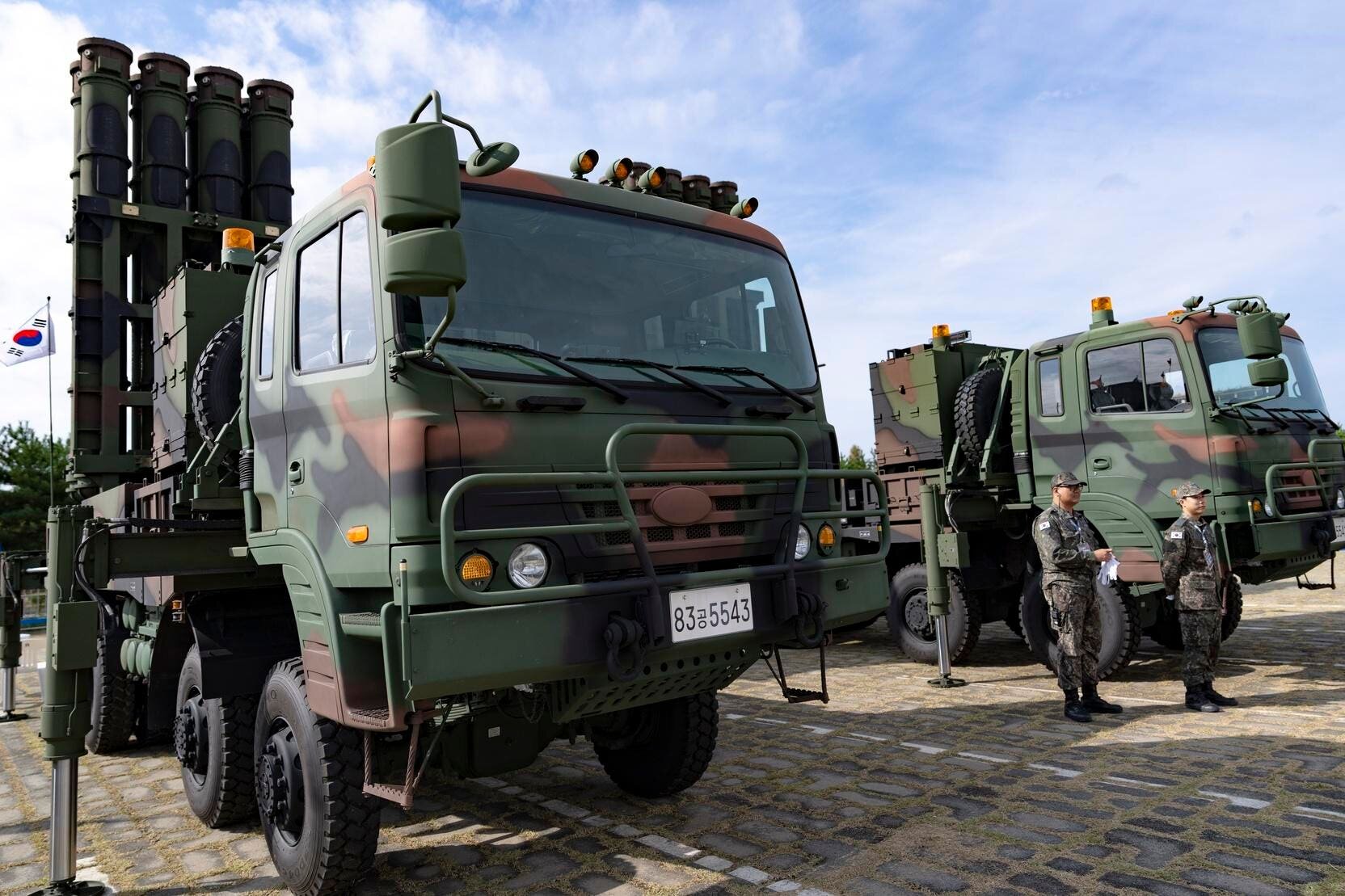
Such comments are nothing new. In fact, Iraq began 2026 with what looked like a promising outlook for the future of its limited and neglected air defenses. Reports from late 2025 indicated that it would begin receiving the medium-range Cheongung-II, or KM-SAM, air defense missile system it had ordered from South Korea as part of a landmark $2.78 billion deal. It’s also expected to finalize a deal for 14 advanced Dassault Rafale F4 multirole fighter jets from France and was already upgrading its airspace coverage with acquisitions of French-made Thales Grand Master 403 and GM200 radars.
Far from accelerating air defense procurement, Baghdad may actually fail to realize its initial plans to upgrade its air defenses that predated the present Iran war.
Earlier in the Iran war, Numan told Iraqi Kurdistan’s Rudaw Media Network that the government had decided to manufacture air defense systems for countering repeated drone attacks. The systems envisaged by the plan would provide point defense for important facilities. Furthermore, he said they would protect facilities inside the autonomous Kurdistan Region of Iraq, which faced constant attacks from Iran and militias inside Iraq, in addition to the federal provinces.
However, that nascent plan has already hit a major stumbling block. In July, Iraqi Kurdistan’s BasNews reported that Iraq is unable to protect Iraqi Kurdistan’s airspace. Iraq’s air defense commander reportedly told lawmakers that the autonomous region’s airspace isn’t under Iraqi control and therefore “we are not permitted to protect its skies.” According to the report, Muhannad Ghalib al-Asadi also clarified that the Cheongung-II delivery has been delayed since Baghdad still hasn’t paid its second installment. “The first payment has been made, and the second installment is still pending,” he said.
Earlier in July, Iraq’s Shafaq News reported that Iraq is at risk of losing the contract altogether, with South Korea warning that it could even sell the system elsewhere if Iraq doesn’t complete its payments. Iraqi MP Faleh Al-Khazali told the outlet that Iraq paid the initial $500 million installment but has delayed further payments that were due last year.
It’s worth noting that the United Arab Emirates received its first Cheongung-IIs at the height of the Iran war when it was under daily fire, swiftly pressed them into service and achieved multiple intercepts, marking the system’s combat debut. Consequently, Seoul would presumably not baulk at delivering these systems to Baghdad amidst active regional conflict once it fulfilled its payments in full.
AIPROPX is an independent multi-source news index — we track, compare, and connect coverage from across the web into one place you won't find anywhere else.