This is one outlet's own report from ScienceDaily — the article as it was filed. Other outlets are covering the same event; open the full story to compare every source side by side.
These insect submariners survive depths that should crush them
Deep-diving insect larvae in an African lake are forcing scientists to reconsider a popular explanation for why insects are almost entirely absent from the open ocean. Their secret is a remarkably durable system of air sacs that can tolerate far more pressure than researchers expected.
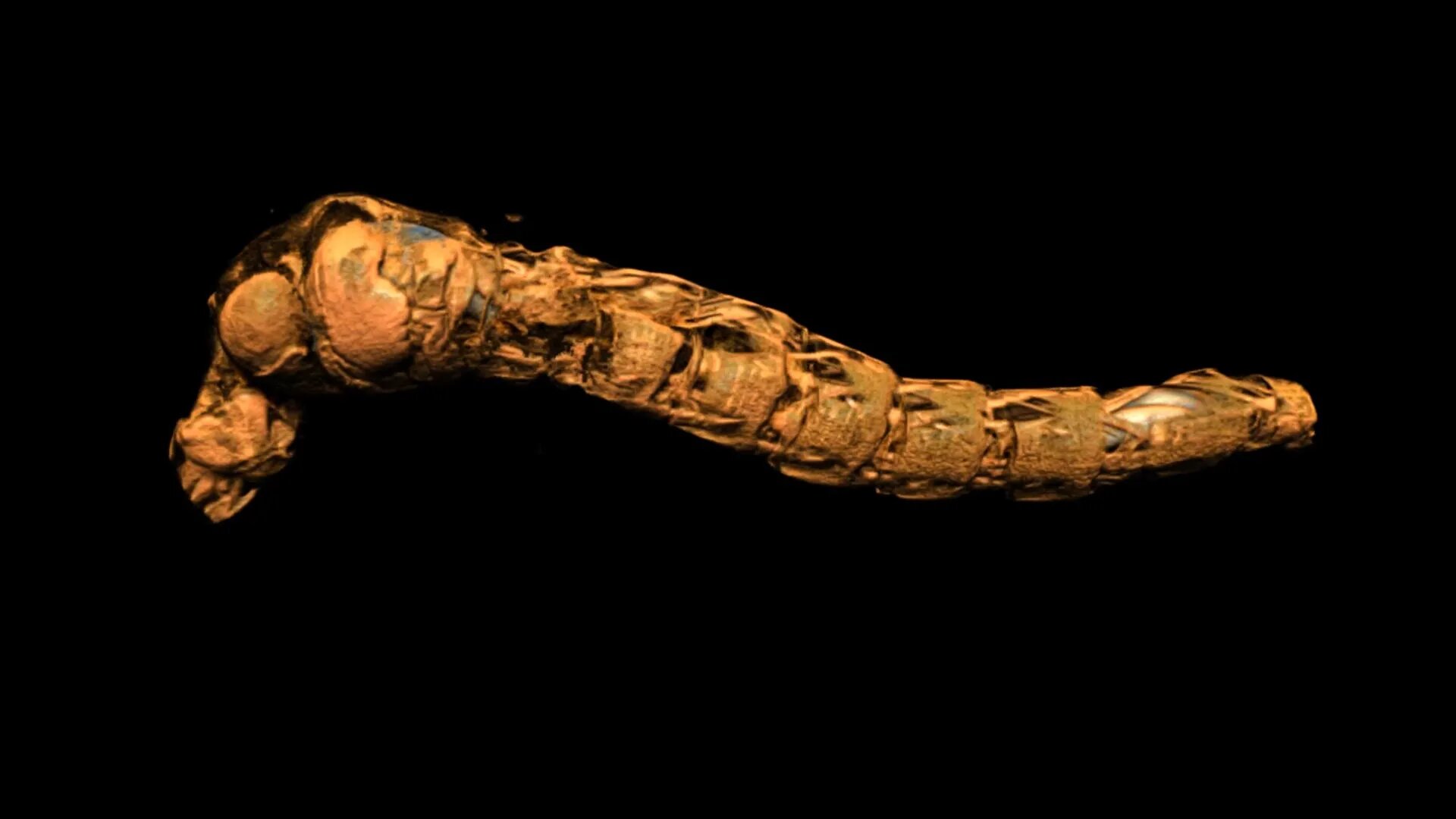
Billions of lake fly larvae ( Chaoborus edulis ), living in Lake Malawi in East Africa, complete an extraordinary vertical migration every day.
During daylight hours, the larvae descend more than 200 meters into a deep region of the lake with very little oxygen. This area, often called a dead zone, offers shelter from predators that cannot easily survive there. After dark, the larvae rise toward the surface to feed, although they must first pass through large numbers of fish waiting to eat them.
To track this daily movement, UBC researchers Drs. Philip Matthews and Evan McKenzie placed a sonar system on the lake floor. The equipment allowed them to observe the enormous groups of larvae as they moved through the water.
When the researchers examined the larvae, they discovered that the insects had adapted part of their respiratory system into two pairs of small air sacs.
These sacs act much like the ballast tanks of a submarine. By adjusting their size, the larvae can change their buoyancy and control whether they rise or sink in the lake.
The walls of the sacs contain resilin, an unusually elastic material found in many insects. The larvae can alter the pH of the sac walls, causing the resilin to expand or contract. This changes the volume of the air sacs and gives the larvae precise control over their depth.
The researchers next placed the larvae inside miniature pressure chambers to determine how much pressure the air sacs could withstand before collapsing.
The results were striking. The sacs survived pressures equal to those found at depths of more than 400 meters, which is far deeper than the larvae normally travel during their daily migration.
Insects are highly successful on land and in fresh water, yet the open ocean contains virtually none. One widely discussed explanation is that the intense pressure at greater depths would crush the air spaces used by insects for breathing.
The toughness of these larvae suggests that pressure alone may not fully explain why insects never established themselves throughout the ocean.
Biological Rubber Could Inspire New Materials
Scientists have previously studied resilin because it behaves almost like a perfect biological rubber. In other insects, it helps form durable structures such as wing hinges and tendons that must bend repeatedly without wearing out.
The newly discovered buoyancy system could also contribute to efforts to develop smart materials made with resilin. Researchers may eventually use similar mechanisms to create artificial muscles or other materials that move when triggered by a chemical change in pH.
This project was partially funded by Natural Sciences and Engineering Research Council of Canada Discovery and Accelerator grants.
Materials provided by University of British Columbia . Note: Content may be edited for style and length.
Alien Signals May Be Hiding in a Radio Band SETI Has Barely Explored
This 518-Million-Year-Old Creature Reveals How Spiders Got Their Bite
This Tiny Gecko Could Reveal How Cancer Spreads
The Backyard “Silly Sprinkler” That Cracked One of Physics’ Biggest Puzzles
Stay informed with ScienceDaily's free email newsletter, updated daily and weekly. Or view our many newsfeeds in your RSS reader:
Keep up to date with the latest news from ScienceDaily via social networks:
Tell us what you think of ScienceDaily -- we welcome both positive and negative comments. Have any problems using the site? Questions?
AIPROPX is an independent multi-source news index — we track, compare, and connect coverage from across the web into one place you won't find anywhere else.