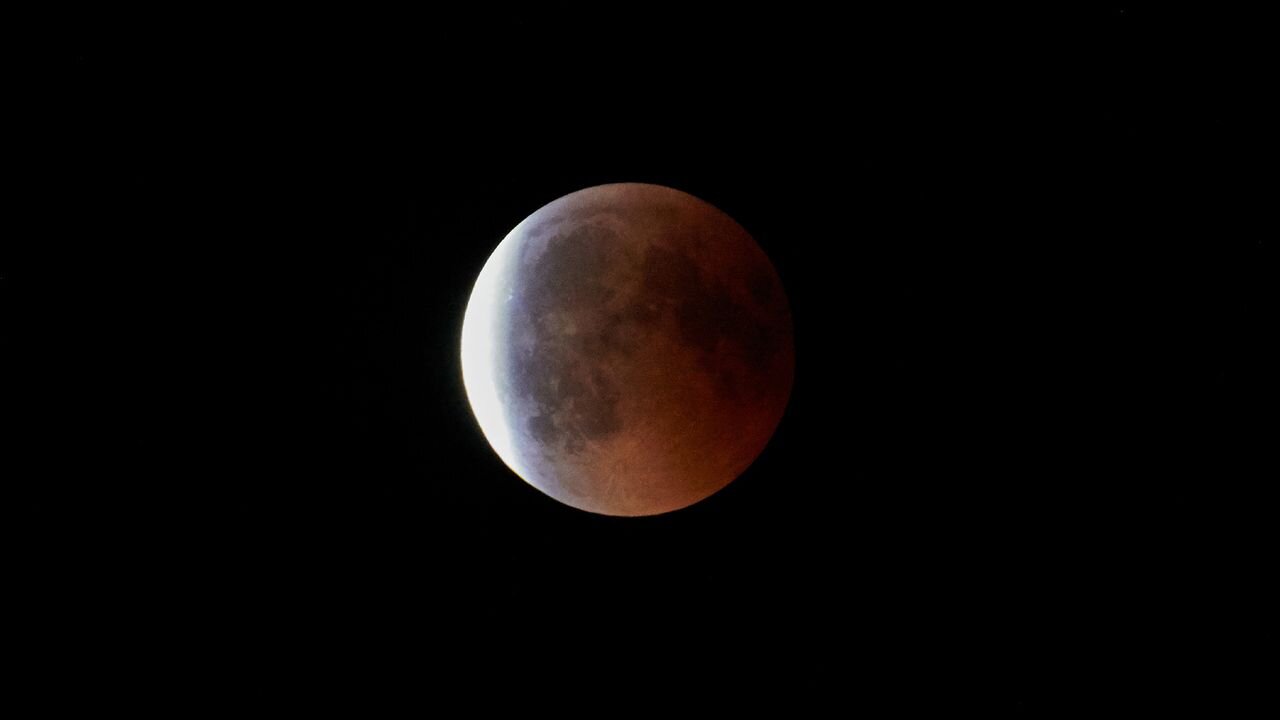
Just over two weeks after the total solar eclipse on Aug. 12 comes an encore. On the night of Aug. 27–28 , a very deep partial lunar eclipse will see Earth's shadow cover more than 96% of the full moon. Although it falls just short of becoming a total lunar eclipse — and therefore isn't technically a "blood moon" — much of the lunar surface will turn a coppery red to cameras. It will also be the deepest lunar eclipse anywhere in the world until the next total lunar eclipse on Dec. 31, 2028.
Unlike a solar eclipse, a lunar eclipse is completely safe to observe with the naked eye and unfolds slowly over several hours, giving observers and photographers plenty of time to enjoy it . Whether you're using binoculars , a telescope , a mirrorless camera or a smart telescope , it will be one of the best lunar photography opportunities for years.
Solar and lunar eclipses often come in pairs because they occur during the same eclipse season — a period of about 34 days when the sun, Earth and moon line up closely enough for eclipses to occur. A solar eclipse happens at new moon, when the moon passes between Earth and the sun. Then, about two weeks later, at full moon, the alignment can produce a lunar eclipse as the moon passes through Earth's shadow.
This eclipse will favor observers in North and South America, where every stage will be visible high in the night sky. Europe gets a different, but equally photogenic experience, with the eclipse occurring before dawn as the moon sinks toward the western horizon.
Whatever equipment you use, the biggest challenge for most people won't be finding the eclipse, but deciding how to see and photograph it. Here's some gear worth considering.
Best binoculars for the Aug. 27-28 lunar eclipse
Large binoculars are a fine way to enjoy a lunar eclipse. (Image credit: Jase Parnell-Brookes)
Canon's image-stabilized binoculars remove hand shake, making it easy to enjoy steady, detailed views of the eclipsed moon without a tripod, with 15x magnification revealing craters and the advancing edge of Earth's shadow. They're expensive, but among the best binoculars available for lunar observing.
Read: Canon 15x50 IS all-weather binoculars review View Deal
If image stabilization isn't in your budget, the SkyMaster 15x70 offers excellent value. Its large 70mm objectives gather plenty of light, while 15x magnification reveals impressive lunar detail. For the best results, mount it on a tripod to minimize vibration.
Read: Celestron SkyMaster 15x70 review View Deal
The Nikon Monarch HG 10x42 combines superb optics with a lightweight, waterproof design that's equally suited to lunar eclipses, stargazing and birdwatching. Its wide, sharp field of view makes it easy to follow Earth's shadow across the moon, while the lower 10x magnification makes it relatively easy to hold steady.
Read: Nikon Monarch HG 10x42 review View Deal
Best telescopes for the Aug. 27-28 lunar eclipse
The StarSense Explorer LT 70AZ is an ideal first telescope for viewing a lunar eclipse. (Image credit: Kimberley Lane)
The Sky-Watcher Evostar 100ED delivers crisp, high-contrast views of the moon, revealing craters and the curved edge of Earth's shadow in exceptional detail. Add a tracking mount and the moon remains centered for hours, making both observing and photography much easier.
Read: Best telescopes View Deal
If your goal is detailed lunar photography, the NexStar 8SE is hard to beat. Its long focal length produces big images of the moon, while the computerized GoTo mount automatically tracks it throughout the eclipse. Pair it with a planetary camera for impressive close-ups.
Read: Celestron NexStar 8SE review View Deal
The StarSense Explorer LT 70AZ is an affordable, portable refractor that is great for beginners and produces impressive views of the moon's craters and maria (dark spots). Its standout feature is the StarSense smartphone app, which helps beginners find objects without any prior astronomy knowledge. However, it requires care — it's a touch wobbly on its tripod.
Read: Celestron StarSense Explorer LT 70AZ review View Deal
Best smart telescopes for the Aug. 27-28 lunar eclipse
The Seestar S30 Pro can automatically track and photograph the eclipsed moon. (Image credit: Jamie Carter)
The Seestar S30 Pro makes lunar eclipse photography almost effortless. It automatically tracks the moon and captures images using a smartphone app, leaving you free to enjoy the eclipse. Lightweight and battery-powered, it's an ideal choice for first-time eclipse photographers.
Read: ZWO Seestar S30 Pro review View Deal
Compact and easy to use, the Dwarf Mini automatically tracks the moon and captures sharp close-ups. It also excels at creating time-lapse sequences showing Earth's shadow gradually crossing the lunar surface. It's also the most travel-friendly size.
Read: DwarfLab Dwarf Mini review View Deal
The Odyssey Pro combines lunar tracking and image processing to produce detailed images with minimal effort. Although designed primarily for deep-sky observing, it handles the moon beautifully and is one of the most capable smart telescopes available — but it comes with a premium price tag.
Read: Unistellar Odyssey Pro review View Deal
Best cameras for the Aug. 27-28 lunar eclipse
Sony's high-resolution mirrorless camera captures exceptional lunar detail. (Image credit: Kimberley Lane)
The moon's brightness differs dramatically on its lit and unlit sides during a lunar eclipse, demanding a camera with excellent dynamic range. The Canon EOS R6 Mark II handles that superbly and can be paired with a long telephoto lens or telescope for great images.
Read: Canon EOS R6 Mark II review View Deal
The Nikon Z8's 45.7MP full-frame sensor combines superb dynamic range with excellent high-ISO performance, making it ideal for photographing the moon as it fades into Earth's shadow. Astrophotographers will also appreciate its Night Vision mode, which preserves dark adaptation by switching ...