A non-profit newsroom, powered by WNYC. Gothamist Listen Live Donate News Legionnaires' survivors point blame at NYC officials for another summer outbreak By Joe Hong Published Aug 24, 2026 at 6:00 a.m. ET
Twitter Reddit Email Never miss a story Email address By submitting your information, you're agreeing to receive communications from New York Public Radio in accordance with our Terms . By Joe Hong Published Aug 24, 2026 at 6:00 a.m. ET
Twitter Reddit Email We rely on your support to make local news available to all Make your contribution now and help Gothamist thrive in 2026. Donate today
Gothamist is funded by sponsors and member donations
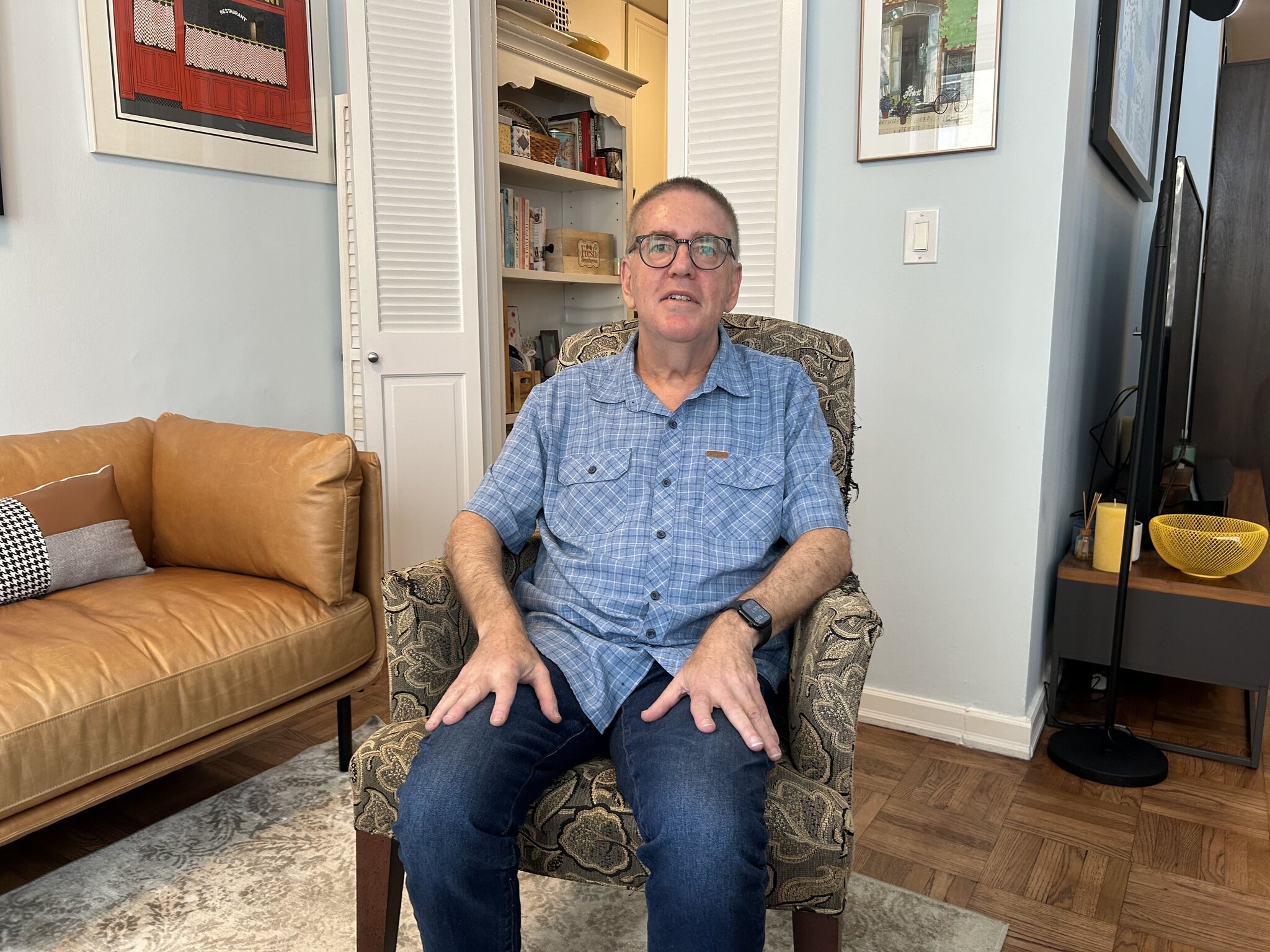
Ken Pearl’s Apple Watch logs about 15,000 steps a day, mostly on the blocks around his Upper East Side apartment. The 63-year-old history professor estimates he regularly strolls on every street in the neighborhood.
“ What's my thing I love? I walk everywhere,” he said.
That changed in July, when Pearl became one of 92 people diagnosed with Legionnaires’ disease in an outbreak that tore through the Upper East Side this summer and left him bedridden for weeks, unable to walk even 100 steps outside his front door.
”I felt like a boxer came and smacked me in the chest, there was remarkable pain,” he said.
It was the second outbreak in New York City in as many years, unusual compared to past outbreaks, with Harlem being last summer’s epicenter. More than 70 people were hospitalized in the most recent cluster between July and August, and earlier this month the outbreak passed a grim milestone when the death toll reached a total of nine people, surpassing last year’s fatalities.
Both outbreaks spurred city health officials into action to track down the source. Legionnaires’ disease spreads when cooling towers – part of a building’s air conditioning system – grow lethal levels of Legionella bacteria in hot summer months and cast it around a neighborhood via giant fans used to vaporize water.
More than 75 cooling towers on the Upper East Side tested positive for the bacteria in an initial round of testing, including at the Guggenheim Museum and the Metropolitan Museum of Art. The health department ordered building owners to drain their cooling towers and clean them to curb the disease’s spread.
But Pearl and other victims say the city has missed opportunities to protect New Yorkers. Public health experts agree that Legionnaires’ outbreaks are avoidable. They say that what’s clear, after two successive waves, is that the city has suffered from a lack of personnel to enforce existing regulations, and that it could benefit from the kind of stricter testing limits and hands-on approach that other cities have used to stop outbreaks from happening in the first place.
“Having a proactive, effective outbreak response is good,” said Chris Boyd, a water systems consultant who helped write the city’s cooling tower regulations in 2015. “Preventing the outbreak is better.”
Last year, the health department began increasing its number of inspectors after a Gothamist analysis found that the agency had only inspected about 24% of the city’s 4,900 cooling towers in the first six months of the year before the Harlem outbreak, a near-record low for the city. And in May, health officials said it would double its ranks of inspectors with new funding from the city’s budget.
But by the start of this year’s outbreak, the agency said that just 35 of 56 open positions had been filled and fully trained, And according to health department spokesperson William Fowler, it had inspected 1,580 towers in the first six months of 2026, only about 400 more compared to roughly the same period last year, before people started getting sick on the Upper East Side.
“Why did New York City not do more inspections?” Pearl said. “I blame New York City.”
Fowler did not respond to criticisms about the staffing delays but said the department responded aggressively once the outbreak began and eliminated the source quickly. He added that staffing levels now stand at 43 cooling tower inspectors, with six more currently being onboarded.
Fowler said there’s no way to prevent Legionella bacteria from growing in the built environment, but there are ways to reduce bacterial growth and prevent it from becoming a public health hazard. He said building owners must be vigilant and monitor their cooling tower systems daily.
“We always hold building owners accountable and have stepped up our enforcement this year, dramatically increasing inspections by 35% compared to the year prior,” he said, referring to the number of inspections conducted citywide in the first half of 2026.
He added that the agency collected $71,000 in fines since May.
Pearl’s tussle with Legionnaires' began almost as soon as the outbreak started. He woke up feeling achy on July 3, a day after health officials announced the cluster of cases on the Upper East Side, and assumed he had the flu. But as his symptoms worsened over the next few days – chest pain, a fever of 104 degrees Fahrenheit – he decided to go to the emergency room.
Being a devoted walker, he stumbled his way to a clinic a few blocks away.
”You might say, ‘Why not take a cab?’ I hate cabs,” said Pearl, who has an endearing penchant for asking his own questions in an interview and answering them. “If someone saw me, they’d think, ‘Oh my God, what’d this guy drink?’”
Legionnaires’ disease is a severe type of pneumonia that causes a litany of flu-like symptoms: fever, body aches, extreme fatigue and diarrhea. Elderly patients and immunocompromised people are at a much higher risk of developing severe cases.
After a battery of tests, he said he was prescribed a nine day course of antibiotics, but that his recovery was slow. He spent the rest of the month horizontal, barely able to lift his head high enough to watch World Cup matches on television.
”There were times where I was like, ‘I know I have to brush my teeth. I can't get out of bed,’” Pearl said.
Near ...