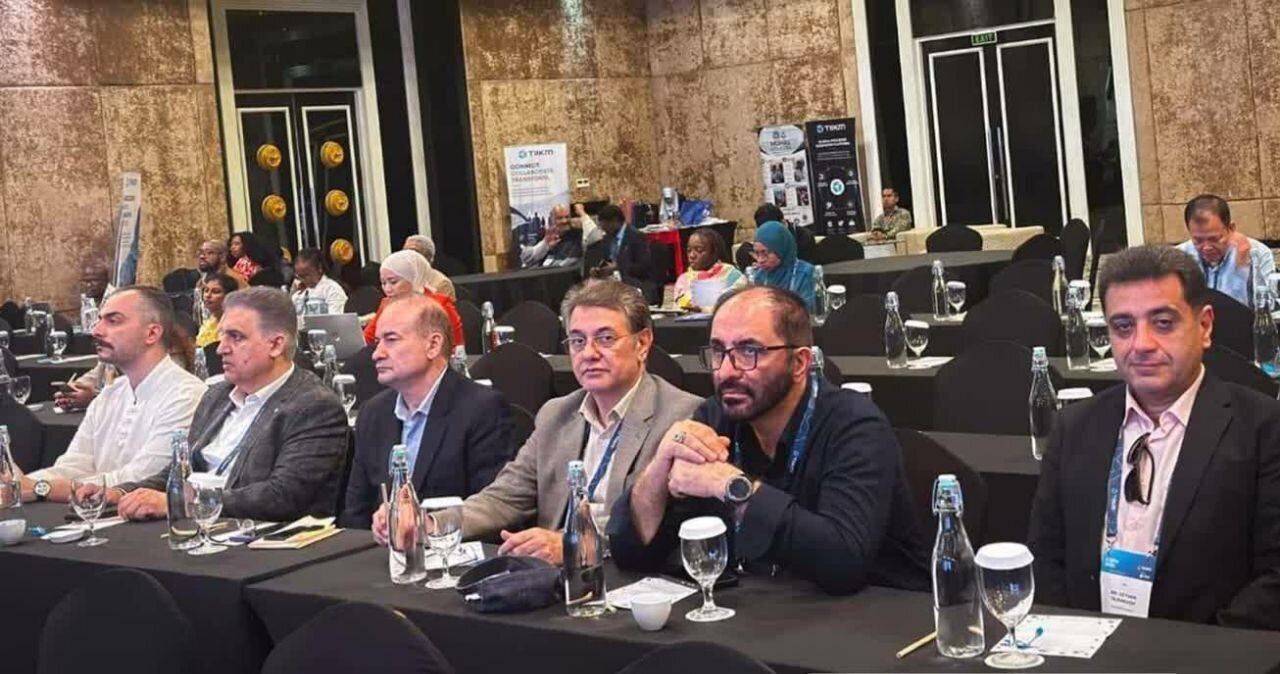
TEHRAN – The head of the Iranian Health Insurance Organization, Mohammad-Mehdi Nasehi, and officials from International Conference on Public Health (ICOPH) committee have explored avenues to enhance collaborations.
The Conference chair, Hematram Yadav, and its convener, Isanka Gamage, held a meeting with Iranian officials to discuss ways for boosting cooperation in the fields of health insurance research and the exchange of managerial expertise, Borna news agency reported.
The officials met on the sidelines of the 12th International Conference on Public Health (ICOPH) held from August 5th to 7th in Bali, Malaysia. An Iranian delegation led by Nasehi attended the conference.
Lauding Iran’s active participation, Yadav said enhancement of scientific cooperation with Iran would be a valuable opportunity for ICOPH members.
For his part, Nasehi voiced the country’s readiness for the promotion of scientific cooperation with ICOPH. Referring to the scientific and practical capabilities of Asian countries, he stated that fostering ties with universities, research institutes, and health organizations in the ICOPH member states could pave the way for broader scientific, research, and managerial cooperation in health and health insurance sectors.
Many Asian countries face challenges comparable to those affecting Iran’s healthcare system, so the exchange of knowledge and experience among these nations would contribute to the identification of effective solutions to address these shared challenges, Nasehi added.
Underlining the scientific and managerial capabilities of Iran in the fields of health and insurance, he noted that Iran possesses substantial potential to share its knowledge and expertise with like-minded nations, and benefit from the knowledge, experience, and achievements of other countries to enhance its health insurance system and manage existing challenges.
The expansion of science diplomacy is an effective way to strengthen international interactions in health sector. Establishing sustainable connections among scientific centers, universities, and executive organizations in Asian countries could lead to development of joint research, the exchange of successful experiences, and the enhancement of specialized knowledge in the fields of health and insurance, he further noted.
The official went on to say that scientific and research collaborations, regardless of geographicalborders, can help enhance the capacity of the countries to address shared health issues and pave the way for the development of an active network of scientific cooperation in the region.
The 12th Conference brought together researchers, managers, and experts in public health sector from around the world. Iranian delegation attended meetings and specialized workshops, focusing on sharing expertise and expanding scientific and research collaborations with scientific centers and health organizations in Asian countries.
The ICOPH 2026 was held under the theme ‘Beyond Boundaries: Advancing Public Health through Sustainability, Innovation, and Global Change’. As a leading Health Conference 2026, ICOPH 2026 invited participants to rethink how public health is researched, practiced, and implemented, while connecting global ideas with local action.
The theme highlighted that public health today is no longer confined by borders, institutions, or traditional ways of thinking. Climate change, digital transformation, health inequities, pandemics, and shifting population needs have made one thing clear: solving public health challenges requires collaboration that goes beyond boundaries.
Held annually, the Conference promotes interdisciplinary collaboration to advance research and innovation in public health. It encourages sustainable solutions and the use of emerging technologies to address pressing global health issues. By providing a dynamic platform for discussion and collaboration, ICOPH connects researchers, practitioners, policymakers, and advocates to share insights and to develop transformative strategies.
According to the health ministry, about two million patients with rare and hard-to-treat diseases are covered by the Health Insurance Organization.
To safeguard the patients’ health and lower financial burden on households, tens of specialized healthcare service packages have been defined for them, with some more being continuously developed. The packages include diagnostic, therapeutic, pharmaceutical, rehabilitation, and dental services, whether in the form of outpatient or inpatient services, which are provided with minimal deductibles or free of charge.
In 2024, seven more anti-cancer drugs were added to the list of rare diseases fund, with health insurance covering 70 percent of the costs.
“Currently, with the inclusion of these seven drugs, a total of 90 anti-cancer drugs are covered by the rare and hard-to-treat diseases fund, and the health insurance is paying 70 to 95 percent of their costs,” IRIB quoted Kameli, an official with the health insurance organization, as saying.
The number of health centers that have concluded contracts with the Health Insurance Organization increased by seven percent in the past Iranian calendar year (ended on March 19) compared with the year before.
In 2025, more than 53,000 centers concluded contracts with health insurance organizations, IRNA quoted Keivan Tajbakhsh, an official with the Organization, as saying.
Health insurance contracts have been signed with government, non-government, private, and charity centers for services.
The centers include doctors’ offices, hospitals, pharmacies, rehabilitation centers, and all medical centers.
“We hope to witness an increase in the number of health centers that are parties to the contract with Health Insurance Organization as new forms of the contract, approved by the Supreme Council of Insurance, are announced,” Tajbakhsh said.
He stated that 13,931 pharmacies, 20,804 doctors’ offices, 2,049 clinics, 2,446 indepen...