This is one outlet's own report from Gizmodo — the article as it was filed. Other outlets are covering the same event; open the full story to compare every source side by side.
September 1 is the first day of meteorological fall, but for many Americans, it still feels like the dog days of summer.
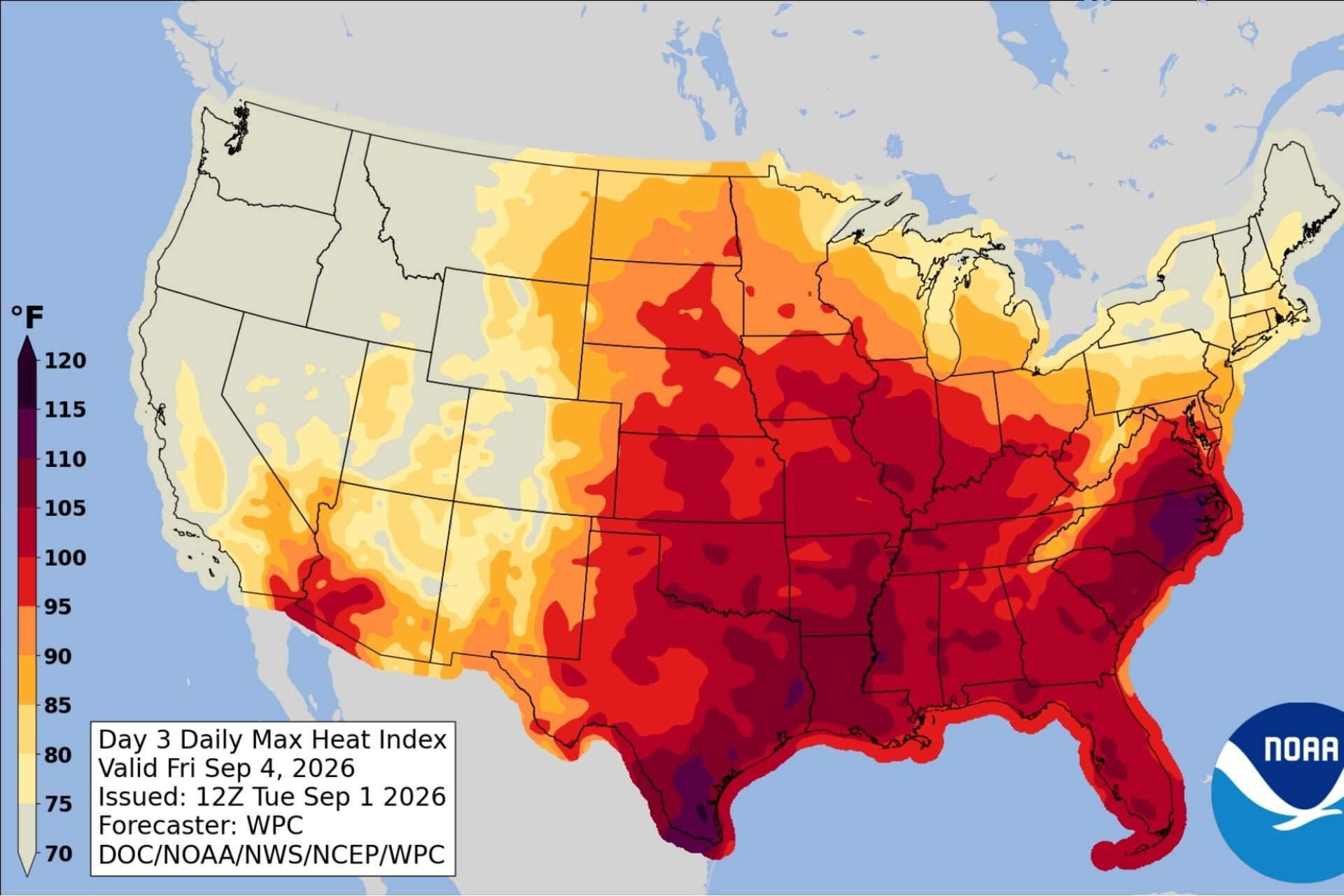
Today, an estimated 191 million people across the nation will experience temperatures above 90 degrees Fahrenheit (32 degrees Celsius), according to meteorologist Ryan Maue. The most stifling temperatures will be concentrated across the South, Midwest, and south-central East Coast, where the National Weather Service has issued heat advisories in more than a dozen states.
It appears the heat will stick around for a while. The Weather Prediction Center forecasts average heat indexes—also known as "feels like" temperatures—in the high 80s and 90s F (high 20s and 30s C) through Friday, with maximum heat indexes reaching well above 100 degrees F (38 degrees C) in some areas. While forecasters expect the most intense zone of heat to shrink heading into next week, it will be some time before the eastern half of the country sees more fall-like temperatures.
"Heat will build over parts of the Middle Mississippi Valley and Central/Southern Plains on Tuesday and expand into the Ohio/Tennessee Valleys and the Mid-Atlantic on Wednesday and Thursday," the NWS reports .
A whopping 191 million Americans and their pets will be at least 90°F on Tuesday to start meteorological fall –> September 1st.
Everyone should take extra hydration breaks, and maybe eat some fruit. pic.twitter.com/kdTnyEbNBl
— Ryan Maue (@RyanWeather) September 1, 2026
The combined impact of climate change and a rapidly developing "super" El Niño brought unrelenting heat to much of the U.S. this summer. While it's too soon to call summer 2026 the hottest on record, meteorologists say it looks like a shoo-in.
The contiguous United States recorded its hottest July ever this year, and the season as a whole is on track to surpass the country's average temperature record set during the Dust Bowl summer of 1936, meteorologist Ben Noll reports for The Washington Post. Average temperatures from June 1 to August 29 have been roughly 2.05 degrees F (1.14 degrees C) above average across the nation, just above the anomaly experienced 90 years ago, according to Noll.
Repeated extreme heatwaves have helped fuel drought and wildfire this summer, particularly across the West and the South. In August, the country's largest reservoirs, located on the parched Colorado River, reached their lowest levels since they were filled . So far this year, more than 8 million acres have burned across the nation, the largest amount of area burned by August 31 of any year in the past decade.
El Niño typically peaks between November and January, so its effect on global temperatures and regional weather is strongest during winter. Because this El Niño is on track to become the strongest on record, we can expect particularly significant impacts this winter.
Those impacts vary by region. El Niño shifts the Pacific jet stream southward, generally bringing wetter and colder conditions to the southern tier of the U.S. and dryer, warmer conditions to the northern tier. It can also lead to more frequent bouts of extreme weather. We've already seen this begin to play out with the extreme heatwaves, drought conditions, and wildfires this summer.
On a global scale, El Niño pumps enormous amounts of excess heat into the atmosphere, boosting global temperatures. Meteorologists already expect the combined effect of this super El Niño and human-driven warming to make 2026 the hottest year on record, but 2027 will likely surpass it.
New research strongly suggests that climate change is making El Niño worse , so the unprecedented temperatures and weather extremes the U.S. experiences over the next year may soon become features of a typical El Niño year.
It’sFirst DayMeteorological FallUS Is Scorching HotNearlyAmericansFahrenheitCelsius
AIPROPX is an independent multi-source news index — we track, compare, and connect coverage from across the web into one place you won't find anywhere else.